General
Our stay in the incredible country that is Fiji gave our family many things. Unfortunately, the first of these was COVID. But more of that later. The country of Fiji consists of 330 islands of which about a third are inhabited. Most of the population live on the main two islands of Viti Levu (where Nadi and Suva are located) and Vanua Levu (home to Savusavu) but we would spend almost all our time in the smaller island groups. Due to a system of indentured Indian labour in the late 1800s and early1900s, there is a large Indian population (approximately one third) and one of the three official languages is Hindi with the others being English and Fijian. Almost all our interactions were with islanders and if I was to sum up the people we met with three attributes I would say happy, generous and fiercely proud of their culture. It seemed that the three inventions that facilitate this happy way of life are:
- The outboard engine – most villages had no roads and access to the rest of the world was by long boats powered by outboard engines, almost always Yamaha 2 strokes. They are part taxi, fishing boat, school bus, family car and even ambulance and every village would have a collection neatly anchored out the front
- The solar panel – every house would have one linked to a battery and they would run their appliances and devices off them. No need for generators, power lines or fuel
- The mobile phone – an incredible network of mobile phone towers gave all but the remotest villages 4g access to the rest of the worl virtually. Not only good for keeping up with Instagram, this also plays an important role in distributing warnings during the cyclone season, calling for help in the case of a medical emergency and for parents to keep connected with their children who in most cases live and study in major towns on the mainland for secondary school often being away for months at a time
Savusavu
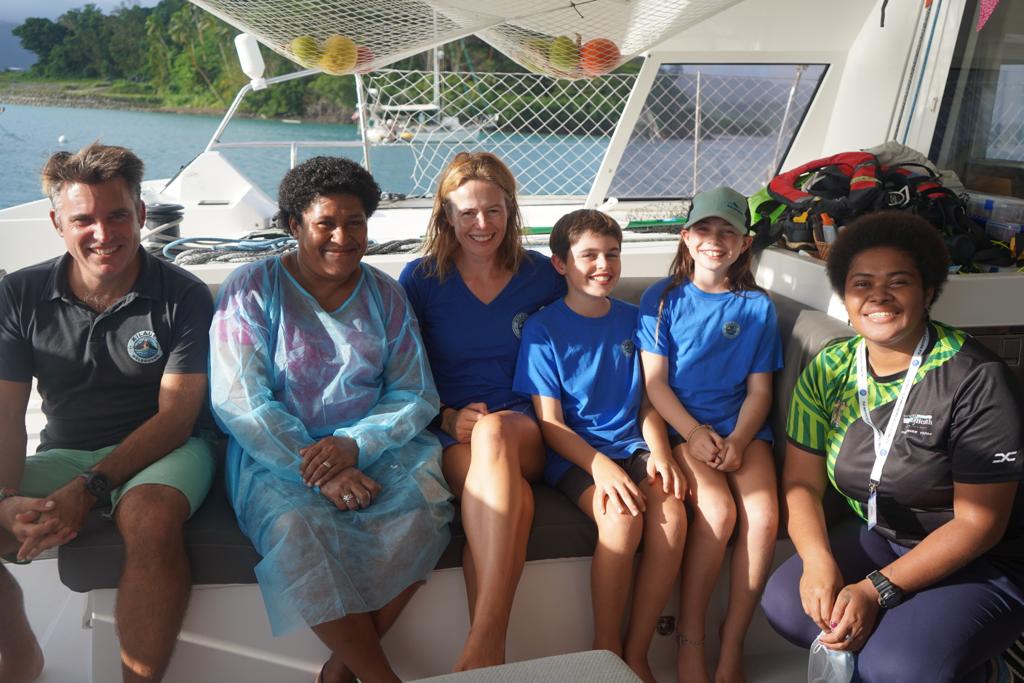
Savusavu has a wild west feel about it. It’s a one street town with a couple of supermarkets, a market, liquor stores, hardware stores and a bank and its inhabitants are a mixed collection of native Fijians and Indians coughing and spluttering happily away as a wave of COVID swept through the place perfectly coinciding with our visit. It didn’t seem to dampen their spirits however. Walking back from the high street to the tiny marina / yacht club at which we were fortunate to get a berth, after a failed attempt to find a portable GPS device a primary school bus trundled past. Seeing a white man, all the kids on the port side of the bus leant out of windows, a sea of huge grins, wild black frizzy hair and wide smiling eyes calling out “BULA!” at the tops of their voices before collapsing into giggles as I jumped back in fright. Its impossible not to like Fijians, of all ages.
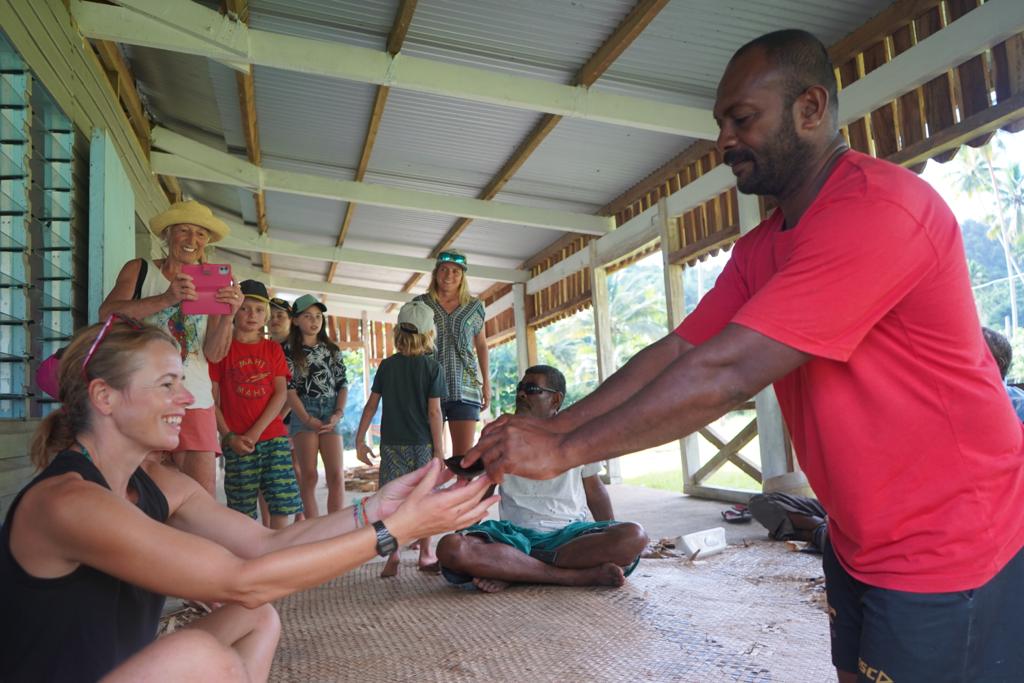
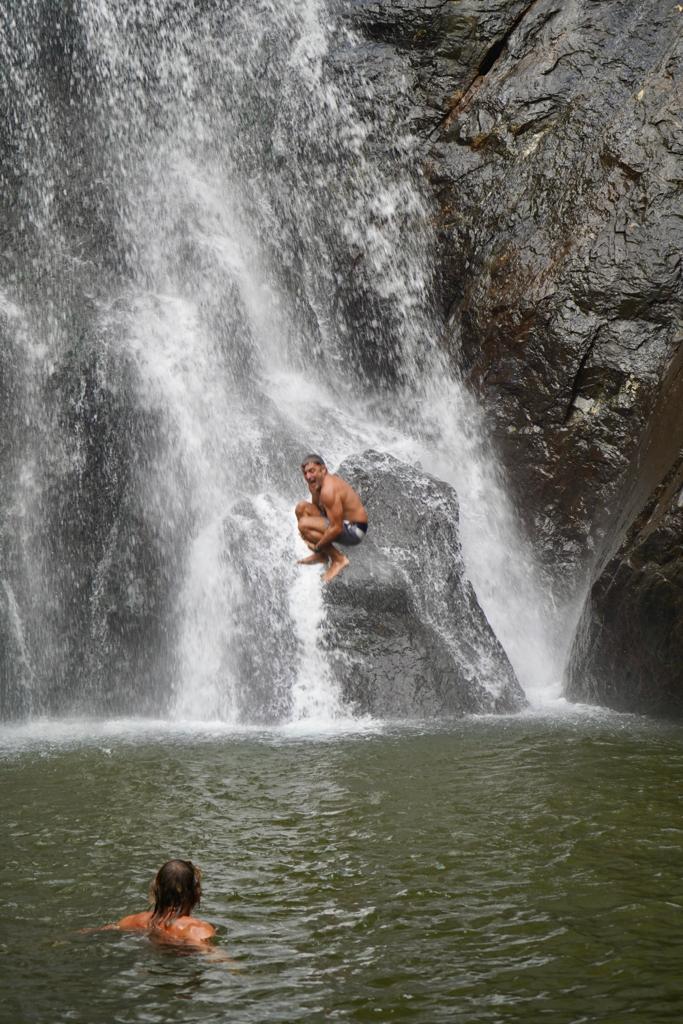
Our main goal in Savusavu was to check in and re-provision ready for our planned trip off the grid to the remote Lau group of islands. We did, however, make time to visit a nearby waterfall. The crew of Quickstep, Kilauea and Far Out piled into two cabs and we shot off up the road and half an hour later arrived at a village at which we were to pay our respects (and a small fee) to the chief and village elders prior to visiting their waterfall. This ended up being a better experience than the waterfall itself. In one room, the local women had laid out their hand made crafts for us to peruse and in the other, the elders sat around on a hand woven mat in front of a big kava bowl just generally chilling. Kava is a root with mildly narcotic qualities widely grown in Fiji which, when mashed up and mixed with water, is drunk at ceremonial occasions and also just at social events in a similar way to us drinking alcohol. There is a little more tradition to drinking kava however than downing pints of beer. A cup is scooped out of the big bowl and offered to each person in turn at which point various claps are made in acknowledgment. You may be asked if you want low tide, high tide or tsunami which relates to how full the cup is. It should be drunk in one go and its definitely bad form to make a gruesome face and retching noises despite the liquid looking and tasting a little like old washing up water.
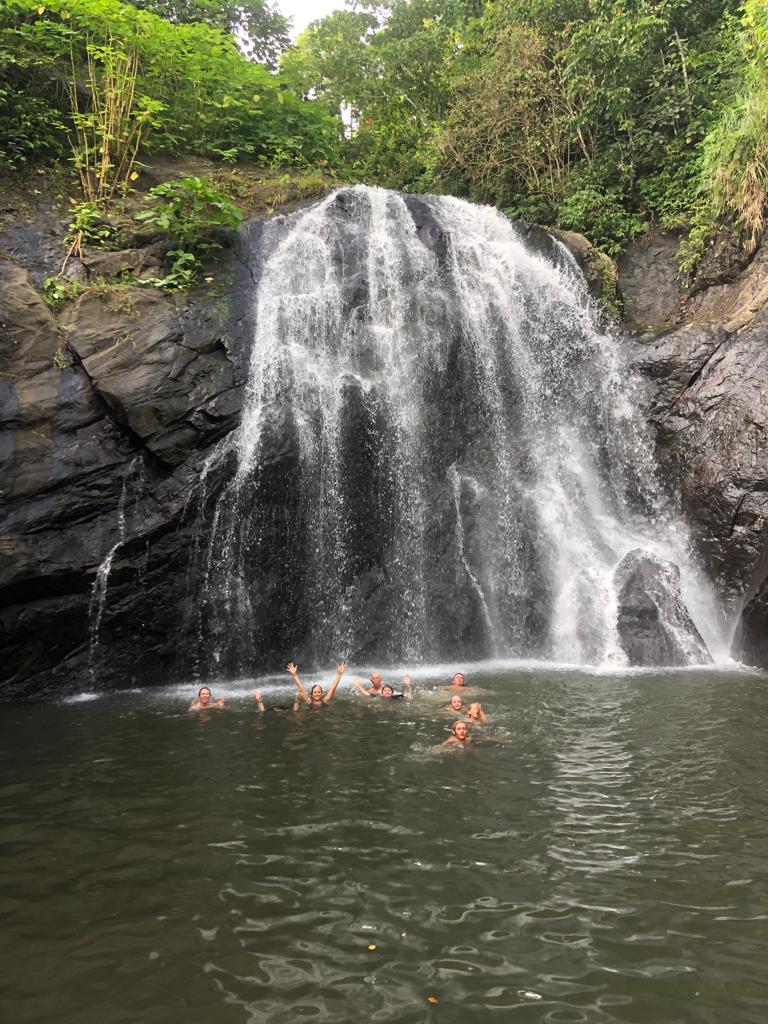
Respects and fees paid and kava sampled our next stop was the waterfall and swimming hole which was beautiful and definitely made it onto the top three list of best waterfalls we had visited in the South Pacific.
By now, we were provisioned up, the first of us started showing the symptoms of COVID so it was time to get away up the town and find some of the Fiji we had come here for. At this stage we farewelled Quickstep who were heading west in search of surf and, together with Far Out, we motored the 40 miles up the coast to Viani Bay which, had we been Captain Cook discovering this bay for the first time, would have been named COVID Recovery Bay.
Viani (Recovery) Bay
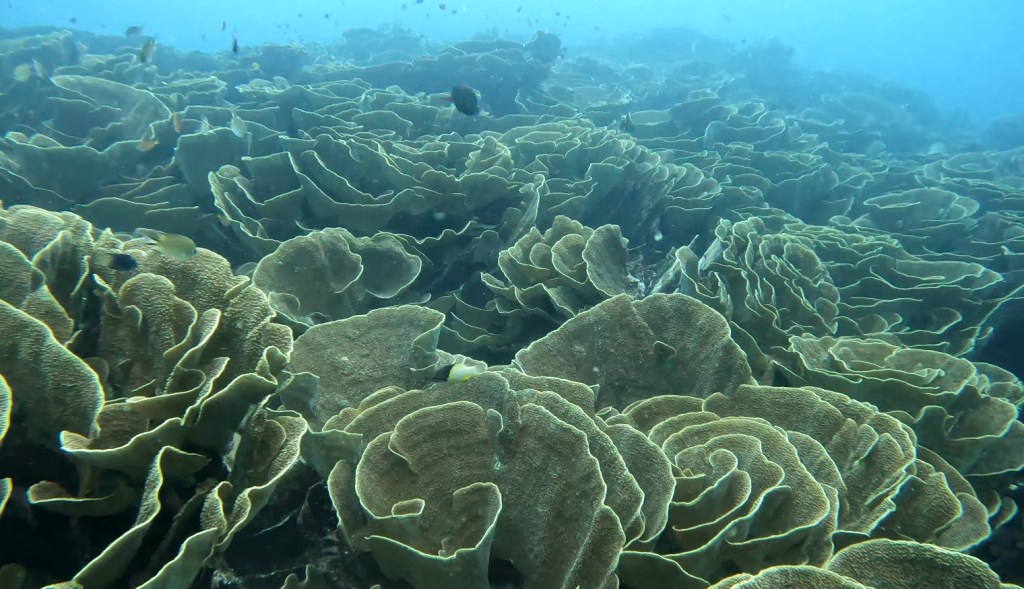
We came to Viani Bay to dive and snorkel the famous Rainbow Reef one of the finest dive sites in Fiji and to some extent the world. Unfortunately, one by one the crew members of both Far Out and Kilauea took ill with COVID with only Lynnie and myself escaping with relatively slight symptoms. At the head of the bay was a tiny village and a lovely little dive resort with a handful of guest shacks and a central eating / drinking area. The resort was incredibly cruiser friendly putting on a cruisers BBQ once a week and picking them up from their boats for snorkel and dive excursions.
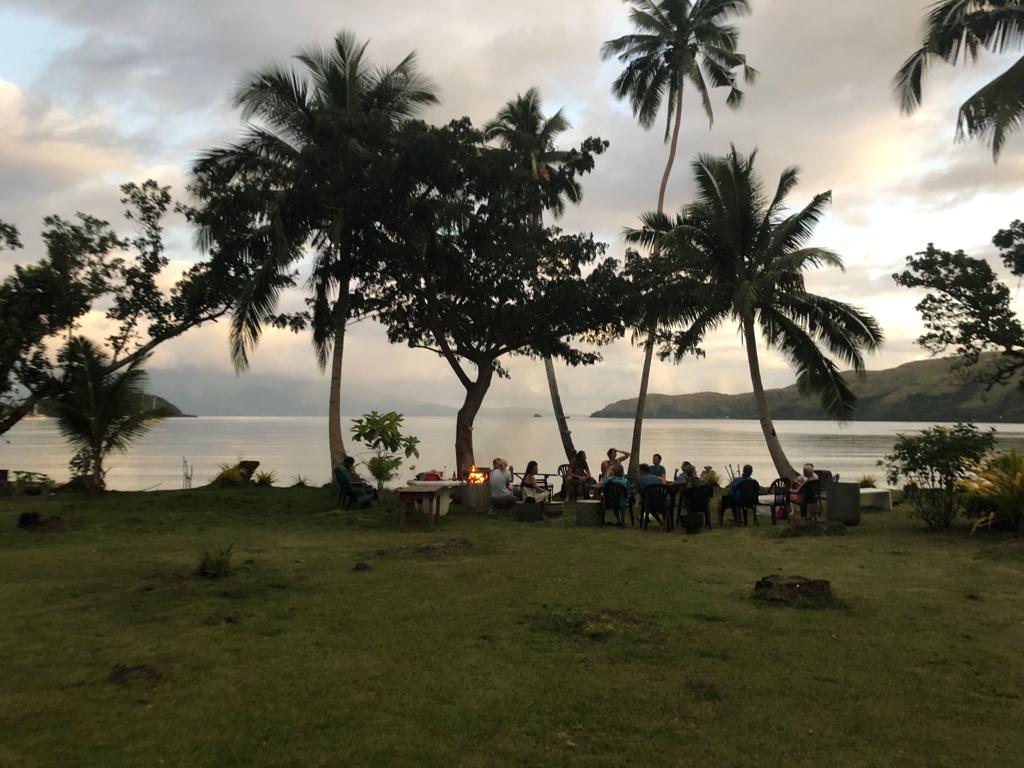
Our first day there was a Sunday and Lynnie and I, being the only ones well enough, went ashore for a look around. In no time at all we had been invited to join a group of Seventh Day Adventists who were listening to a sermon complete with powerpoint slides given in a mixture of Fijian and English and broken up with various songs sung by hand selected members of the group. We were welcomed like great important guests and the whole thing was delightful at first but after 45 minutes we started wondering if there was ever going to be an end. Lynnie, bless her soul, made up a very convincing excuse about needing to fix something on the boat and we managed to escape. We later learned that for the whole week there would be three sermons a day, morning, afternoon and evening. How do they have the stamina and what an earth can they be talking about all that time?
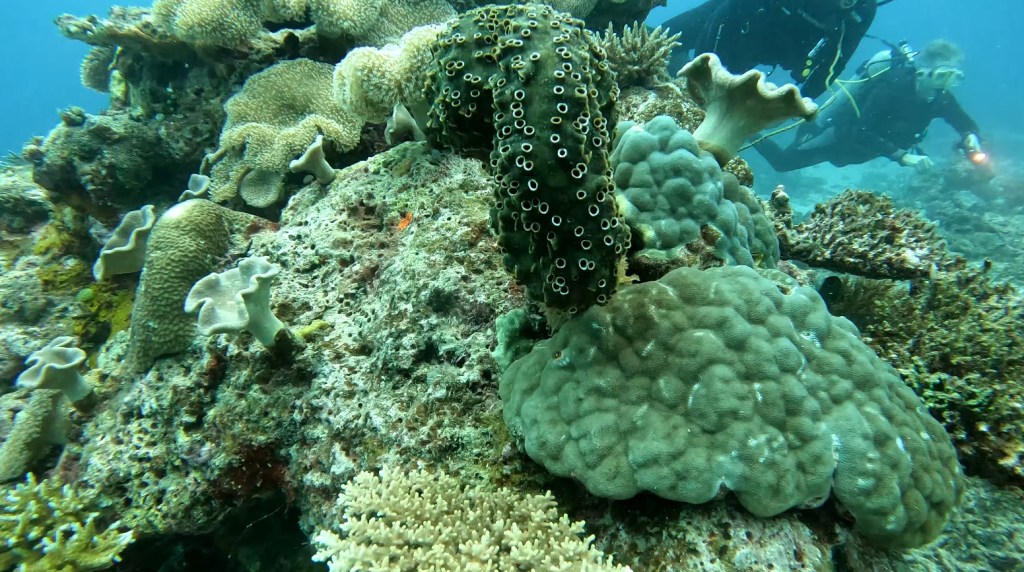
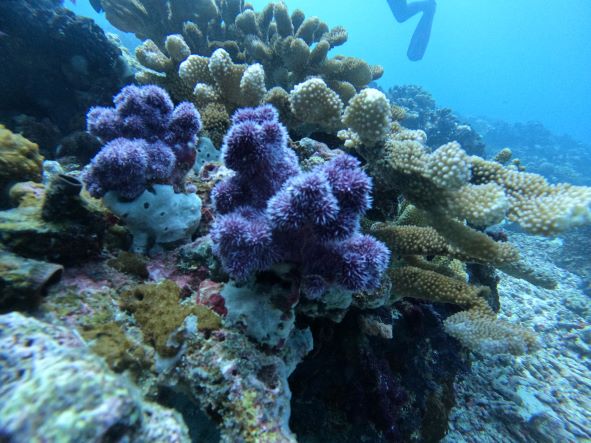
We did manage to get most of the crews of both boats out for at least one dive or snorkel and the reef did not disappoint. Highlights for me were the huge diversity and strong health of the coral, swimming above the largest patch of cabbage coral in the world, watching a turtle feeding on sea grass and observing a school of barracuda spiraling around in the current.
We made one hop up to the North side of Taveuni Island where we stayed for a night and this gave us the perfect jumping off point for a close reach to the Explorer Islands in the Northern Lau Group which was a long and bumpy day sail the next day.
Explorer Islands
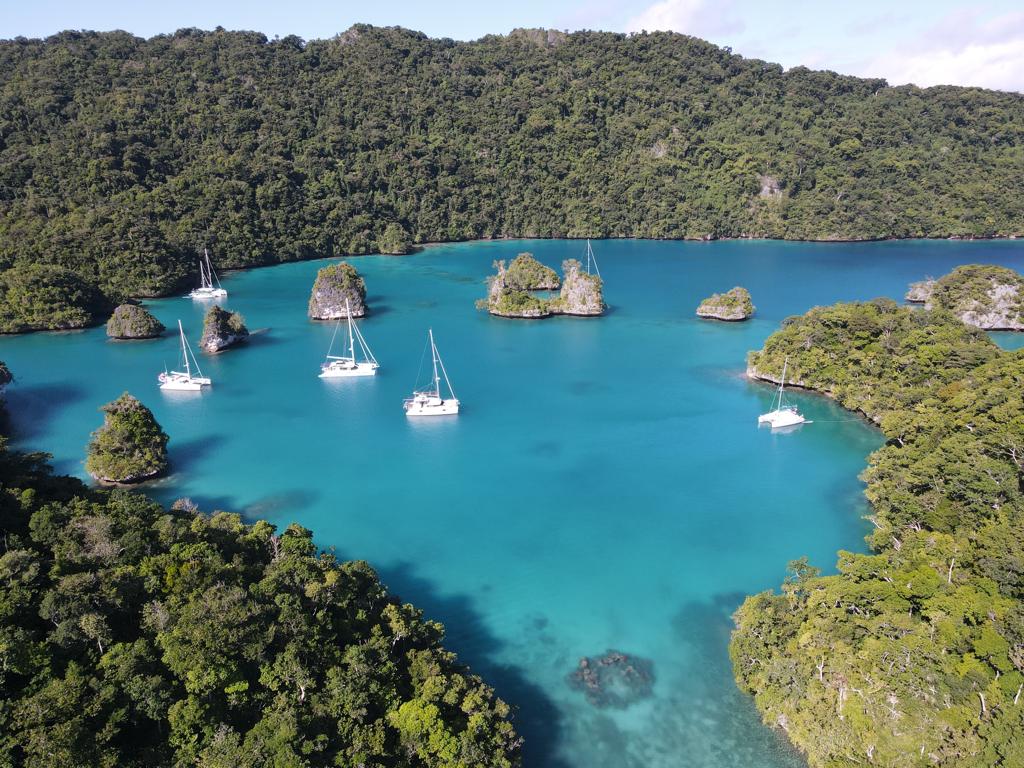
The Explorer Islands or Vanua Balavu consists of a circular reef with one big island in the middle on which there are a few small villages and multiple smaller islands. We stopped first at the biggest village to pay our respects to the chief, conduct the sevusevu ceremony and seek permission to cruise these waters. In Savusavu we had purchased a number of bundles of kava roots and a sulu (sari) each. We were told that when we anchored off a village we were to don our sulus, present the chief with a bundle of kava roots and thus be granted access to their waters and land. This was called the sevusevu ceremony and as the chief was not there, his wife conducted the ceremony very quickly and sent us on our way.

As we wondered round the village a bearded man in a wetsuit came up to us and introduced himself as a professor at the university of the South Pacific who was visiting the island to teach the local youths how to farm coral to improve the health of their reefs. “I saw you had children and wondered if you would like to join us. We leave in half an hour, we’ll come past your boat and you can follow us in our dinghy”. “OK, kids, normal school is cancelled, today we’re learning about coral farming!”. “Yay!!!”
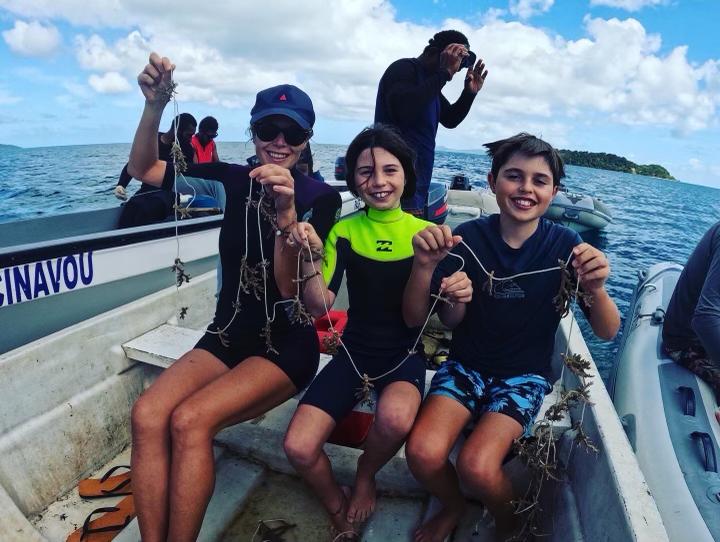
There were about 20 locals plus us, Far Out and another boat and we were split into two teams. One team went off to a location to harvest “super coral” while we went to the reef that was going to be used to grow it. The process went like this. Healthy coral was taken from an area that had been stricken by bleaching and disease with the idea being the coral that could survive in this area must be genetically more able to withstand these conditions. It is then taken to an area that is rich in nutrients, sunlight, clean water and everything else that allows coral to flourish. The harvested coral is broken up into small pieces which are tied to a string about 200mm apart from each other and these strings are then tied between a central structure out to other lumps of coral. Breaking the coral up and stringing them out stimulates the coral to grow many many times faster than they would otherwise as the seek to link up with their neighbours. After a few years, when the strings are a mass of new healthy super coral, they are lifted up and taken back to the damaged reef thus regenerating it many years quicker than would have happened naturally. Our job was to help build the new structure in the growing area and then break up and attach bits of coral to the strings before diving down and stringing them out. The whole thing took all morning and it was both a big learning experience for all of us as well as being physically quite exhausting.
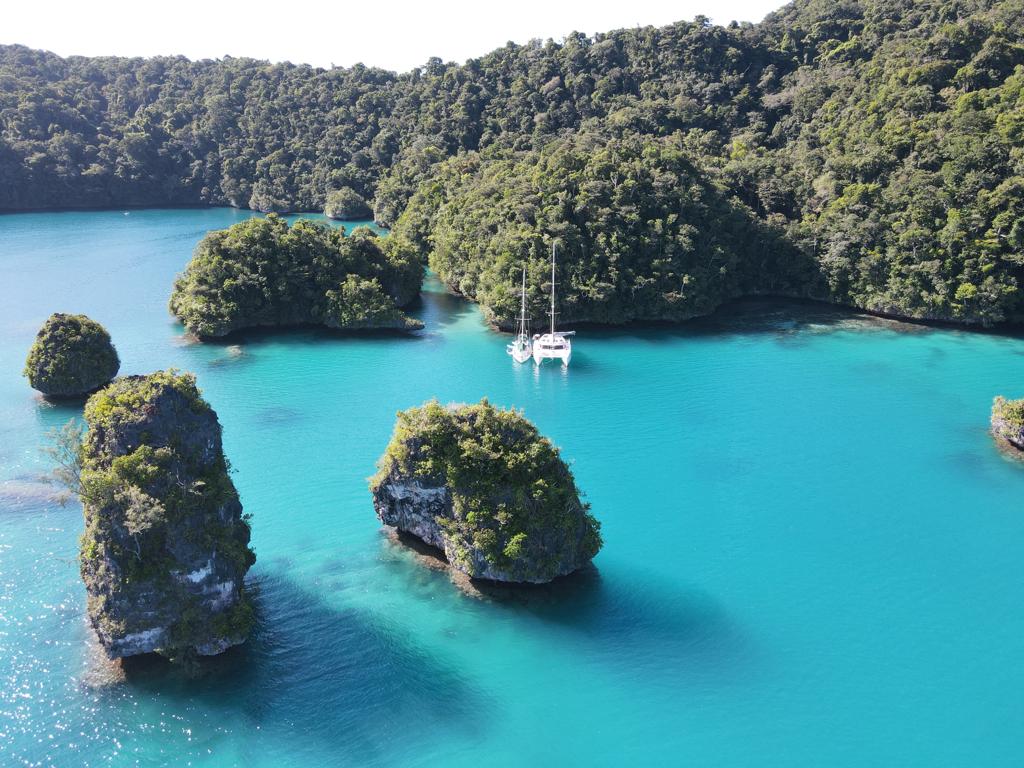
The next day we motored around to what was to be one of the most incredible anchorages we were ever to visit, the beautiful Bay of Islands. This is a series of steep rocks, little bays and tall mushroom shaped rocky islands forming a maze of little passages and nooks and crannies to anchor in and explore. We found a nice little spot, dropped the anchor, backed up and tied mooring ropes to the rocky cliff to hold us in place. Far Out dropped their hook next to ours, backed up and tied up alongside and we spent 3 glorious days rafted up to our mates.
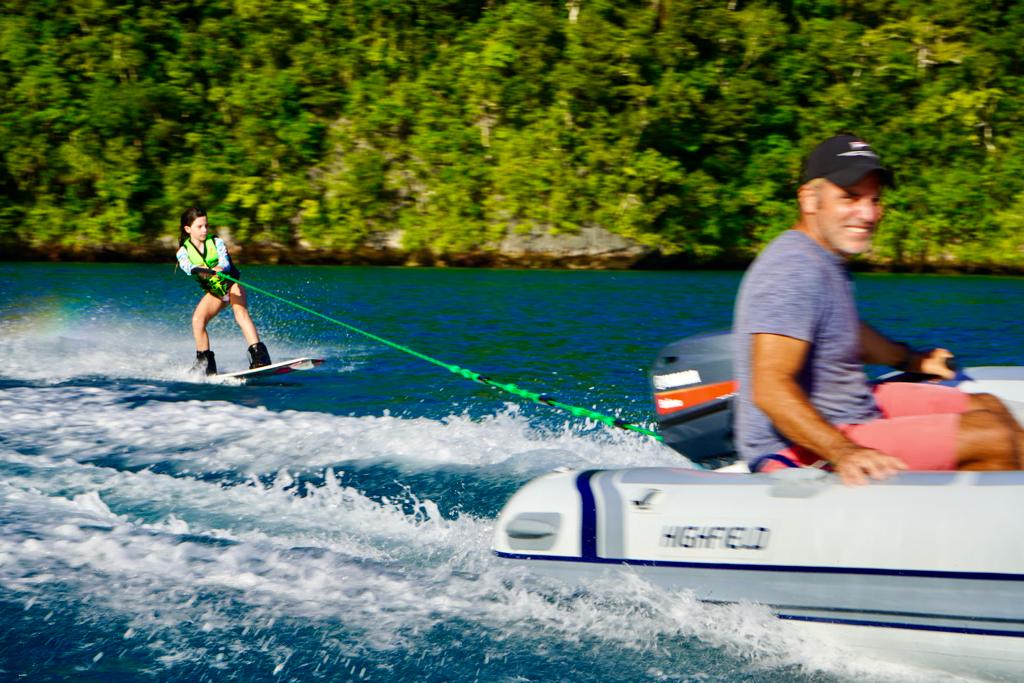
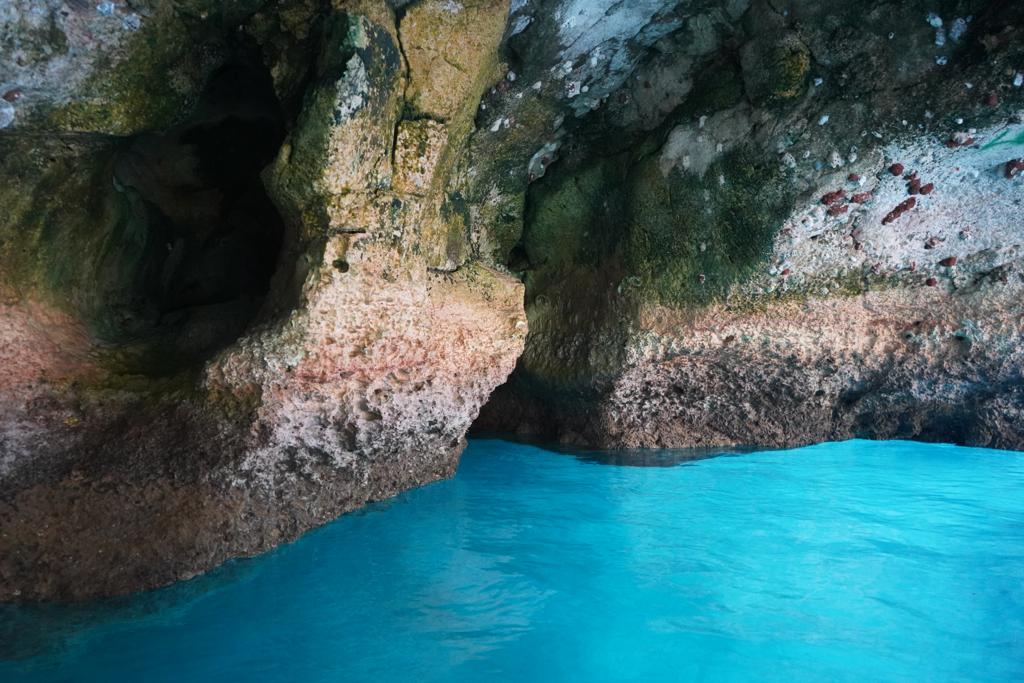

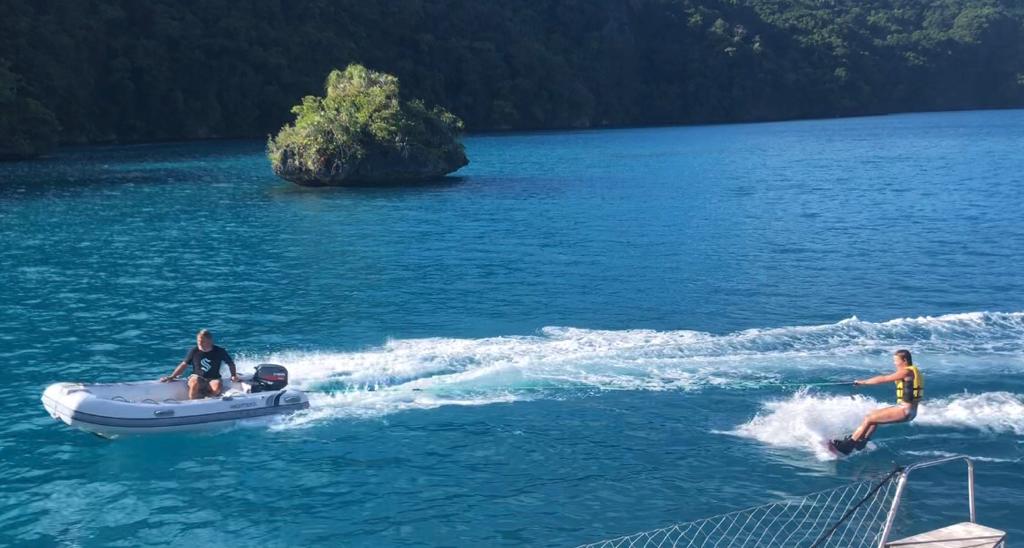
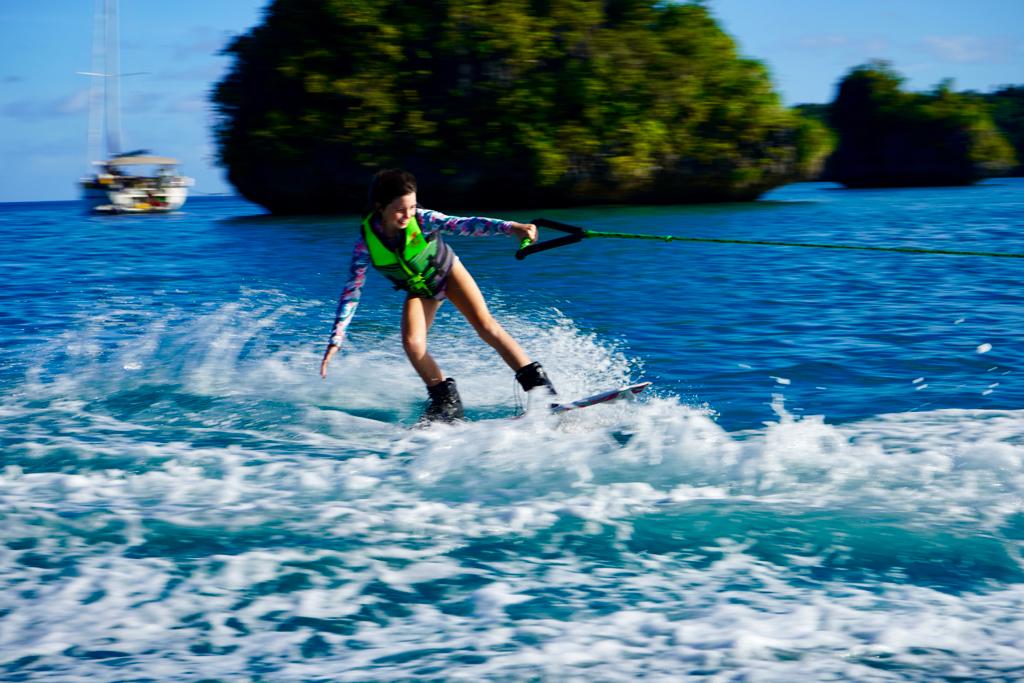
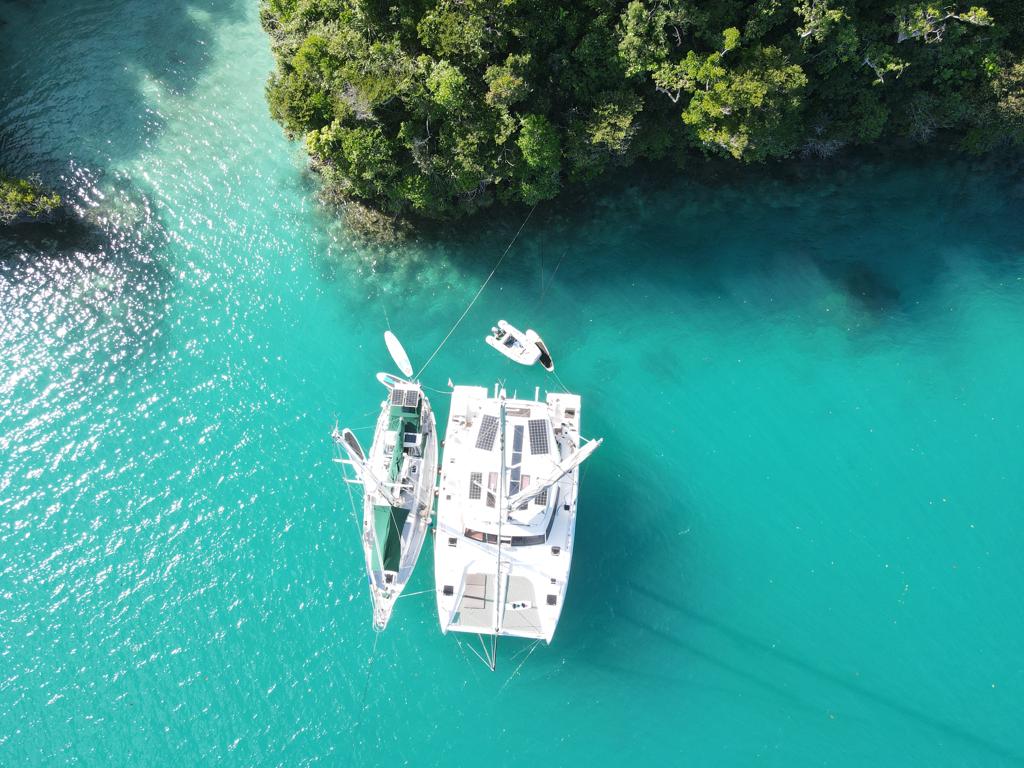
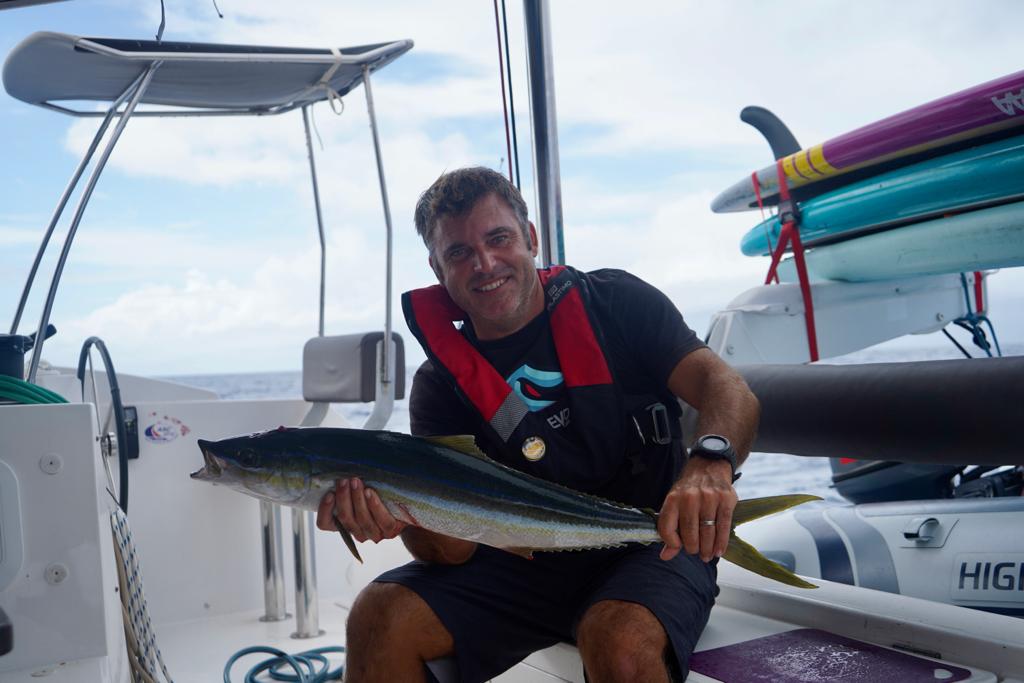
Mornings were spent paddle boarding around the labyrinth of islands and afternoons were spent wakeboarding and fishing. It was here that Lottie learned to wakeboard and whoops and yells echoed off the cliff walls as she carved her way past the anchored boats one hand up giving the shredder symbol.
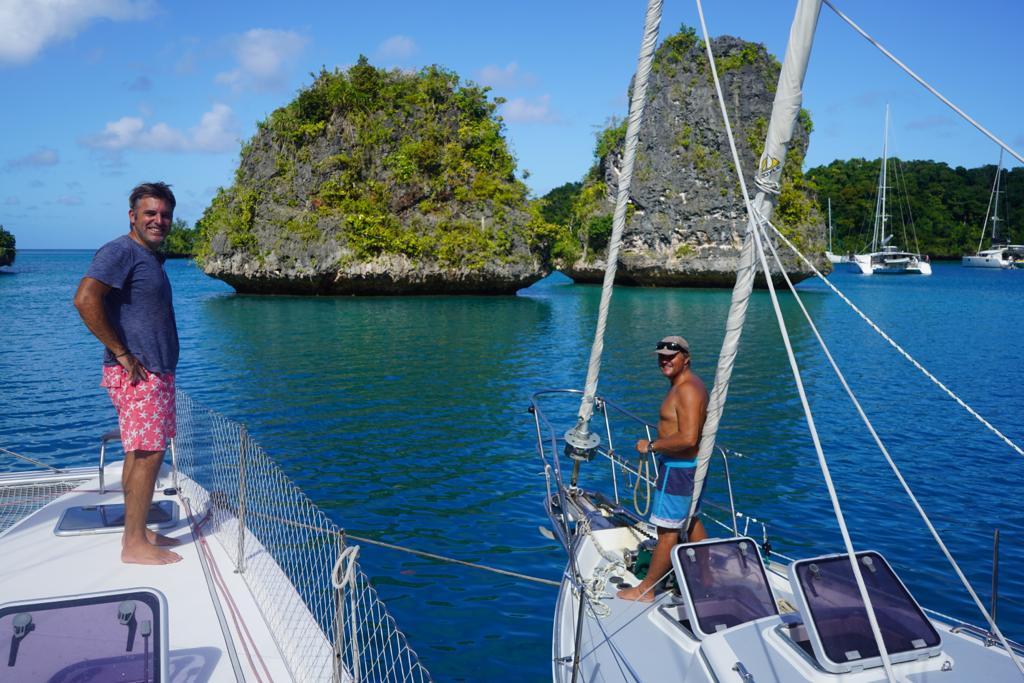
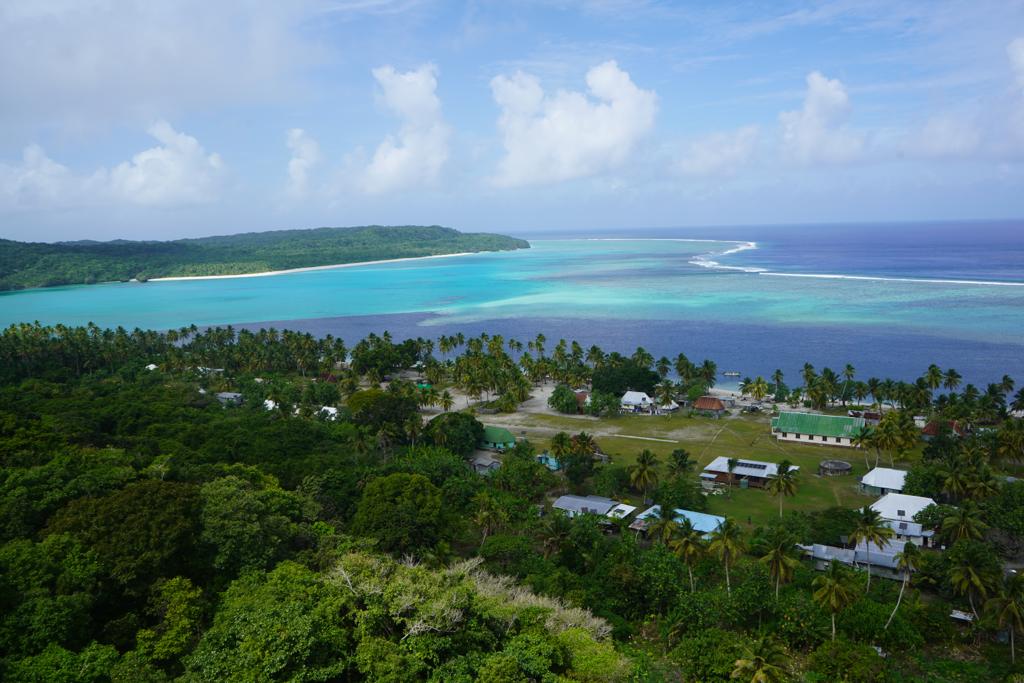
Much as we loved it here, we had heard of an even more magical place in the even more remote Southern Lau Group of islands called Falunga so we decided to make the trip in one go and sail overnight directly there. We had a brisk breeze on our beam and made such good progress we arrived just at dawn and lingered outside for an hour waiting for the sun to rise high enough to see the pass into the reef. Then, we safely entered the pass, motored across the lagoon to anchor as close as we could to the village.
Falunga
One of the things we had read that was unique to Fulunga was that each yacht gets assigned to a local family that “adopts” them for the duration of their stay. Intrigued by this we set off with the crew of Far Out for the twenty minute walk across the island to the main village, one of three on the island and the administrative centre. During this walk we have never seen so many mosquitos. Our backs were covered in dozens of them and we all used our sulus as capes to wave them off. Arriving at the village we found it near deserted. We did come across a couple of women sitting outside the fifth house we came to and they ushered us inside where thankfully they had a mosquito coil burning which gave everyone some relief. They explained that you couldn’t see the chief on Sunday and almost everyone in the village was currently at the morning church service. However it was to end soon and would we like to stay for a banquet lunch? Er, yes!
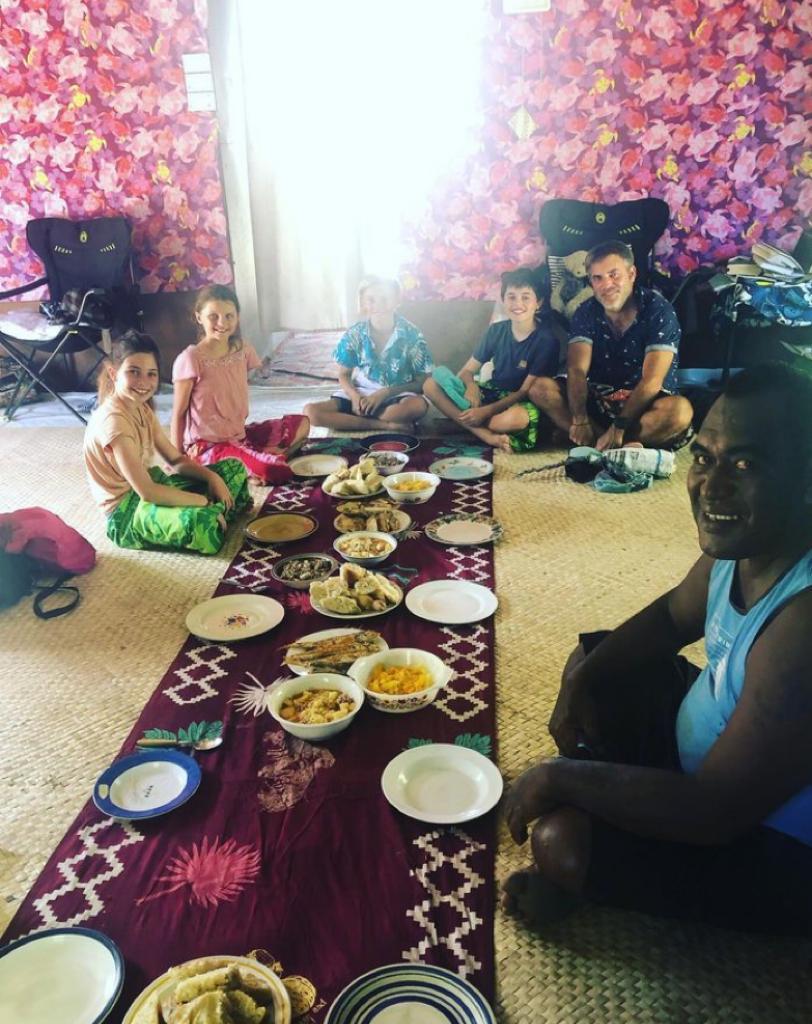
We helped the ladies roll out a long matt which was to serve as the table and the children were commandeered to ferry the food from the outside kitchen area to the banquet “table”. First came a plate of coconut bread and cassava. Then came a big pile of barbequed reef fish. This was followed by a kind of clam chowder, a chicken curry and a bowl of coconut rice. Then came second and even third plates of the same dishes until the entire “table” was covered in food. As the food came out, more and more people turned up and finally when all was laid out, the head of the house arrived, a big imposing man who used to be the Village Head Man and who commanded respect but spoke very gently and was genuinely interested in our story. We had worried about bringing COVID to these remote islands but it was clear from the beads of sweat rolling down his face and constant hacking cough that someone had already beaten us to it. What followed was one of the finest meals we were to eat in Fiji. “How did you know to make so much food?” we asked as all eight of us yachties tucked in, ravenous after our overnight passage. “We always make a lot in case visitors come to see us” was the reply. Can you imagine doing that at home? Making 3 times too much food and then sitting on your front porch inviting hobos off the street into your home to share it with you? They were hugely offended when we offered to give them something in return. “It is our culture to share with you what we have” was the explanation.
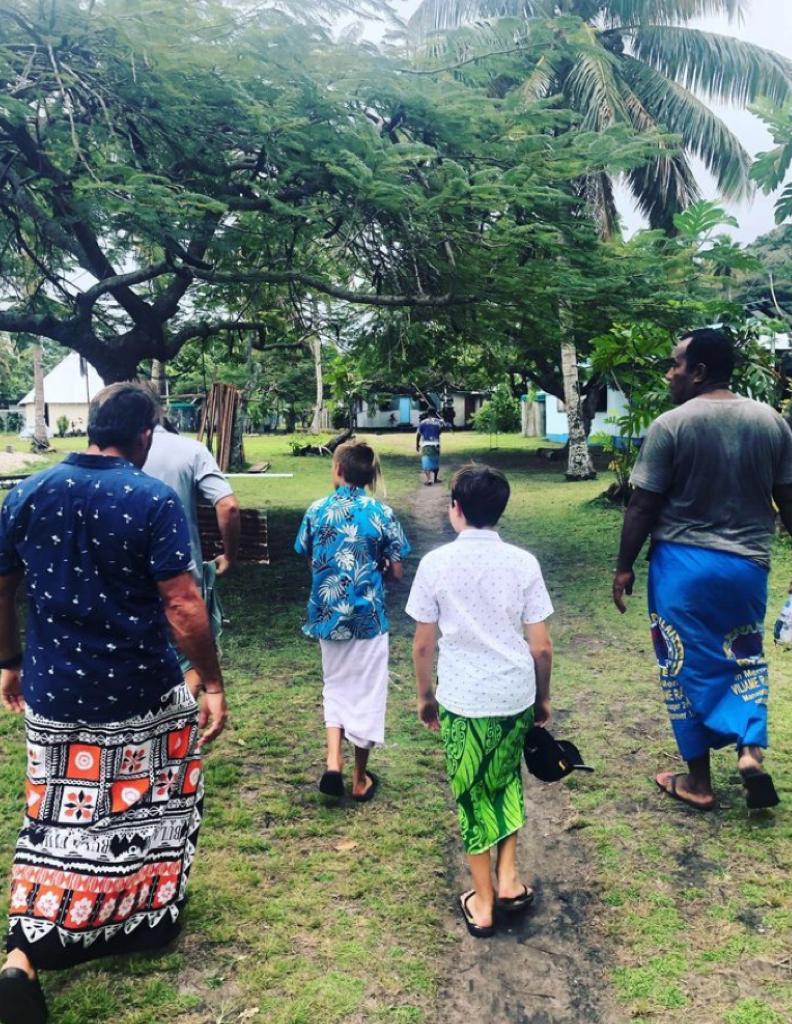
Stomachs bulging, we left our new friends with promises to return the next day to pay our respects to the chief and then braved the mosquito alley back to the dinghy and our yachts. We upped anchor and moved across to the windward side of the lagoon, a beautiful anchorage with a series of mushroom shaped rocks scattered about the shallows with strips or bright yellow beaches in between.
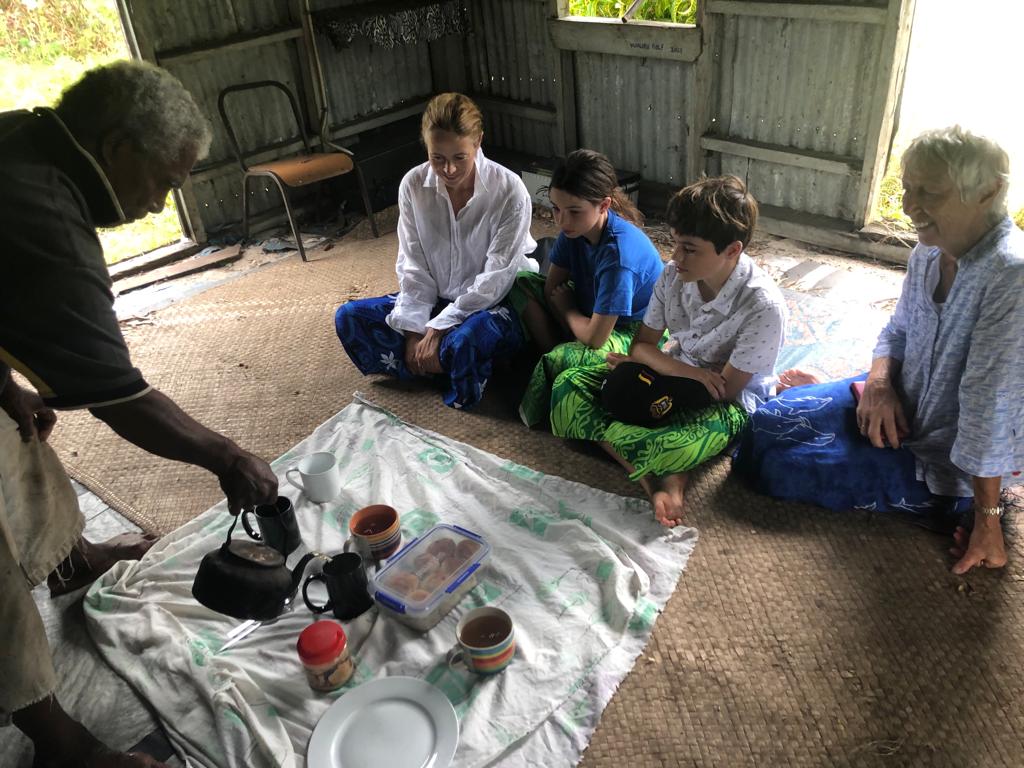
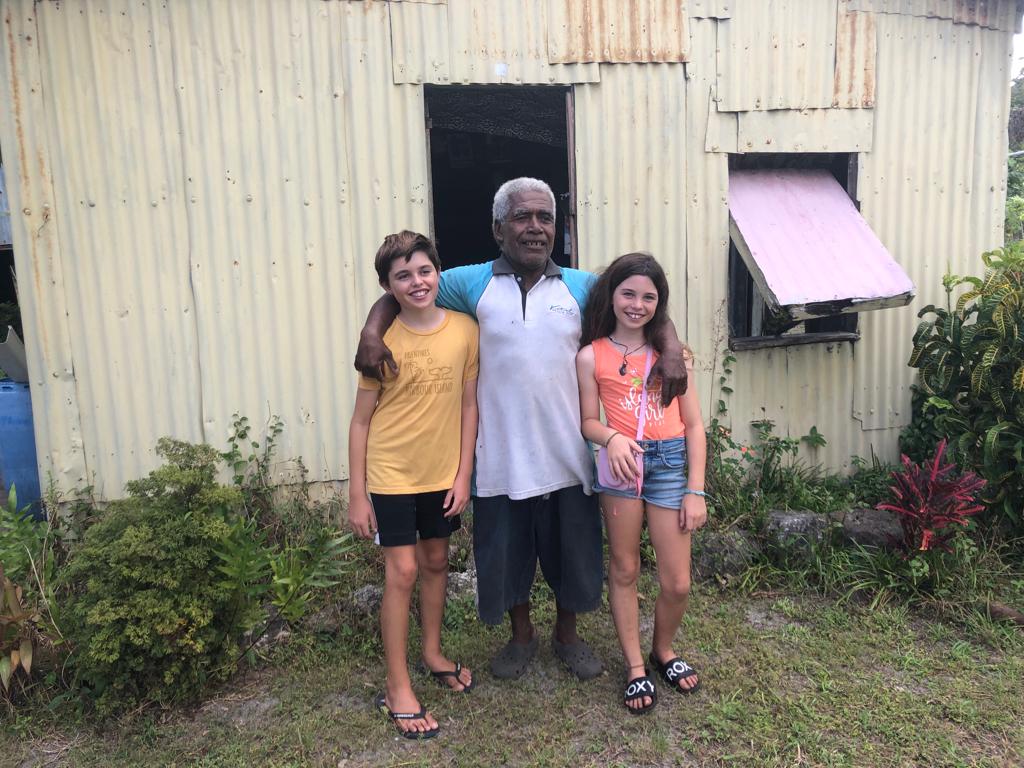
The next day we got our sulus back out and dinghied across the lagoon, back to mosquito alley (this time drenched in repellent) and back to the village which was now a hive of activity. Everyone was busy washing, weaving matts, gathering their gear to go fishing or tending their market gardens. We were taken to the chief and one of the most serious ceremonies we were to experience was conducted. We signed the guest book (after thumbing through it to see if we could find any yachts we recognised which included a you-tuber we were following before the trip) and paid the modest “conservation fee”, handed over our kava and then the chief informed us “as is our law, you are now granted free access to our village, our beaches and our lagoon. You may wonder wherever you like, catch fish and have bonfires on the beach. We just ask that you don’t do any sports (foil boarding was specifically mentioned!) on Sundays and you clean up after yourselves.” No problem! We were then taken to our “family” who in our case was a little old man called Tai. It wasn’t clear what had happened to Tai’s wife but he did tell us his kids were on the mainland working. There was no chance of Tai being lonely, however, as a series of little kids, all some sort of relation, came to see him throughout the morning and there was never any shortage of cuddles for each one. Again, it was impossible not to make comparisons with Western culture where crippling loneliness amongst some of our elderly is a huge problem. There was no chance of that here. Tai invited us into his home, a one room shack with a bed in one corner, a dilapidated tallboy in another, a few pairs of pants and shirts hanging from the roof and a matt on the floor which acted as the living and dining area. He collected water off the roof which he stored in a tank alongside the shack and I noticed he had no solar panel and therefore was without electricity. A toilet hut was outside.
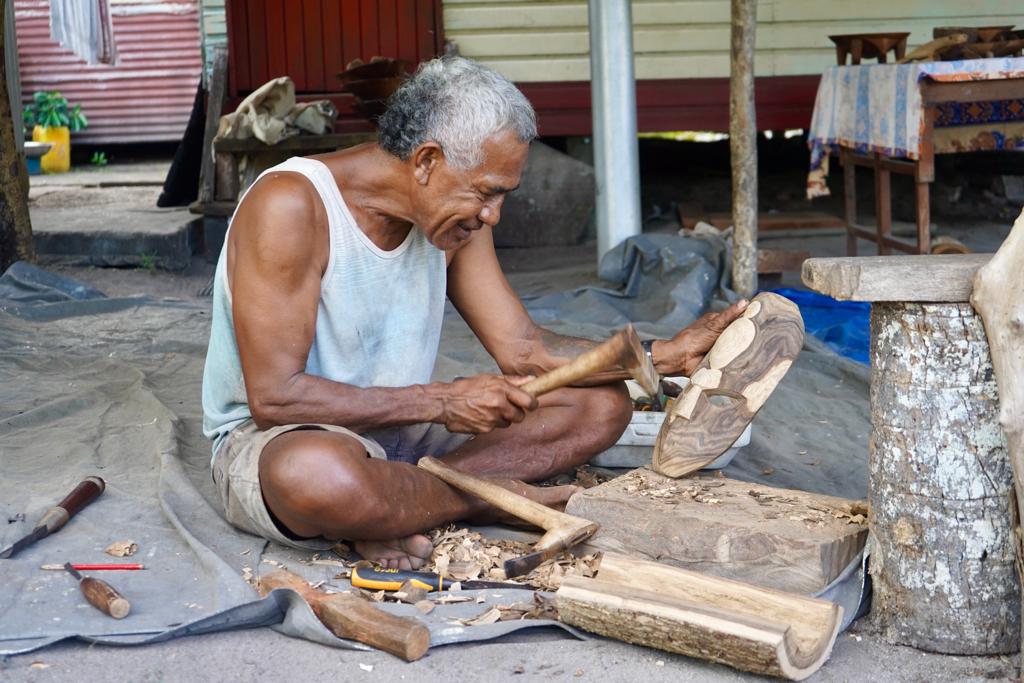
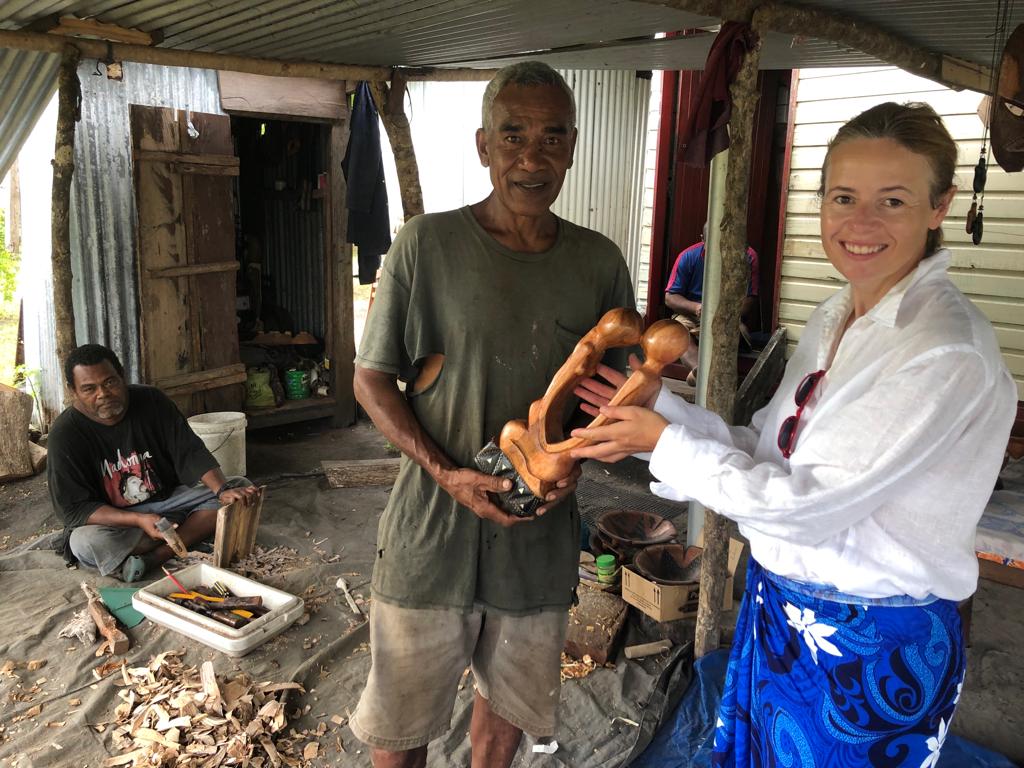
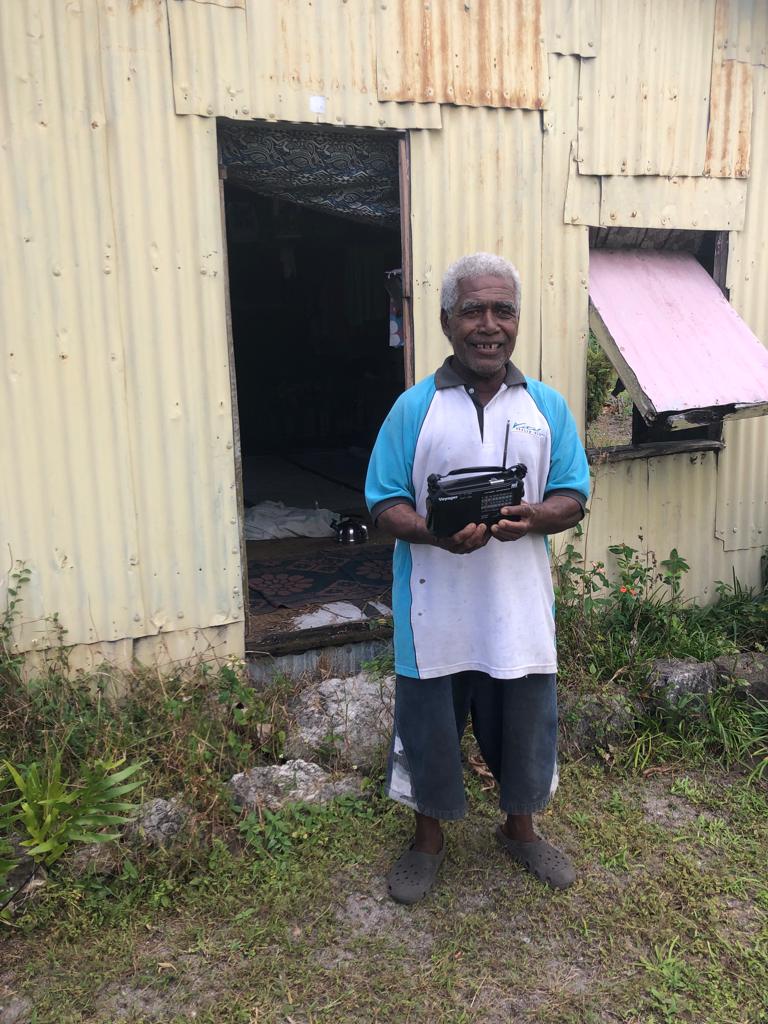
Tai had prepared some lemongrass tea which he ladled spoonfulls of sugar into and had his neighbour bake some coconut bread which he served with jam, clearly a gift from a previous visiting yachtie. We sat cross legged on the floor eating and drinking and getting to know each other and it felt like a real sharing of cultures. We asked Tai what he needed and it was extremely hard to get anything out of him at first. Eventually he admitted that his sandals were almost completely worn through. He also asked if we knew any other boats which were coming that could bring a radio to replace his old one that had recently broken. He found out that it was Jasmine’s birthday the next day and begged us to return for a birthday morning tea and a tour of the primary school. He also introduced us to the local carver and we brought a few items crossing our fingers that the wood wasn’t riddled with woodworm that would then infest the boat!
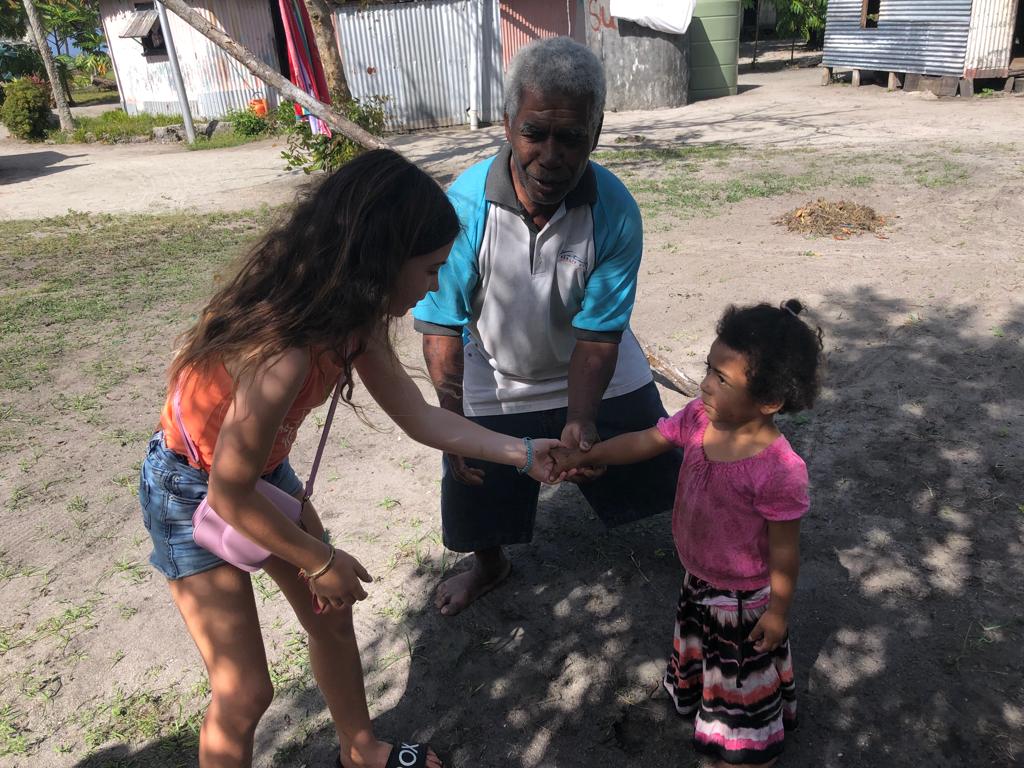
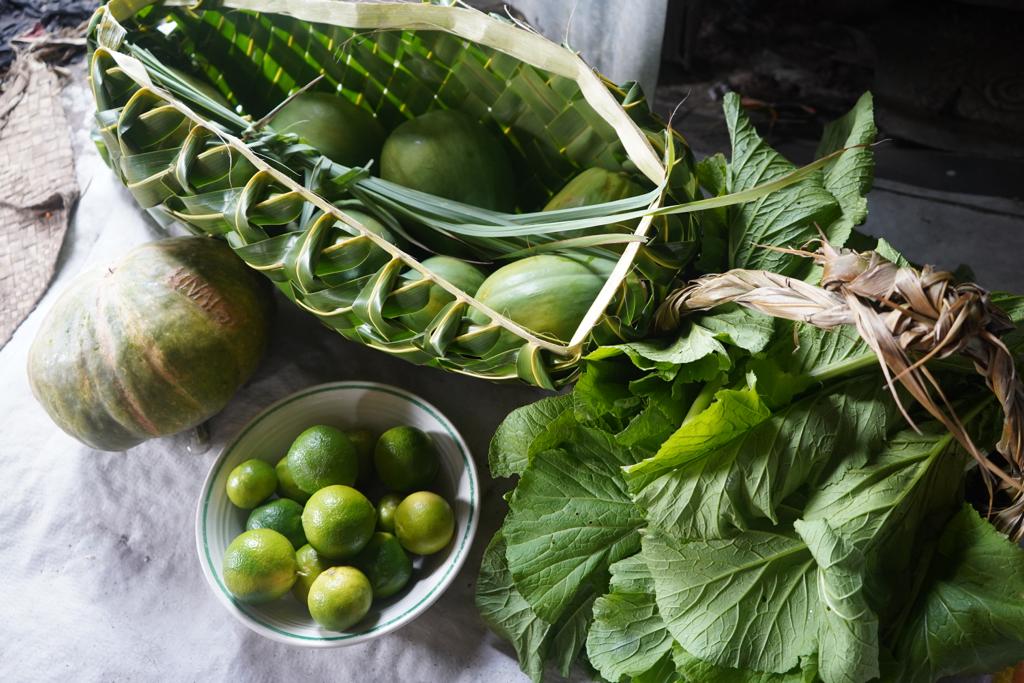
The next day was Jasmine’s tenth birthday and so the morning was a flurry of present opening and pancake eating. As was becoming our daily tradition we hot footed it back to the village where Tai welcomed us with open arms and a spread of food. He had asked one of his adoring female neighbours to bake a birthday cake and also had cut up a big plate of papaya plus a teapot full of his delicious sweet lemongrass tea. We had a wind up / solar / battery radio which we didn’t really use and so presented this to Tai along with other gifts including some flip flops that I had never worn. His eyes welled up with tears of gratitude and he grasped each of hands with both of his and murmured “I love you from the bottom of my heart”. Nothing was ever said with such genuineness and it brought tears to our eyes as well. I showed him how to operate it and when the Fijian language radio station started coming out of the speakers Tai’s whole face lit up with a wide grin. He explained that there was little to do once the sun went down since his radio had broken and he would now be able to listen to music and learn what was happening on the mainland. Such a small thing, such a big impact on a life.

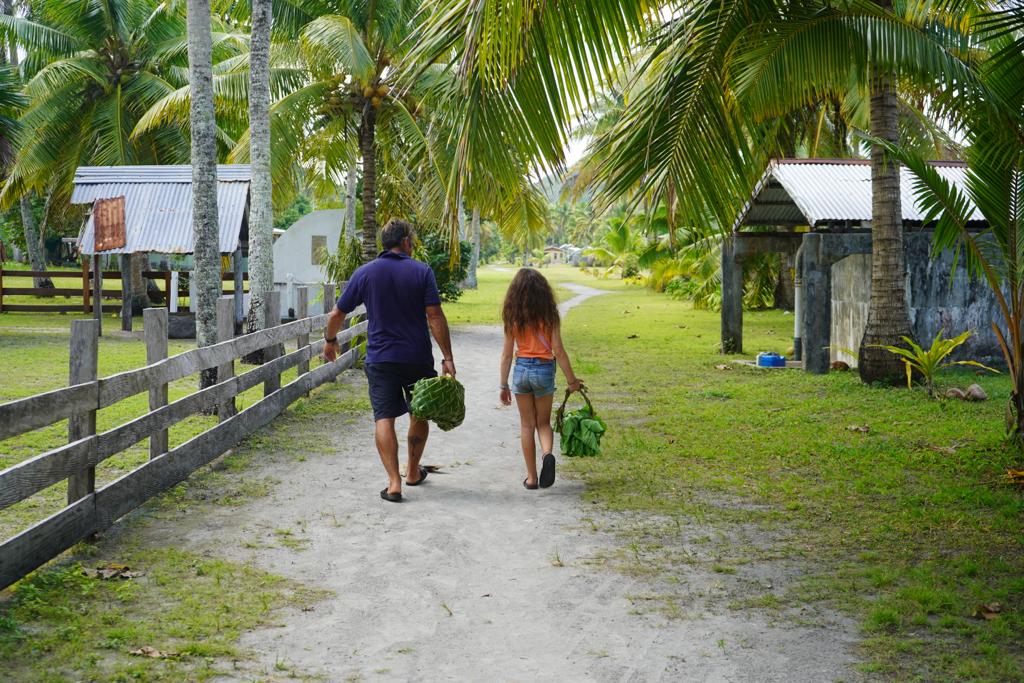




Tai took us for a tour of the school which seemed to be incredibly well run and then a climb to the highest point on the island. Along the way there was a cave just above head height and he grabbed Jasmine lifted her up and said “look in there, what do you see?”. Jasmine creamed out “there’s skeletons in there!” Laughing at this obvious joke we all peered in as well and sure enough, the small cave was full of skulls and very human like bones of various descriptions. Tai, giggling now, climbed into the cave, beckoned me in, and threw me a skull to hold. This wasn’t a joke, I was now actually sitting amongst the remains of many humans with a chuckling local who then started juggling three skulls to impress me. Er, respect for the dead? No such thing here. Tai wasn’t sure who the bones belonged to. “They are either villagers who my ancestors placed here or maybe our enemies who we killed.” “.. and ate?” Just a big grin in return which we took to mean “probably”.


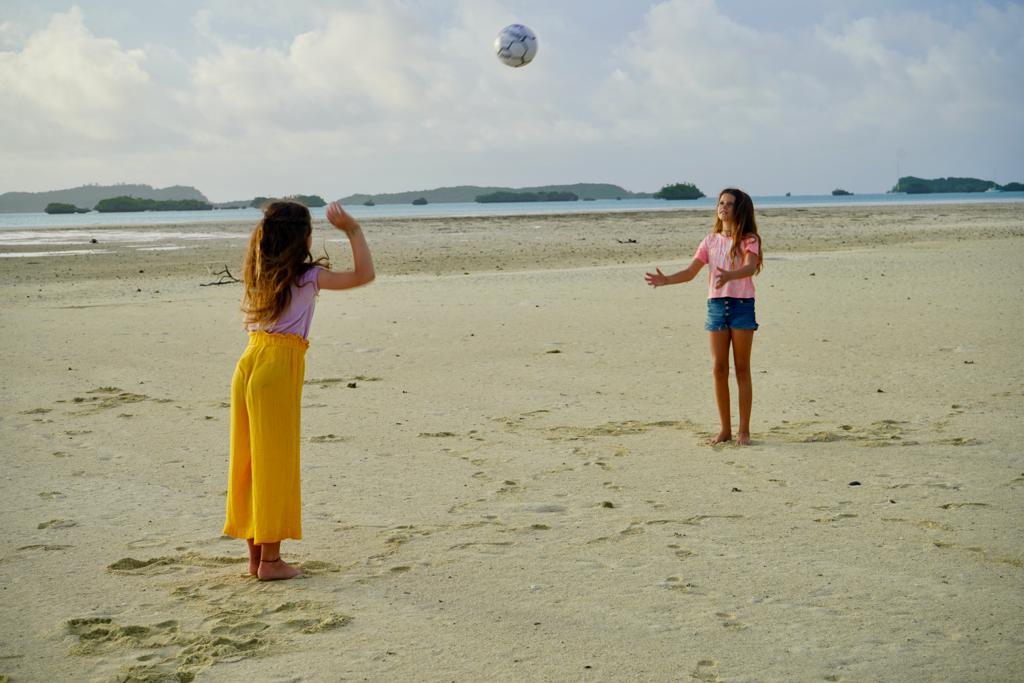
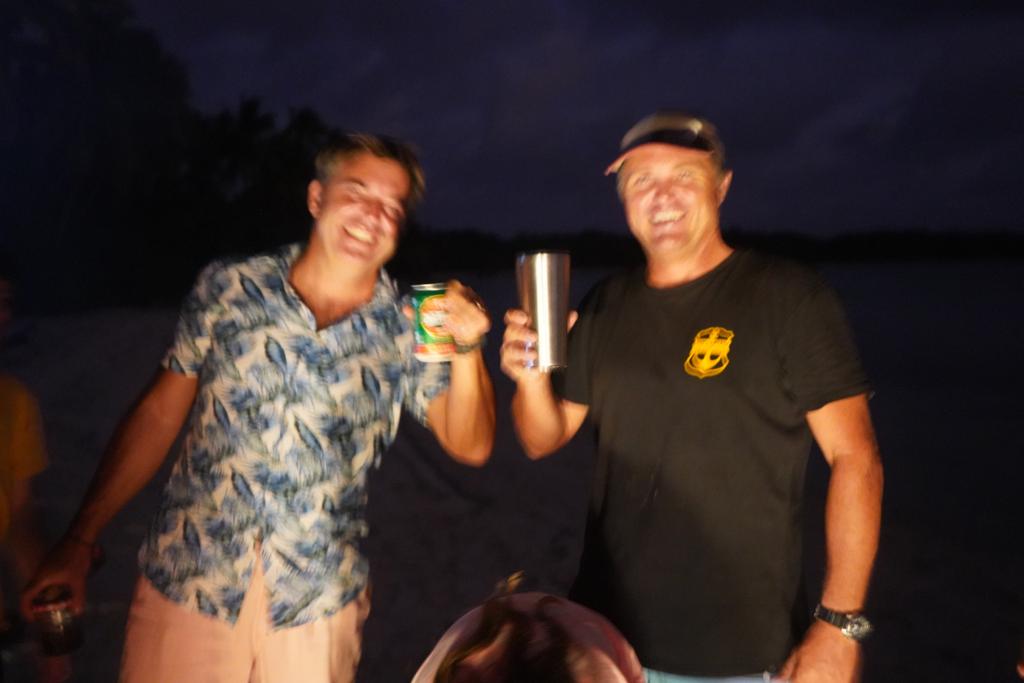
That night we gathered ashore with the crew of Far Out for a birthday bonfire for Jasmine. The kids flew kites and had cartwheel competitions while the grownups cooked mahi mahi on the fire to be served with quinoa salad. Then out came the marshmallows and bottles of rum for the kids and parents respectively and we partied until cruisers midnight (about 9:30) before zig zagging our way back to our two boats.



I dedicated the next morning to learning how to gybe the wing foil. There was an old guy from a kiwi boat who seemed to find it childsplay and so I asked him for some tips. How many times have you tried it? About 20? OK, so it took me 300 tries, keep at it! I found out later this guy was the ex 470 world champion and current Kiwi Olympic sailing team head coach so there was no shame in being much worse than him despite his age. By lunchtime after making some progress with my gybing we were packing the boat up, saying our goodbyes to Far Out and motoring out of the pass for our 2 day sail to Port Denerau on the Western side of Fiji. We had a crew member to drop off and a sister with family to pick up!
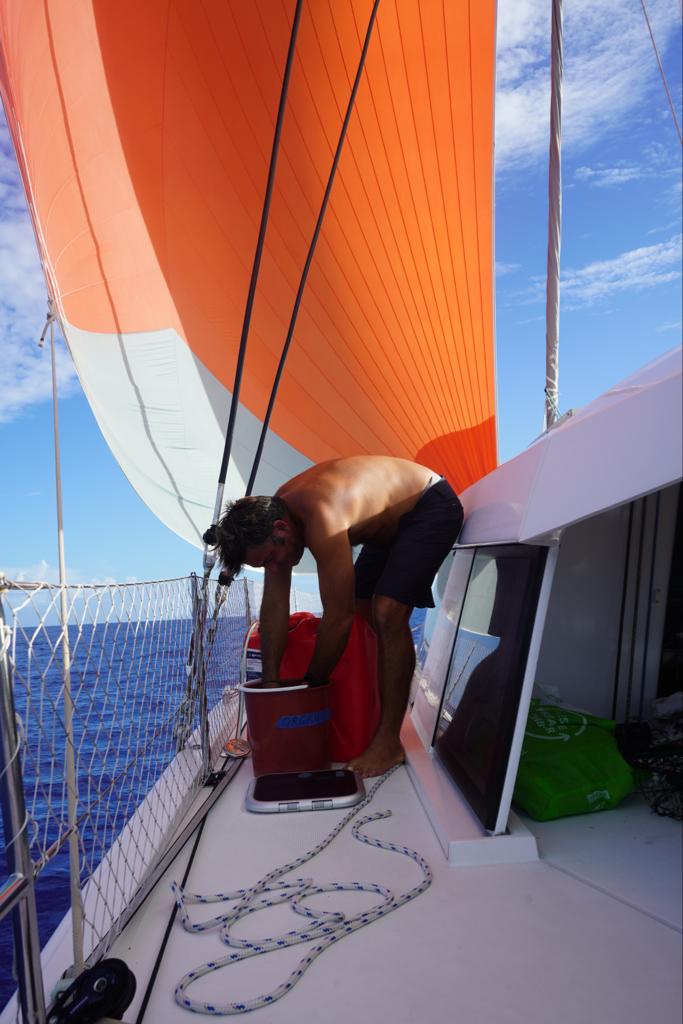
 Sailing Kilauea
I am loving your updates. What a trip.
Giam
LikeLike
Thanks Giam, we’ll be in Sydney Harbour this weekend if you want to come down and see the good ship!
LikeLike
lovely update once again, Fiji for me. Have sea levels risen or no comment from the locals?
LikeLike
Sea levels didn’t seem to be an issue from the Fijians we spoke to. More the increase in number and ferocity of cyclones.
LikeLike