
What are these Tuamotus of which you speak?
Open up google earth and search for Tahiti. Then zoom out a bit and scroll up and slightly right. You’ll soon come across what looks like a string of turquoise stepping stones stretching out in an arc diagonally up from right to left. What you have found is the atolls of the Tuamotus archipelago. There are roughly 80 atolls in total, 50 of them are inhabited (very sparsely) and 30 of them have breaks in the reef or passes suitable for a yacht to use. Most of these have the same basic elements, a ring of coral reef dotted with small islands (motus) and one or more passes that let water (and yachts like us) in and out. Once inside you are protected by the ocean by the fringing reef and the anchoring options are almost limitless The main attractions for sailors are diving or snorkelling the passes that are often rich with marine life, visiting the tiny villages or sailing across the lagoon and anchoring off any one of hundreds of uninhabited picture perfect motus to get a bit of paradise all to yourself.
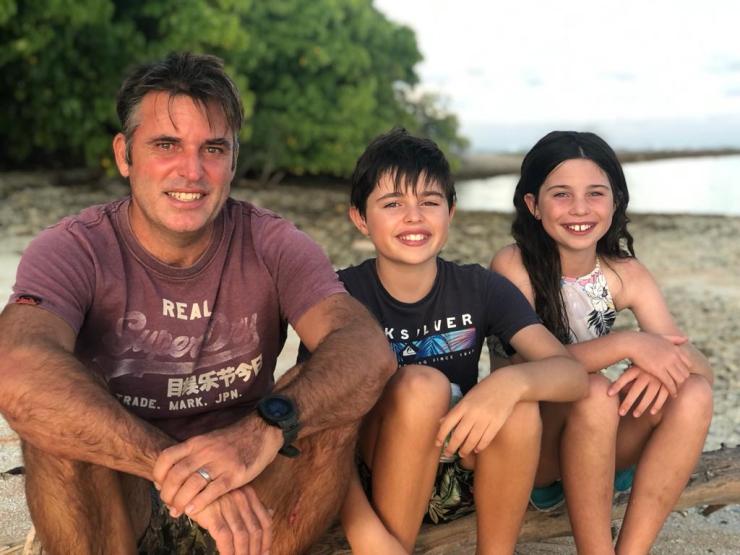
When planning our visit the main challenge was working out which ones to visit in the 4 weeks we had. As these islands are so remote, we wanted to cruise these atolls in company with other boats to provide that safety net if something went wrong but also because its a lot of fun as well. We would not be disappointed. We ended up sharing most anchorages with some of the following boats, all of them with children ranging from 6 years old to 20 (I know, I’m stretching the definition of children). The boats were:
Kilauea – Australia – 2 kids
Waterhorse – New Zealand – 3 kids
Far Out – US / New Zealand – 2 kids
Aquafox – USA – 4 kids
Lolalita – USA – 5 kids
Tusitala – USA – 5 kids
Kalohe – USA – 2 kids
Living Daylights – Italy / Peru – 3 kids
Bella Donna – UK – 2 kids
Singuarlar – UK – 2 kids
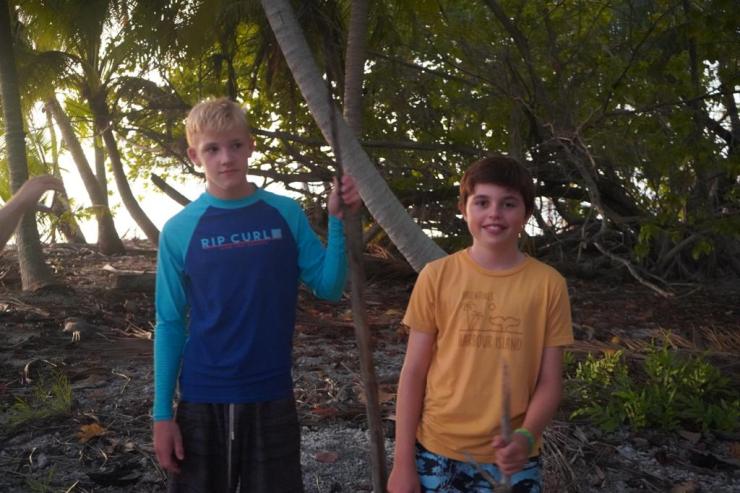
And we thought we were trail blazers! Each and every one of these families had a really interesting story and whilst from hugely varying backgrounds, we were all united in our desire to step out of the rat race of life and give ourselves and our children a very different experience to the norm. Our fond memories of the Tuamotus are as much about the superb people with which we shared our visit as they are about the incredible experiences we had.
Getting there
We left Ua Poa at midnight, hoisted the sails, turned off the engine and wouldn’t use it again until we motored into the pass at Raroia, the first Tuamoto we would visit, 3 days sail away. I took the first watch and was rewarded with an incredibly beautiful experience I will never forget. Imagine a dolphin drawn using sparklers. Then multiply by 5 and send these images shooting through the water at and around the boat leaving sparkling shafts of light behind them like glitter torpedoes. This is my clumsy way to describe what it is like to have dolphins playing around the boat at night when sailing through plankton rich water. The plankton sparkles when disturbed (phosphorescence) and there was so much of it you could make out the body shape and fins of each dolphin by the disturbed plankton around its edges. I felt like I held my breath throughout the whole experience which lasted only about 5 minutes.
Despite being the longest distance we had sailed without extra crew, the three day passage was uneventful. Our friends on Waterhorse left at the same time from another island and we converged on Raroia at dawn. The passes into these atolls are notorious for having very strong currents, whirlpools and breaking waves under certain conditions and can often be impassable. As it was we timed our entry into the lagoon well and had no problem negotiating the pass and anchoring off the village.
Raroia
We had a quick look around the village. 90% of the village was a runway for the airport and the rest housed the 80 odd people that call Raroia their home. Everyone seemed very happy cycling around on electric bikes and hanging out by the one shop. We couldn’t figure out the need for the runway though. It looked brand spanking new complete with car park for 20 vehicles. The problem was there were no passengers, or err planes. We asked a local and he proudly told us that they get a flight every week! Imagine missing your flight.
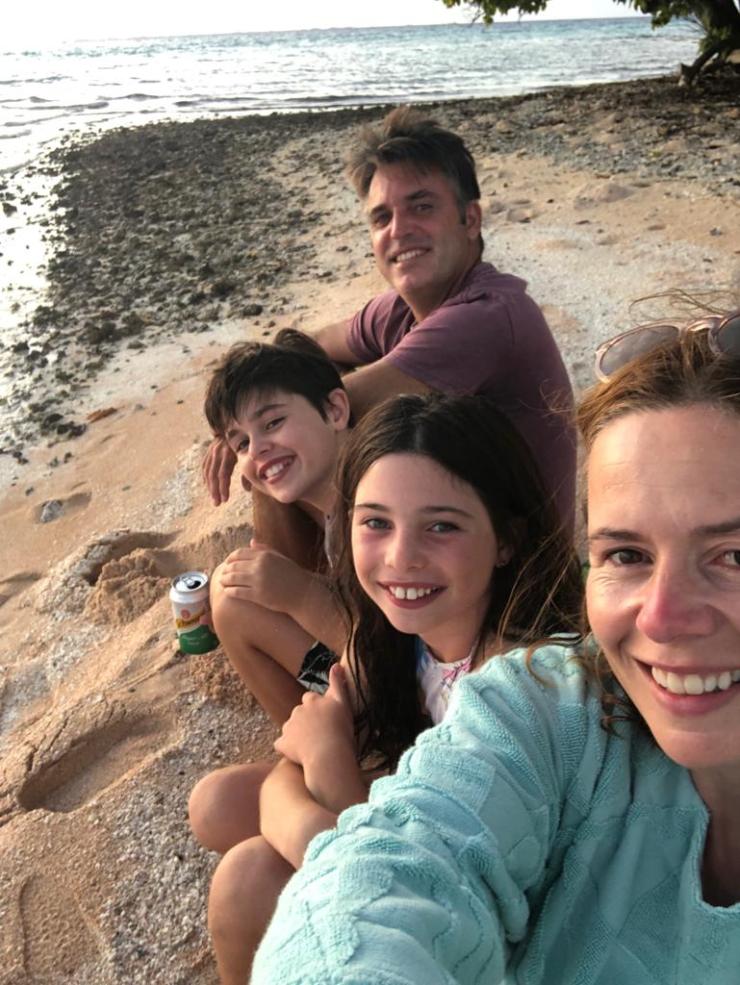
Annelise, by now a 4 year veteran of ocean cruising and diving and a spearfishing goddess, befriended a local fisherman and asked whether there was ciguatera present on the island. This is build up of a certain toxin found in carnivorous reef fish in some areas and it can be very harmful to humans if a toxic fish is eaten. We were told that fish in the pass were out of bounds but those in the lagoon were fair game. “Is it good to snorkel and dive the pass?” “yes, its great, lots of black tip and white tip sharks there!”. “Er OK, is it safe?”. “Of course, no problem, they won’t bother you, they’re all scared of the tiger shark anyway”. “Err, tiger shark?” “yeah, he’s about 4m long and lives in the pass, he’ll probably check you out if you swim there” colour draining from face “err, 4m?” “ha ha ha, don’t worry! The tiger shark won’t eat you! He’s got plenty of black tip sharks to eat!”
Well that’s fine then. He was probably pulling our leg anyway, they’ll be having a right laugh about our reaction to their made up tiger shark story. Thus suitably mollified, we donned our snorkel gear and joined by the crew of Far Out we took 5 adults and 7 children into the pass. The plan was to motor the dinghies out into the ocean, jump in with our snorkel gear and then let the incoming tide drift us and our dinghies back through the pass into the lagoon.
Jumping in I was instantly aware that below me was the healthiest fields of coral I had ever seen. We had become used to seeing more than 50% of corals bleached or dead and this was the first time I had seen everything 100% alive in all its technicolour glory. There were lots of fish too of all shapes, colours and sizes with big grouper skulking along the seabed ready to pounce on any poor fish that came their way. It was only a miunte or two before we saw our first sharks and from then on they became a constant on almost all our dives and snorkels in the Tuamotus.
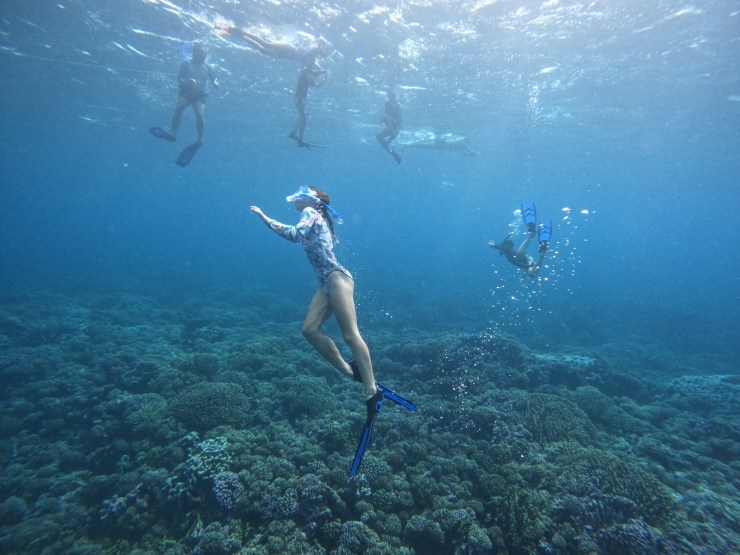
And then it happened. Annelise and I missed the whole thing as we were slightly separated from the group as we were holding on to our respective dinghy lines. Hugo described it to me afterwards. With the kids on the surface, Chae free dived down and held on to a piece of rock to watch a small group of fish. Unbeknown to him but in full view of the others, the not-so-mythical-now 4m long tiger shark swam up directly behind him and hovered there. All the kids were screaming into their snorkels like a pantomime horror “turn round! Look behind you!” but of course sound doesn’t travel so well underwater. Eventually Chae did turn round coming face to face with the massive killer rather like that scene out of Finding Nemo. “I have to admit, at that point a little bit of wee came out” admitted Chae afterwards. They just froze like that for several seconds before Chae darted back to the surface. The shark then swam a slow lazy ring around the swimmers who were trying their hardest not to do impressions of panicked fish, and them swam gently back off into the blue.
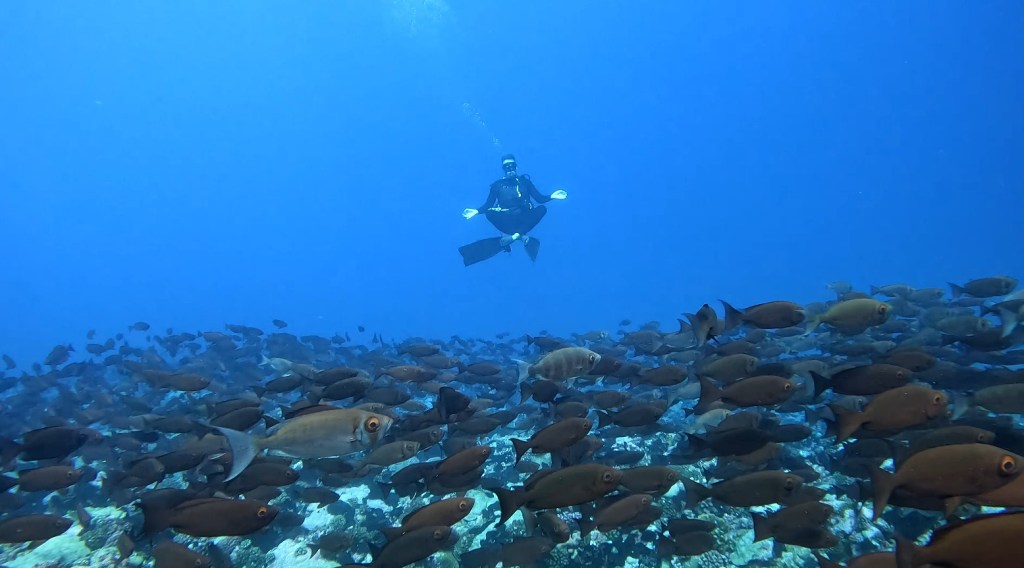
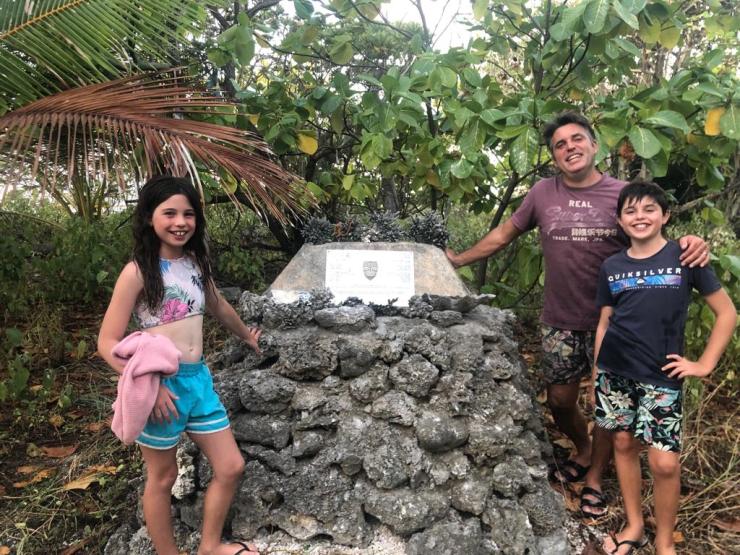
Waterhorse carry their own dive gear and compressor and very kindly offered to take me diving along the drop off outside the pass. The freedom of being able to sail whether you like, strap on some tanks and dive on locations very few people ever get the chance to see is partly what has kept them sailing so long and I can’t blame them. After that it was an hour’s motor across the lagoon where we anchored just off Kon Tiki island. I had read Kon Tiki as a kid and was enraptured by the tale of this half crazy Norwegian who was willing to put his life on the line to prove that Polynesia could have been populated by voyagers from South America who could have made the 3,000 mile journey across the Pacific on a balsa raft with a basic square sail. His crazy adventure is one of the all time classics and he proved his point when he finally came crashing into a reef in a remote atoll in a remote archipelago. Well, you guessed it, we were anchored right at the spot he and his crazy mates came ashore all those years ago. It felt surreal to be there and to imagine what it must have been like for him completing his journey alive but being marooned in such a remote location. As it was, genetic sequencing has proven that Polynesia was populated by those coming from the West, not East, but it doesn’t detract from what is a great story.
It was also at Raroia that I was taken on my first spearfishing trip. Chae took myself and Andrew from Far Out for an expedition in his dinghy to one of the numerous bomies or coral reef islands in the lagoon. Andrew and I were sporting new spearguns but had never used them before whereas Chae was an old hand. We set out weapons in hand looking for a suitable grouper. Within minutes Andrew had spotted one and like a seasoned pro nailed his first shot right into a nice sized grouper. Chae then bagged one before the sharks started to get particularly agitated so we decided to up anchor and move to the next spot. Here, I managed to get my first one, also on my first shot. I used to be a “I like to observe these beautiful creatures not kill them” kind of guy but I have to say that all changed the instant that spear passed through my first fish. That process of spotting my prey, stalking it for a while, swimming down, tracking it through the water aiming, firing and scoring that hit nourished some kind of basic need to hunt that I didn’t even know I had. Returning to the boat afterwards to show my two catches to my wife and children I felt like a great hunter from prehistoric times returning to the village to be revered by one and all. “What did you kill those for, the freezer’s full of tuna!” was the actual response I got for my heroic efforts.

After each kill the shark numbers increased. At one point, Andrew and I were in the dinghy comparing kills when we heard a “bring the bloody dinghy here now!” shouted or rather screeched from a lonely figure standing on top of the coral waving his spear gun. We motored over to find Chae swinging his spear gun like a club as shark after shark swooped into the foot deep water to try to take his catch. Once we got Chae and his catch into the dinghy unscathed we all decided we had definitely satisfied our hunter instinct enough for one day.
Makemo
At each atoll we would generally anchor near the pass or passes and snorkel, dive and spearfish the general area. Then we would cross the lagoon and find a remote spot to anchor to have beach time and play watersports. I’ll just cover the highlights from each atoll here.
Makemo will be the spot where I finally learnt to wing foil. We sailed there overnight with Far Out and Waterhorse and dropped the hook next to a few other yachts off the main village near the pass. The pass was epic for snorkelling and diving which we did the first day and then the breeze picked up so I unleashed the wing foil kit last used in earnest in the Bahamas where I crashed and severely bruised my ribs. With a new impact vest on and the manta tattoo giving me courage I attempted it again. Its a little like a windsurfer at first. You hold the wing and as the wind increases you go faster and faster. Then, as you reach a critical speed and through the magic of physics, the hydrofoil underwater starts creating more lift than your weight and you start rising as if by magic out of the water. You then vary your weight back and forth to keep the board flying at the correct level all the time trimming the wing to get the right amount of power. Too much weight on the front foot or too little power and you nose dive into the sea and somersault over the front. Too much weight on the back foot or too much power and the hydrofoil flies right out of the water instantly loses all its lift and the result is the same. Somehow I managed to get it all working in the right way and flew backwards and forwards amongst the yachts with their crew whooping and cheering each time I rocketed past. The feeling of flying was completely unlike anything I have felt before and from that first controlled flight I was hooked for life.
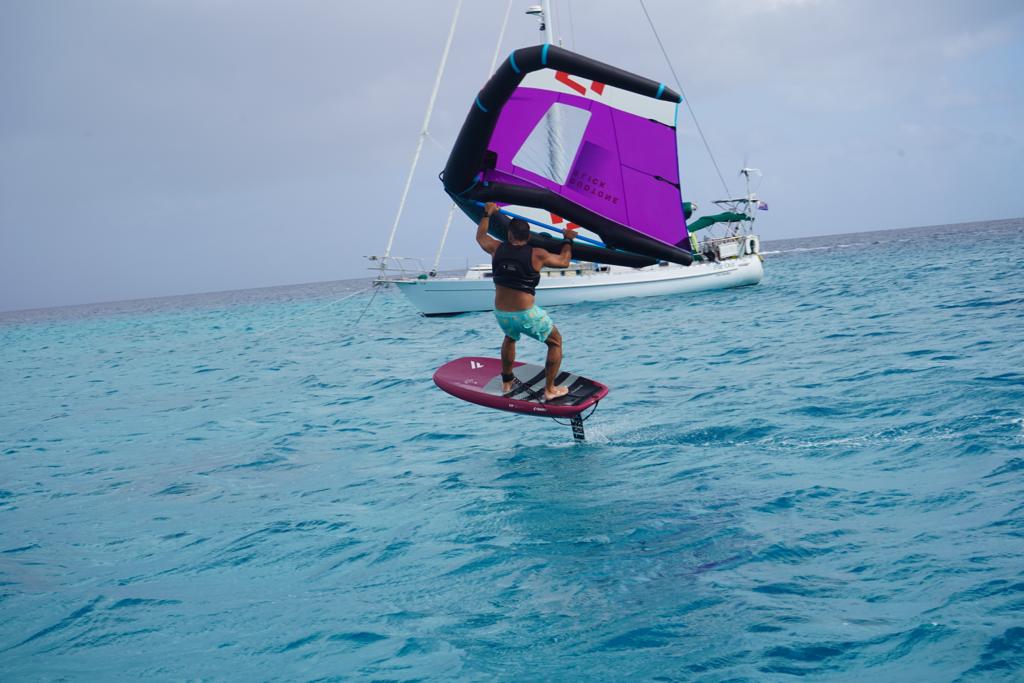
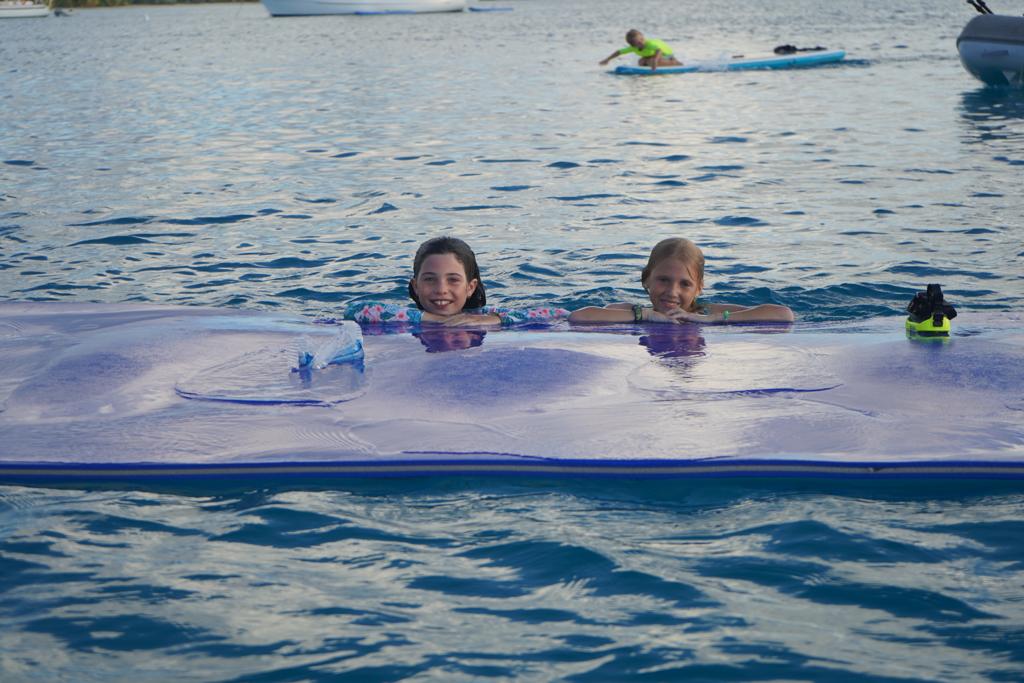
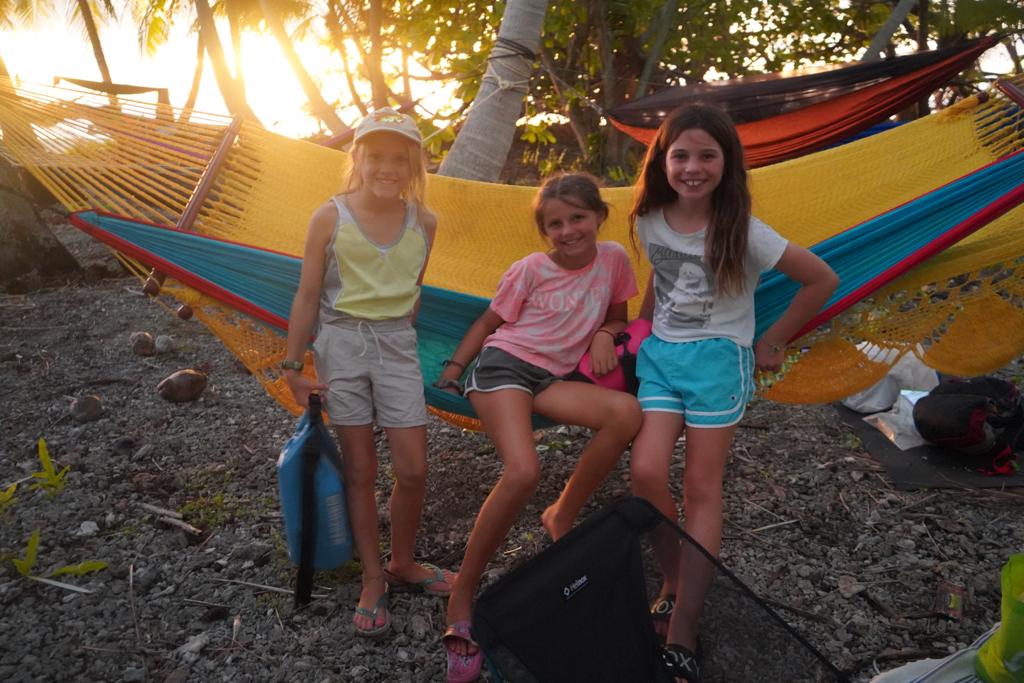
We spent a few nights anchored off a motu at the northern end of the atoll with many of the kid boats mentioned above. The kids would all do boatschool in the morning then jump on the radio and ask each other whether they were finished and allowed out to play. Then, one by one they would jump onto paddle boards which they used like I used to use my bike and paddle round to their mate’s boat to swim, fish, play watersports, explore the beach or just hang out and play games. As there were so many kids of varying ages, they each found a small posse to play with. Jasmine’s group even had a name, the Coconut Claws.
Each of the boats had various water toys to play with. We contributed the foil board, two of the boats had dive tanks and compressors, one had a subwing which is like a reverse hydrofoil that you tow behind a dinghy and hold on to. You can then use it to dive down and do barrel rolls. Several boats had kite boards which could also double as wakeboards. The only limit to the fun was how much time and fuel for the dinghies we had! Evenings were spent building bonfires on the beach and cooking and eating the fish we had caught. You could see why some people spend an entire season in these islands.

Tahanea
Our next stop was the uninhabited nature reserve atoll named Tahanea. We arrived first after an overnighter sailing in company with Far Out and were the first to drop anchor in a beautiful little bay in between two of the passes. Over the next few days we were to be joined by around 10 other boats and this ended up being my favourite atoll of the lot.
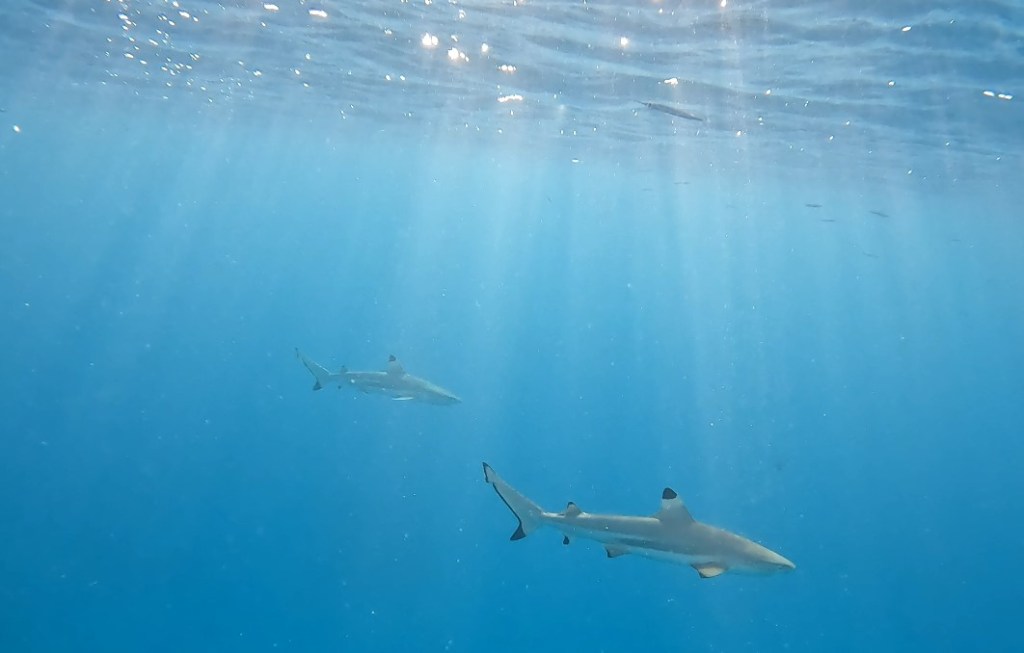
There were three passes, all of them with epic snorkelling with healthy coral and abundant fish and more sharks than we had seen to date. At one point we had 14 sharks circling the boat while we were anchored. It’s funny how quickly you get used to them and Lottie and I would go for a morning snorkel each day being trailed by a few of them as if they were our pet dogs being taken for a walk. There were large numbers of grouper here as well. It seems that the more grouper there are, the more sharks there are too and spearing these fish without inciting a mass shark feeding frenzy was always going to be tricky.

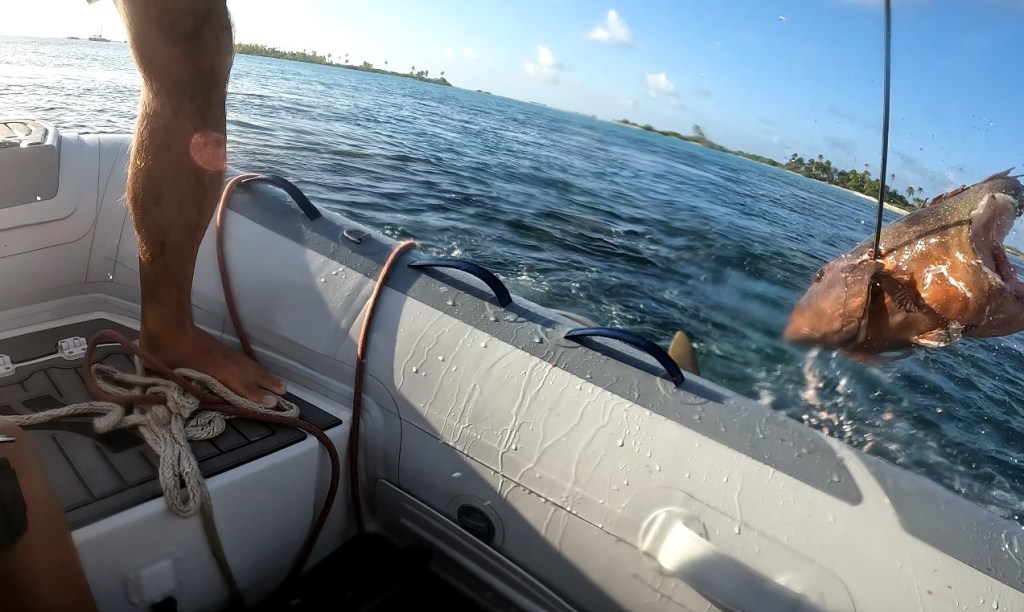
It started well enough with each of us spearing a decent fish and getting it into the dinghy quickly before the sharks could get too much of an idea as to what was happening. Then our fortunes took a bit of a turn for the worse. We found a little reef really close to the boats in shallow water only about 1m deep that was rich in grouper and so jumped in the water and started hunting. I saw a really large one and tracked it to its hiding place under a ledge at which point I was met with the huge grumpy face of the largest grouper I had ever seen which was already resting there. I could not miss, spearing it straight through its mouth but, unfortunately, not into the brain which meant it was able to swim down into a crack taking my spear with it. The mad thrashings of the fish attracted 5 sharks in an instant and we needed no other signal to all get out of the water. The sharks were going crazy ramming themselves at the crack the fish had disappeared into and twisting themselves round and round as if trying to screw themselves into the opening. Meanwhile we were in the dinghy holding on to the spear trying to drag the dying fish out of the hole. What happened next was caught on the gopro. With the sharks circling below we managed to manoeuvre the dinghy in such a way as to pull the fish out. Just as I was hauling it into the boat a shark jumped out, sunk its teeth in and dragged the fish back into the water. In an instant all 5 sharks were biting down on the fish with me madly trying to pull the thing into the dinghy. A few seconds later I “won” the tug of war and hauled in what was left of my catch, the fishes head and about one quarter of its body. When we filleted what was left of the fish, it was still big enough to provide two meals, it would have been six if it had been whole.

By this point, three of the four boats had all succumbed to what was possibly a bug but most likely ciguatera poisoning. It manifested itself as extreme lethargy and bouts of strong muscle aches, particularly in the leg joints. These were so bad the kids would sometimes awake in tears. After a week of this we all vowed not to spear and eat any more fish in the Tuamotus and the symptoms went away.
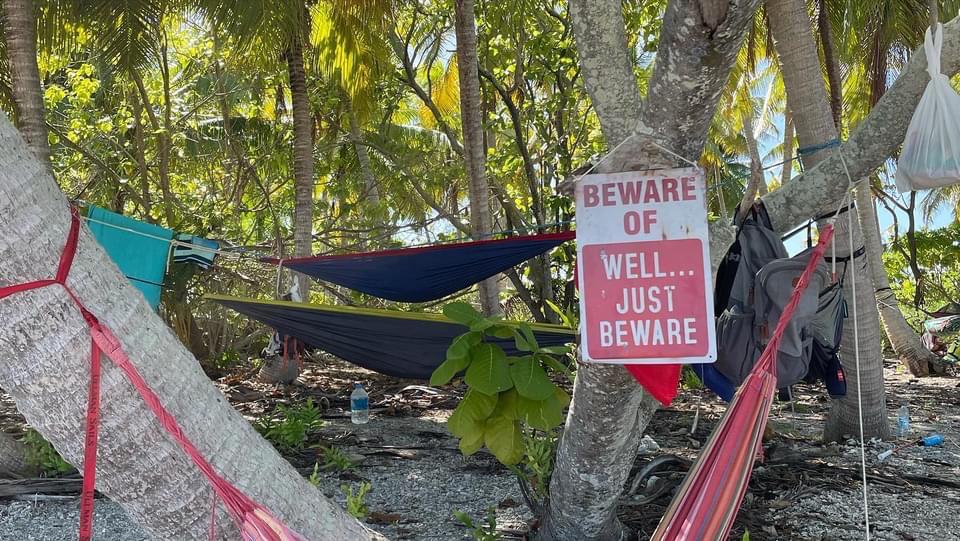
We took the kid boat armada up to a motu on the northern side of the atoll and it was here that the kids had their 24 hour sleep over challenge. The parents helped the kids set up their camp and a hammock village sprang up in the sleeping area with the various age groups all sleeping together. A cooking fire was established near the hammocks and a much larger bonfire set up well away on the coral beach. This was epic, a wooden tepee at least 2m high and the kids had dragged logs around the perimeter to be used as seats. Foil food parcels were delivered to be cooked on the fire, each kid was liberally smeared in insect repellent and vhf radios, jugs of water and torches were distributed. Then, the parents retired to their boats and left 21 kids to spend the night on their uninhabited islands. Of course we all had a kid free party on the biggest boat, a beautiful 63 foot catamaran called Lolalita and at around 8pm the kids got on the radio to inform us that they were lighting the bonfire. It went up like a huge flare and we could smell it all the way out in the anchorage. We were awoken early the following morning with a radio call from the shore crew “bring food now” was the clear message and bacon and egg butties were ferried ashore to be devoured by our hungry and slightly more feral looking kids. All in all, a memory that I am sure will last them a lifetime.



Fakarava
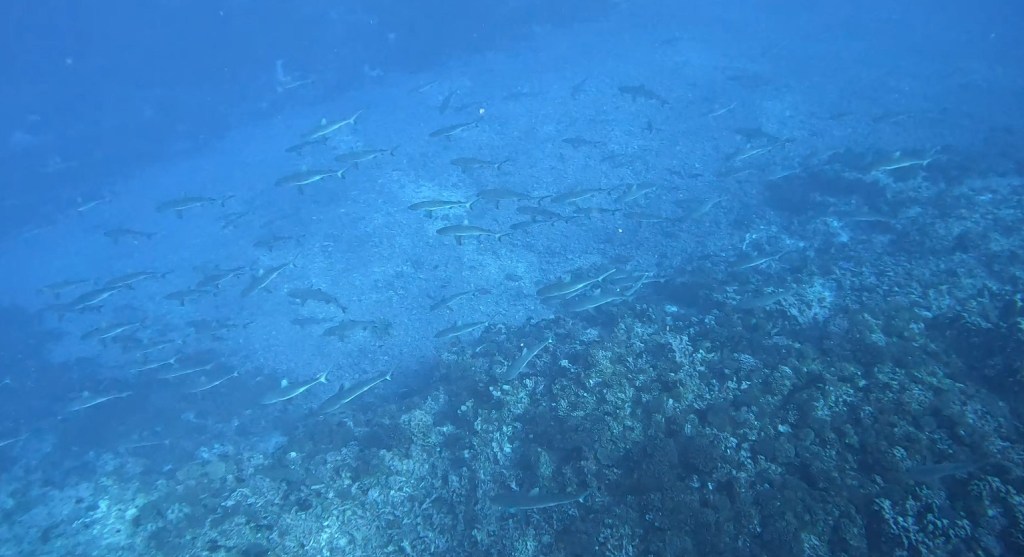
We had seen plenty of sharks up to this point. In fact, enough to last a lifetime but our next stop was world famous for the sheer numbers of the things. Divers come from all over the world to dive the famous South Pass of Fakarava or “wall of sharks” as it is known and it certainly lived up to its name. After day sailing over and spending the night at an anchorage just inside the south pass we declared school work to be suspended in favour of a real life nature excursion and donned our snorkelling gear, heading out to the pass with our friends from Kolohe, Aquafox and Lolalita. Experts at this now, we hopped into the water on the ocean side of the pass, I held on to the dinghy painter and we let the current pull us through. It wasn’t long before we saw our first shark, then another, then a group of five, then a dozen and then a mass of around fifty of them! At one point the seabed was swarming with sharks ranging from about 1m to 2m in length, all black tips and white tips either lazily swimming against the current or stationary on the seabed letting the water flow through their gills. Before long we waved the sharks goodbye and were swept into a shallow channel just deeper than standing depth. The current accelerated here and we rushed along arms outstretched like we were flying over the little communities of coral and fish. All in all, an unforgettable experience.

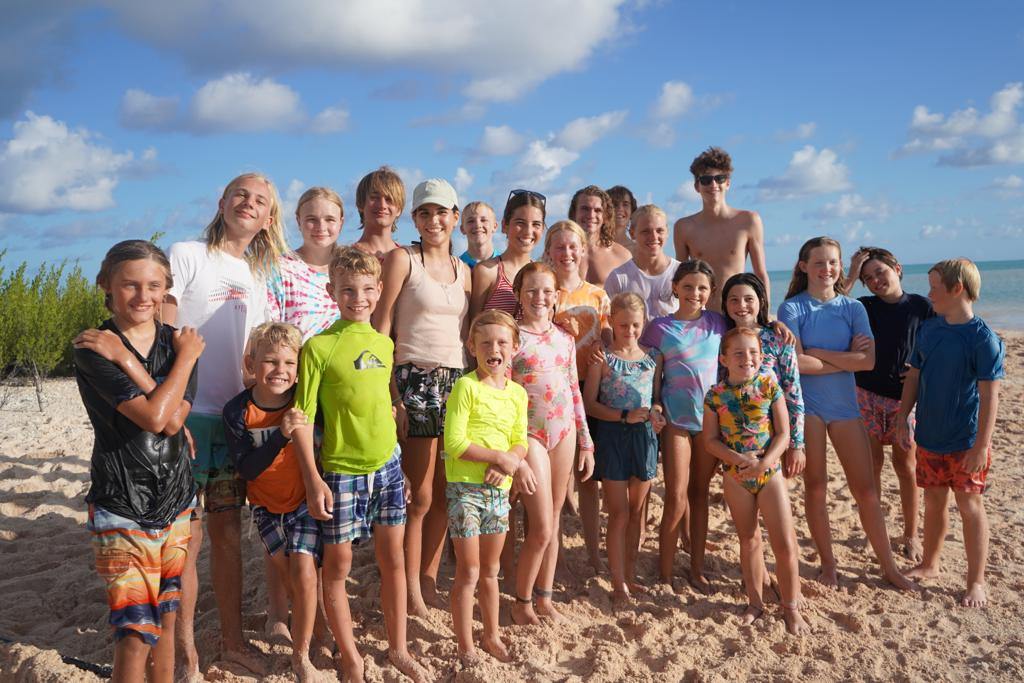
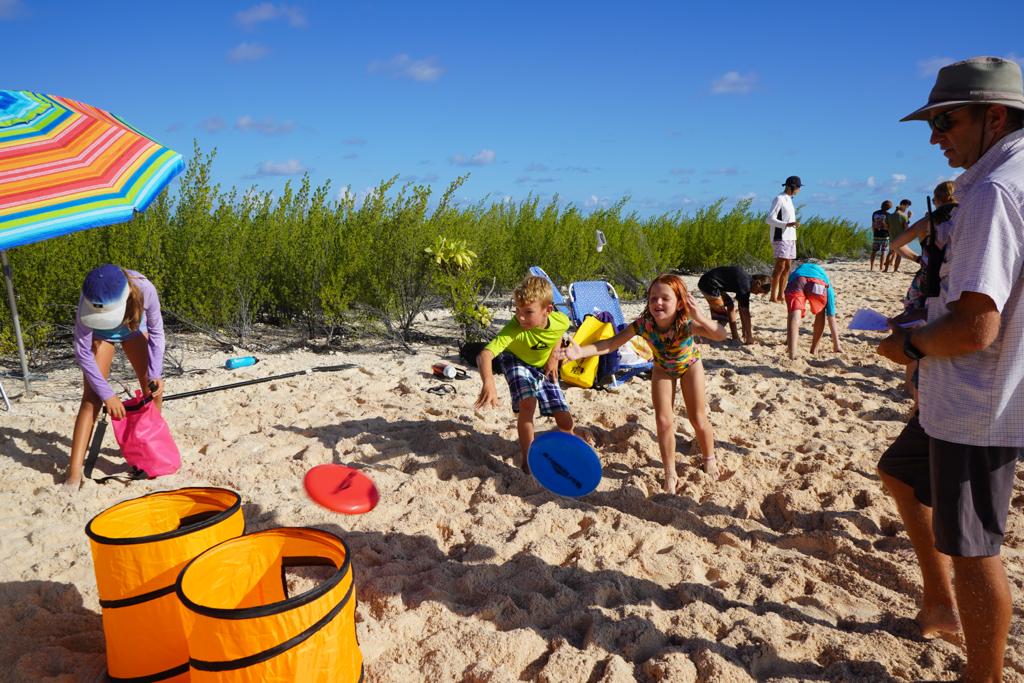
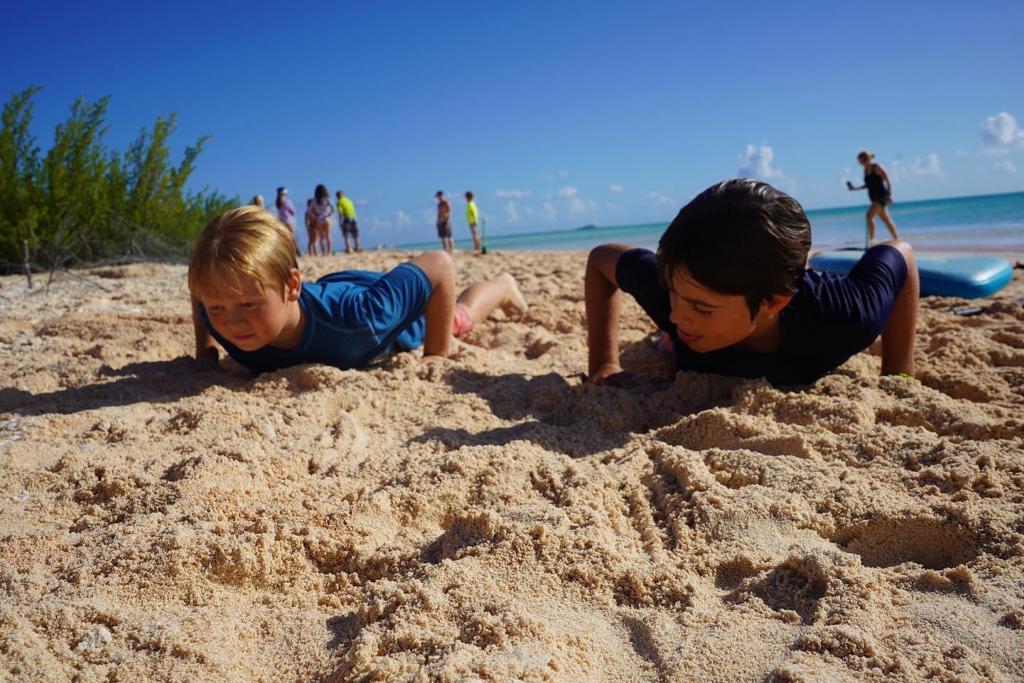
For our last anchorage, we motored inside the lagoon to Hirifa, a calm anchorage off yet another palm fringed beach. This is the spot we decided to have the biggest kid boat raft up ever. First we anchored as normal and then tied our fenders on either side of the boat. Next, Lolalita dropped their anchor alongside ours and reversed back tying along side us on our port side. Then Aquafox did the same on our starboard side. Next up, Kolohe tied up to Aquafox and then Living Daylights tied up to them. On the other side Tusitalla completed the group tying up alongside Lolalitta. All in all, 6 boats with 21 kids and countless paddleboards and other water toys were now all tied up alongside each other in a line. Hoards of children then travelled up and down the boats catching up with their friends, eating whatever food they could find and jumping in the water any time they felt like it. It was like the best holiday resort ever. One afternoon the dads went off to the beach and set up a beach Olympics competition. It took a bit of planning but we had 5 events for three age groups which included Australian style flag capture beach sprints, coconut throwing, paddle board racing, frisbee throwing and rope throwing. Suffice to say the competition was fierce and it ended with a massive tug of war with the two younger groups against the older one. When everyone fell in a heap exhausted at the end no one really cared who had won and but the huge smiles on the parents and kids alike told their own story. That evening, the kids ran amuck while the parents had a progressive dinner moving from boat to boat in a northerly direction having a meal at each. It having been 4 weeks since we had seen a decent shop, fish featured very heavily on most people’s menus.



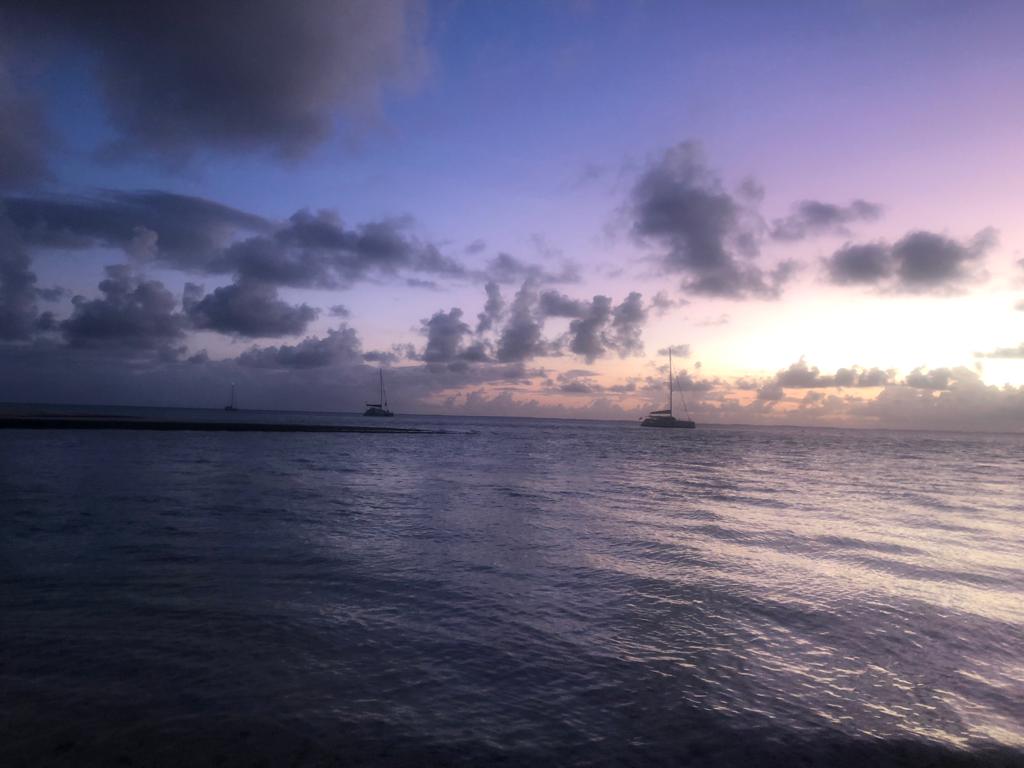
These golden times couldn’t last forever, unfortunately, and we had friends to meet in Tahiti before which we had plenty of work to do on the boat. Reluctantly then, we somehow backed our way out of the raft up, motored out of the pass and set sail for what was to be a two night passage to our next archipelago and the bright lights of Tahiti!
 Sailing Kilauea
What memories you have made!
You can feel the warmth of the sunshine being reflected in the friendships you have made.
The smiles and laughter (and scary moments) will live for a long time in your hearts.
Xxx
LikeLike
Wow! Brilliant post and story telling. Well done on the foil! So amazing!
LikeLike
Lord of the flies! What an amazing time for the kids to remember.
I am so jelly of the fact you are now winging. I am so desperate to catch up. Challenge accepted.
Amazing stories – keep them coming.
LikeLike