Sailing west into the Pacific from Central America is a little like jumping off a very high diving board. The currents and winds in the tropical Pacific Ocean all head from East to West like a continuous conveyor belt always travelling In the same direction. Yachts like ours love sailing across the wind and with the wind behind them but find it very difficult to sail against it. Therefore, as you set off from Panama and turn your bows towards the setting sun, there is a very strong feeling that there is no going back. Just like leaping off a diving board, once you step off you can’t decide its a little high after all and jump back on, the trip is very much one way! Add to this the fact that Panama City is the last proper city before New Zealand or Australia and there is a real sense that the Pacific side of Panama is a bit like a frontier town for yachts, a last chance to prepare and provision before heading off into the vastness of the Pacific.

Not surprisingly then, our few days in La Playita Marina, 10 minutes from downtown Panama City was a whirlwind of boat jobs and provisioning. My world seemed to be waking up in a cold sweat fretting about things like “have I got enough 1 inch hose?”. Charlotte’s was more like, “is 8kg of pasta enough for 6 people for 2 months and how much of each type shall I get?”.
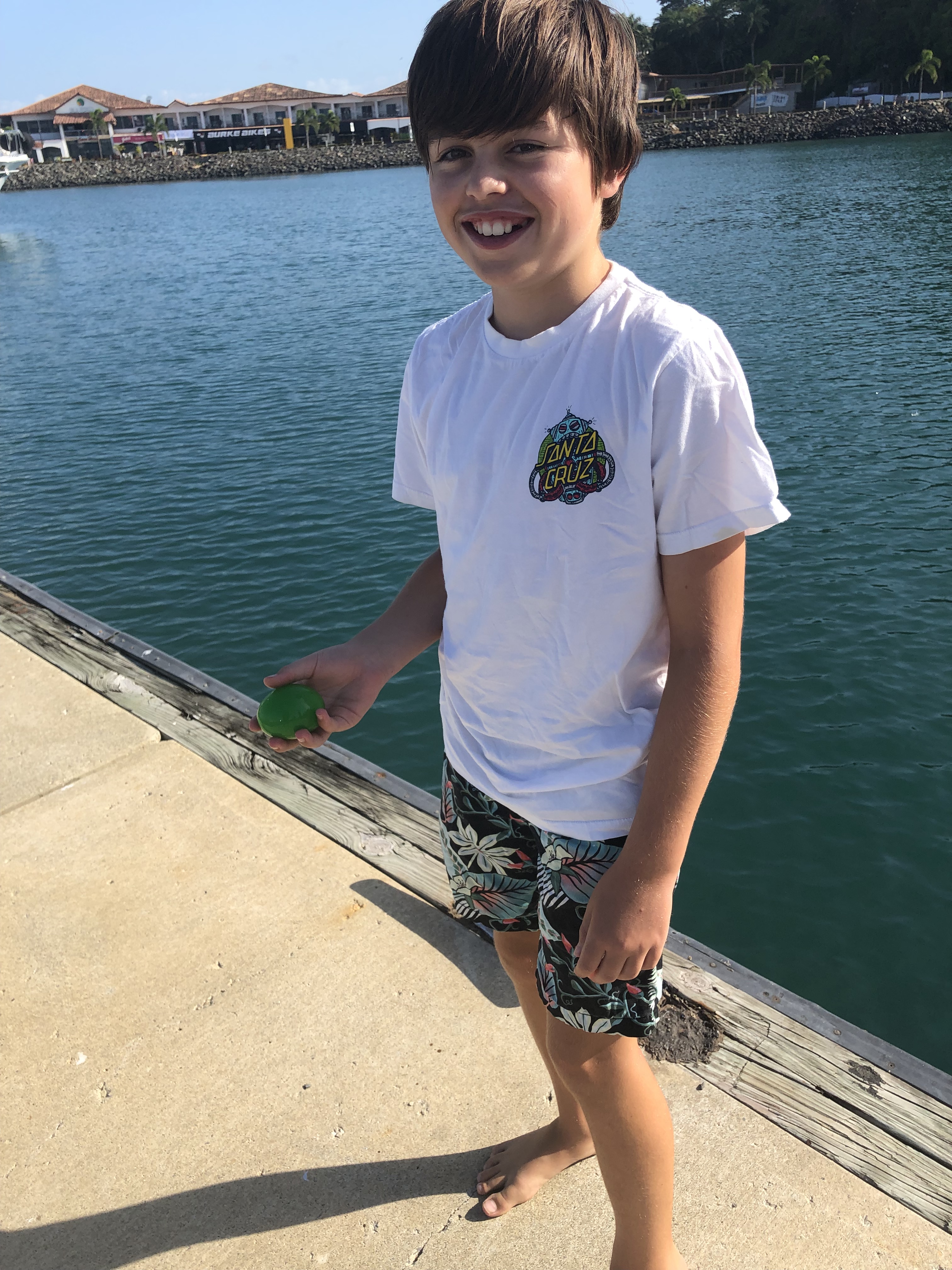
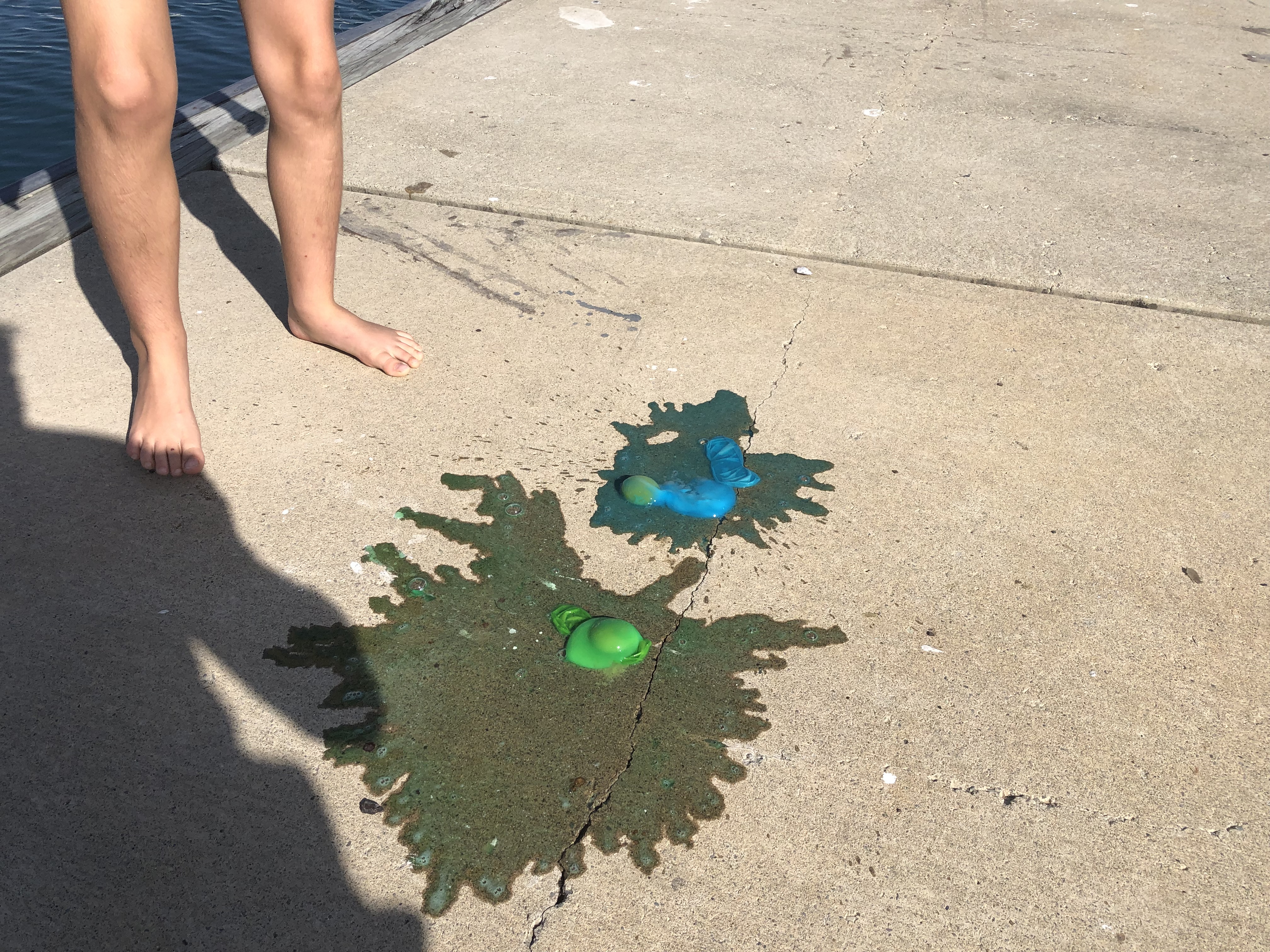
It may seem like splatting coloured eggs on the dock but its actually SCIENCE!
Provisioning a boat for extended periods in remote places is one of the hardest things about doing what we’re doing and the consequences of getting it wrong can bring wrath from the crew – “what, only one jar of marmalade!” (me), “we need more sweets!” (kids). Its especially hard for people like us who have lived for so long within easy reach of any ingredients we want whenever we want them. Buying everything is just part one of the battle. Stowing it all and, most importantly, remembering what you have and were it is stored is arguably even harder.

Charlotte led two massive trips for non perishables. On the first of these, we bought so much stuff, the manager of the supermarket came to greet us and kindly donated his minivan and a driver to take it, and us, back to the boat. Tom and I handled the booze run (cheaper here than anywhere we will be going) dedicating a whole afternoon and a minibus and driver to the task. We started by deliberating quality vs cost, cans vs bottles and the required wine / beer / spirit ratio which was then broken down to the rum/gin sub ratio for spirits. Then we started on mixers trying to predict what rum cocktails you want in a month’s time is trickier than it sounds. In the end we agreed on 15 slabs of beer (almost all cans of “table beer” except two slabs of really nice beer in bottles), 8 gin (mostly Tanqueray plus a couple of fancy ones), 9 rum (including 2 spiced, 2 fancy rums for having neat and the rest aged “table rum” for cocktails), 30 bottles of wine and 3 of champagne plus about 12 slabs of soft drinks. Time was getting on by the time we got to the wine so it was a bit of a supermarket sweep grabbing a couple of bottles from each wine region and of each of the grape types we liked (50/50 red to white).

The last task was the perishables for the 7 day passage to the Galapagos. Lottie and Ceara went on an expedition on the last day to Panama’s fruit and vegetable market accompanied by a knowledgeable local to do all the bartering. They came back with bags overflowing with greenery and chiller bags full of steak, chicken and other protein of unknown origin.

Tom and I handled the boat jobs such as re-tying up the safety netting on the life lines (Tom) and getting ahead of all the vast amounts of administration associated with visiting the Galapagos and entering French Polynesia (me). One of these was the requirement to have negative PCR tests to enter the Galapagos. Now, we know that PCRs can show positive results weeks or even months after someone has recovered from COVID and so we were all a little worried that the Captain would let the side down given my recent bout. Fortunately, this is Panama and for $15 extra you can ask to have a “non invasive” test which basically means the cotton bud hardly even enters the nose almost guaranteeing no pathogens could be detected even if they were there. Not surprisingly we all came up negative. In a similar way, another requirement for entering the Galapagos is to have a fumigation certificate for the boat. When we arranged this we were given the choice to have the boat fumigated and get a certificate or just get the certificate “which is much cheaper captain and I recommend this”. I suppose it kind of makes sense, you aren’t required to be fumigated, only to have a certificate that says you have been! Suffice to say we declined the cheaper option.
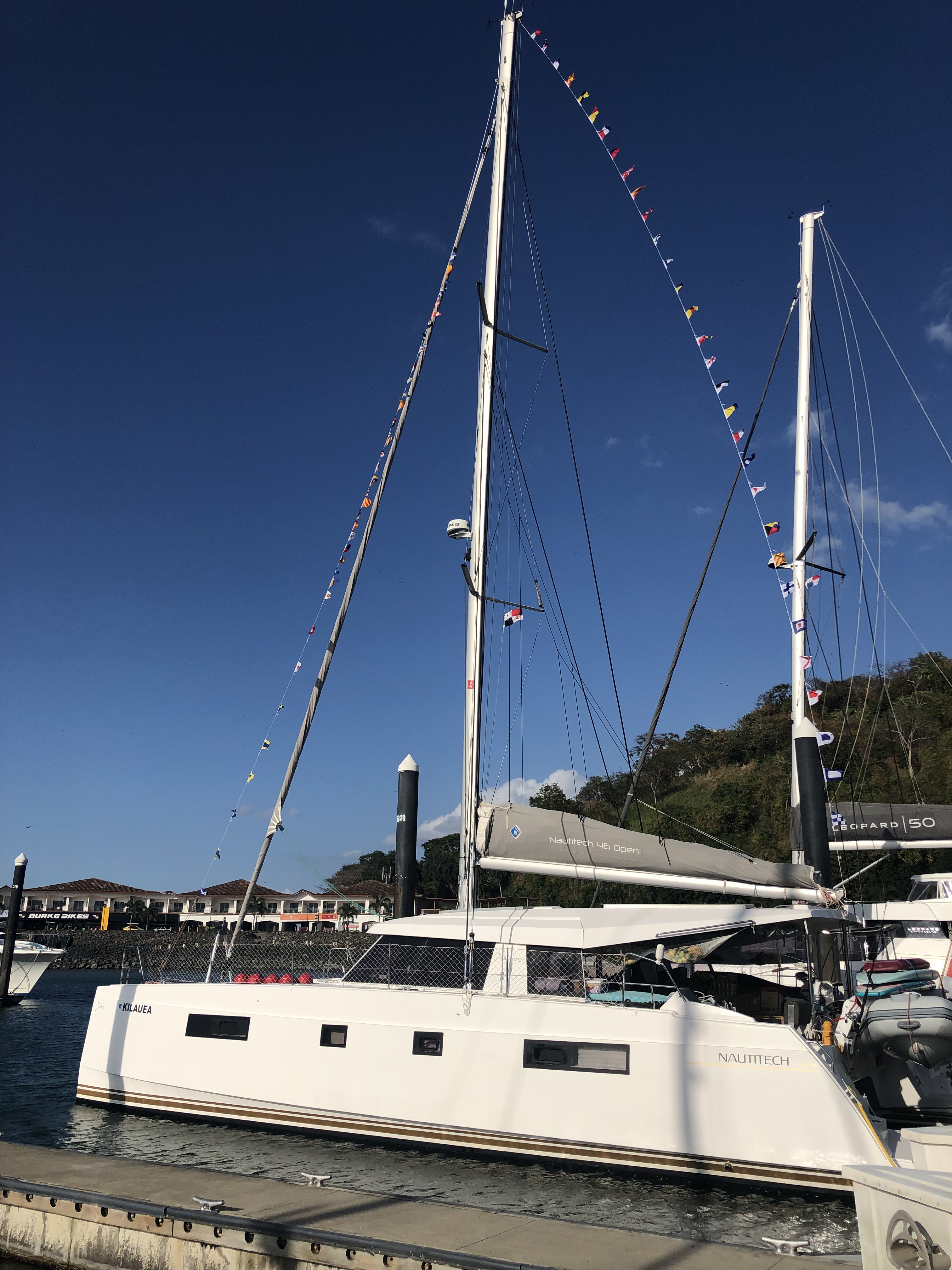
Even the boat dressed up for Lottie’s birthday – the flags spell her name and her age…
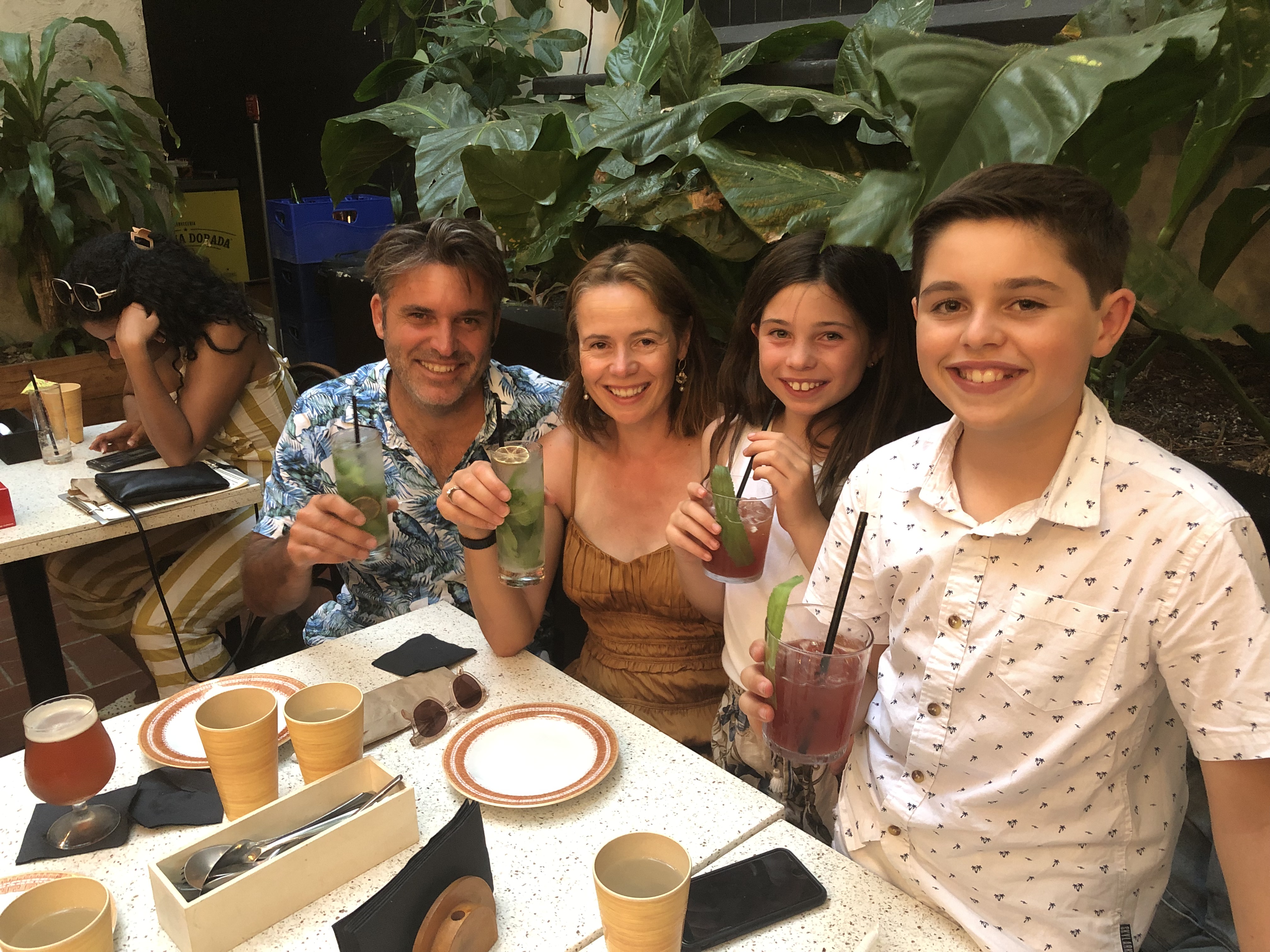
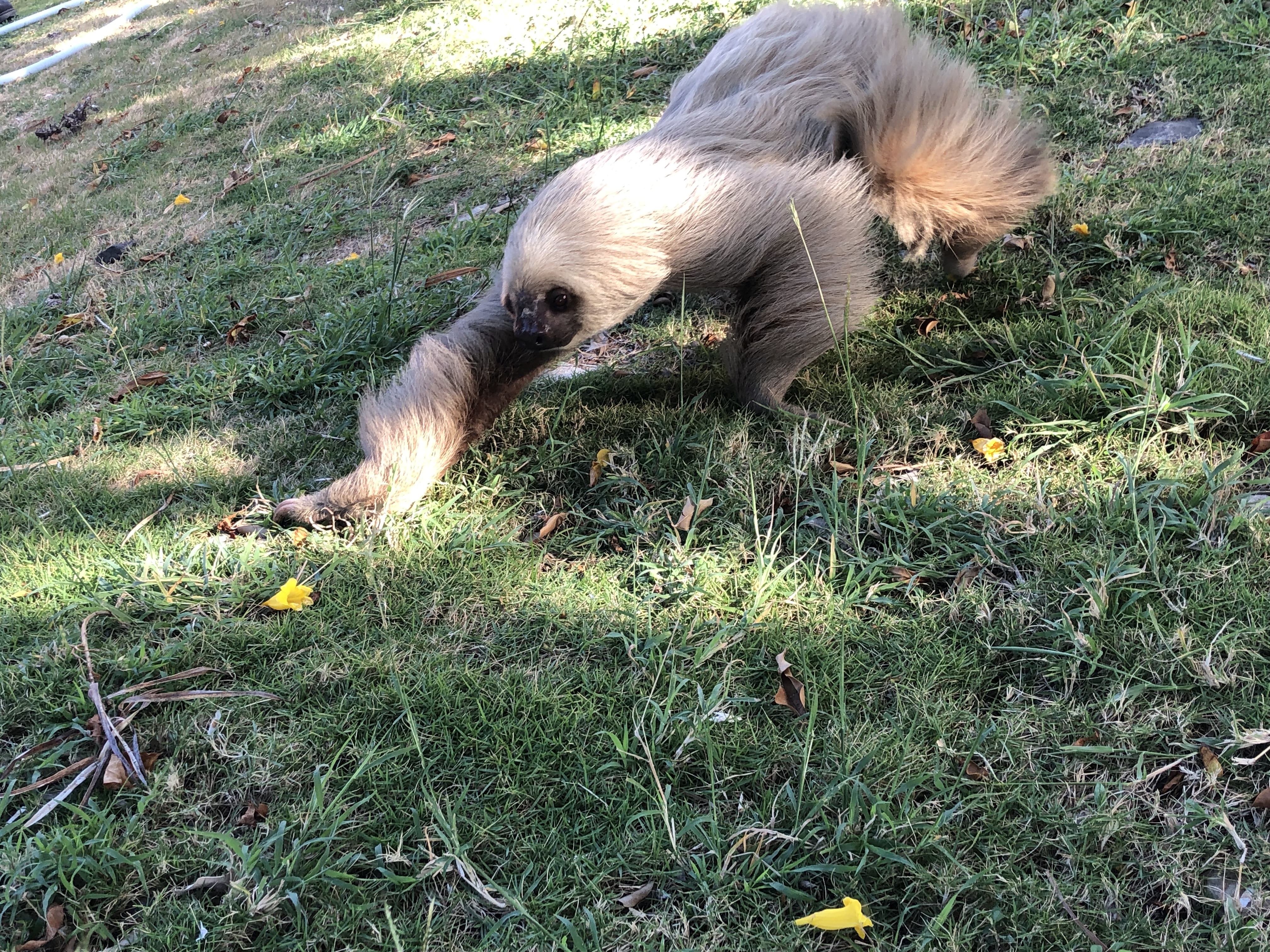
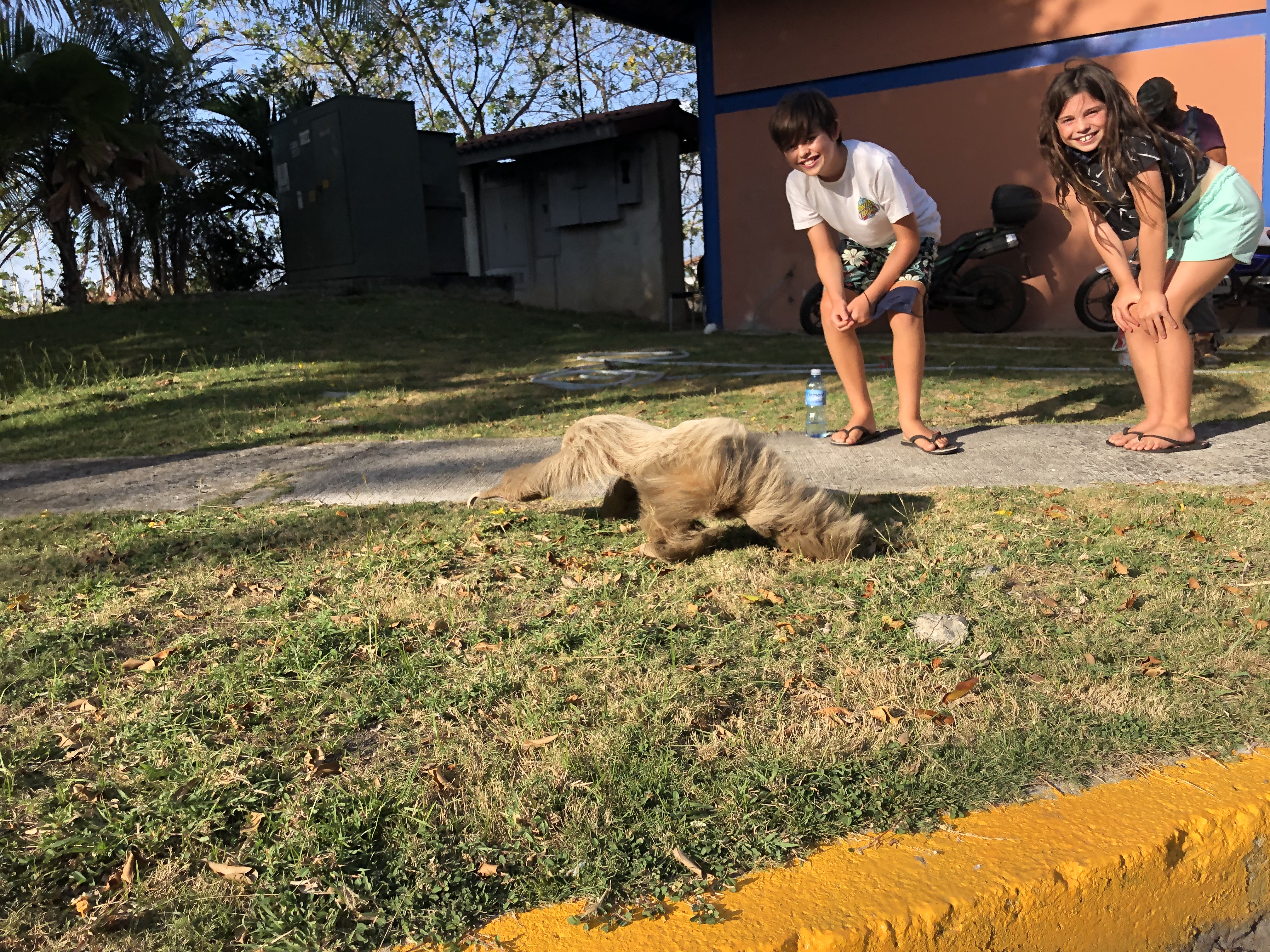
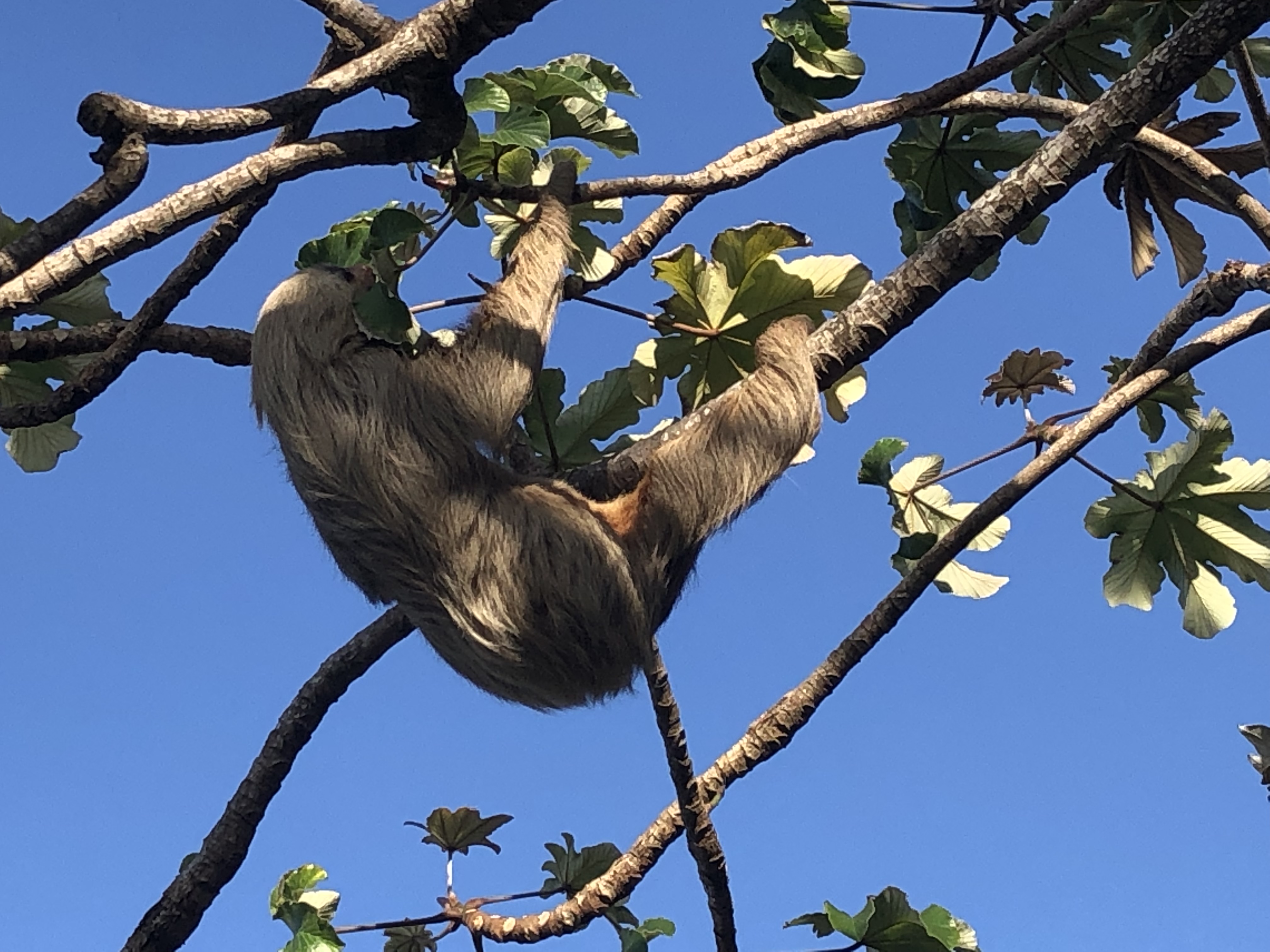
But it wasn’t all jobs. The day before we set off we celebrated Charlotte’s birthday in our favourite cool little restaurant in Old Panama City whose prawn ceviche was the best we had ever tasted. The day before that we had an amazing encounter with a sloth. We arrived back to the marina from some foraging trip in the city to find a sloth casually crawling across the marina car park seemingly without a care in the world and with a sly smile on its very human looking face. We watched it fascinated as it found a tree to its liking before shimmying up. It moved in the slow deliberate way you would expect from a sloth but covered a lot of ground surprisingly quickly.
Nursing hangovers from Charlotte’s birthday celebration and with the boat heavily laden with more fuel, water and provisions than ever before in its short life, the time came to cast off the lines from continental Central America for the last time. For the next 8 months the only land we would visit would be islands all the way to Australia, the biggest island of them all.
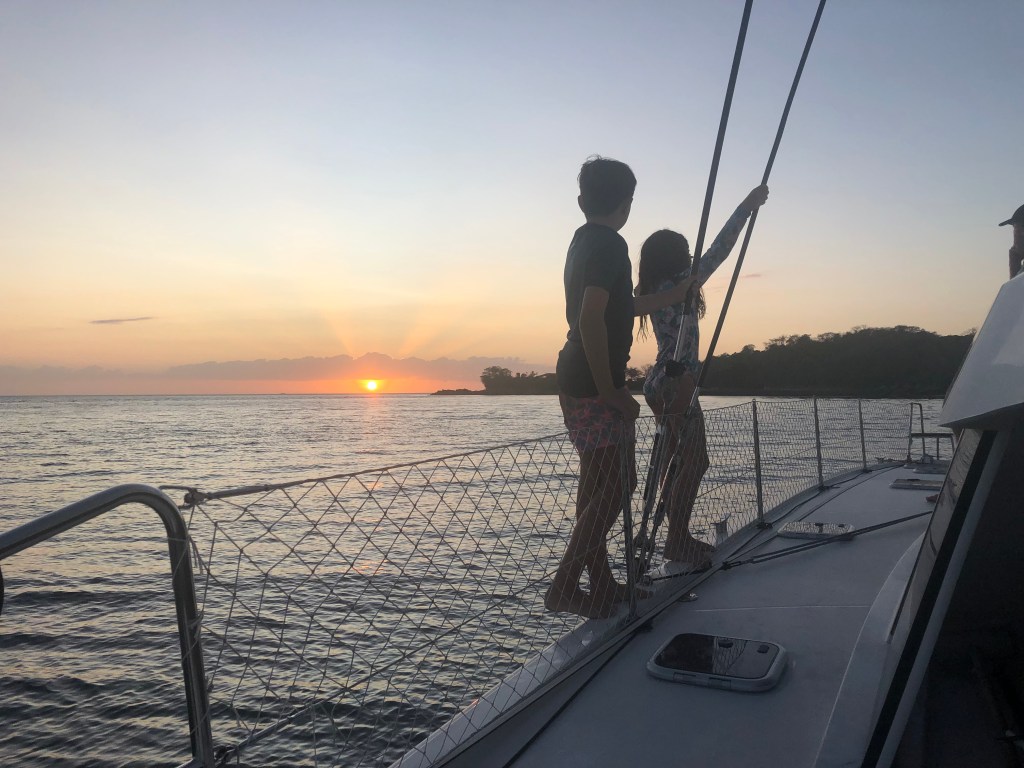
We decided to overnight in the Las Pearlas Islands due to the fact that they were on the way and were famous for being almost as beautiful as the San Blas. I also wanted to dive under the boat in clean water to check we were still barnacle free before we entered the Galapagos. We had heard of boats being turned away for brining in unwanted hitch hikers.

We caught a tasty Spanish Mackerel along the way and we anchored in a lovely spot between two islands and were joined by our new friends on Waterhorse, a kiwi family of 5 who were in year 4 of their world circumnavigation on their Leopard 45 catamaran and on their way home. We had a great evening playing an England v New Zealand v Australia cricket game on the beach and sampling Waterhorse’s South African beer. Chae, Dad and Captain, proudly declared they had left South Africa with 900 litres of diesel and the same quantity in beer. At half the price of the Panama beer and twice as tasty, it was hard to fault his logic.

At dawn the next day, we waved goodbye to Waterhorse after they generously handed us their favourite fishing lure, a very simple cedar plug and set out into the wide Pacific Ocean for our 850 mile passage to the Galapagos Islands. For the first 24 hours we were to sail across and out of the bay of Panama before heading out into the Pacific Ocean proper for another 4 or 5 days. The forecast was typical for this time of year in this location. No wind and the odd thunderstorm. Classic doldrums weather and very frustrating for sailors and we knew we would burn a lot of diesel on this trip.
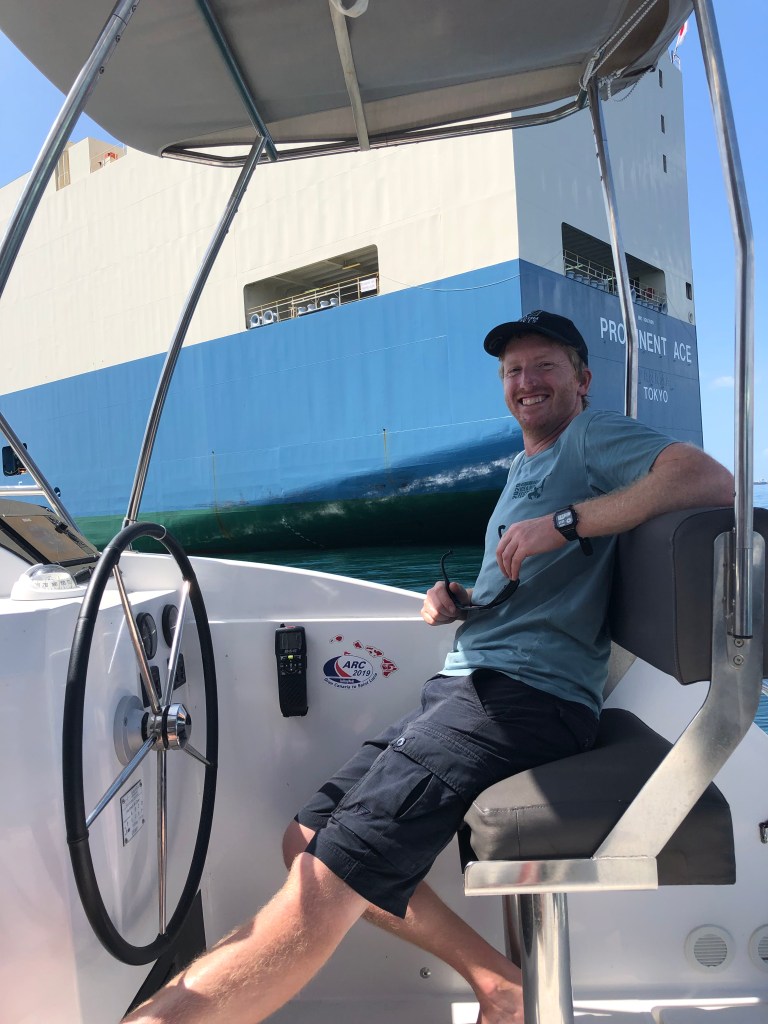
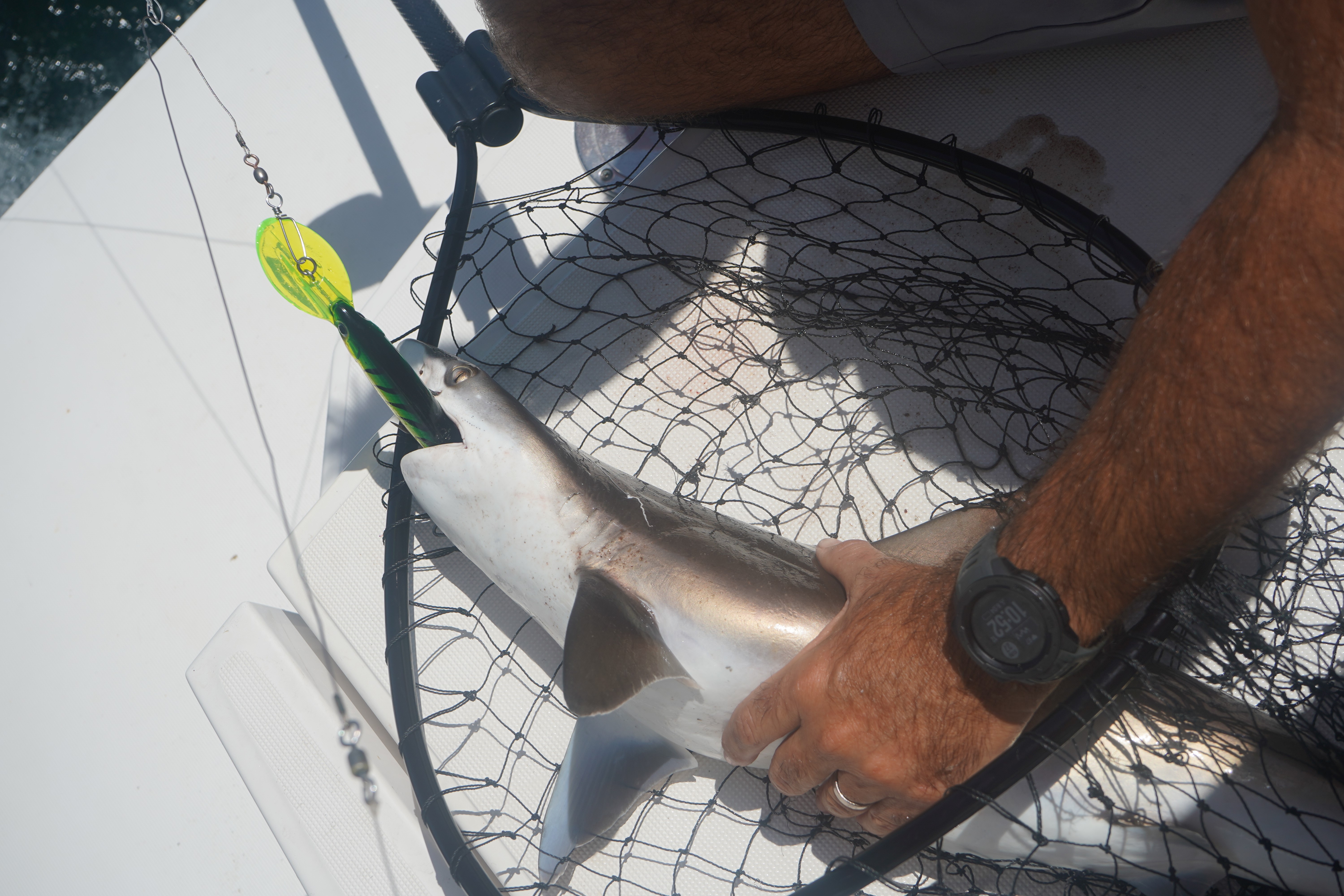
The first day was glorious for its sailing and its fishing. The wind was on the beam, Kilauea’s favourite point of sailing, and we made great progress with a following current. We also caught no less than 5 fish keeping us busy all day. These were two bonitos (small tuna), a Spanish Mackeral and, bizarrely, two sharks! These small little balls of muscle took a lure bigger than their mouths and were particularly hard to get off the line thrashing around with sharp teeth and an angry look in their serpent like eyes.

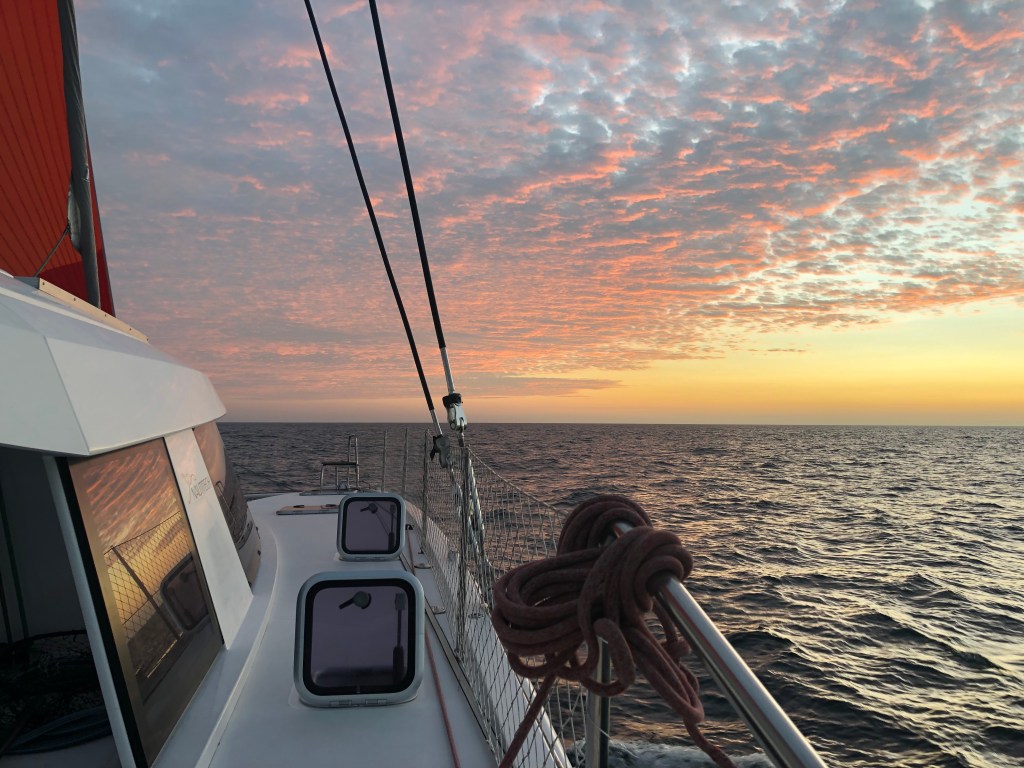
By the afternoon of the second and day the wind had dropped to nothing and other than a few hours sailing in wind caused by a nearby thunderstorm we were to motor for the rest of the trip.
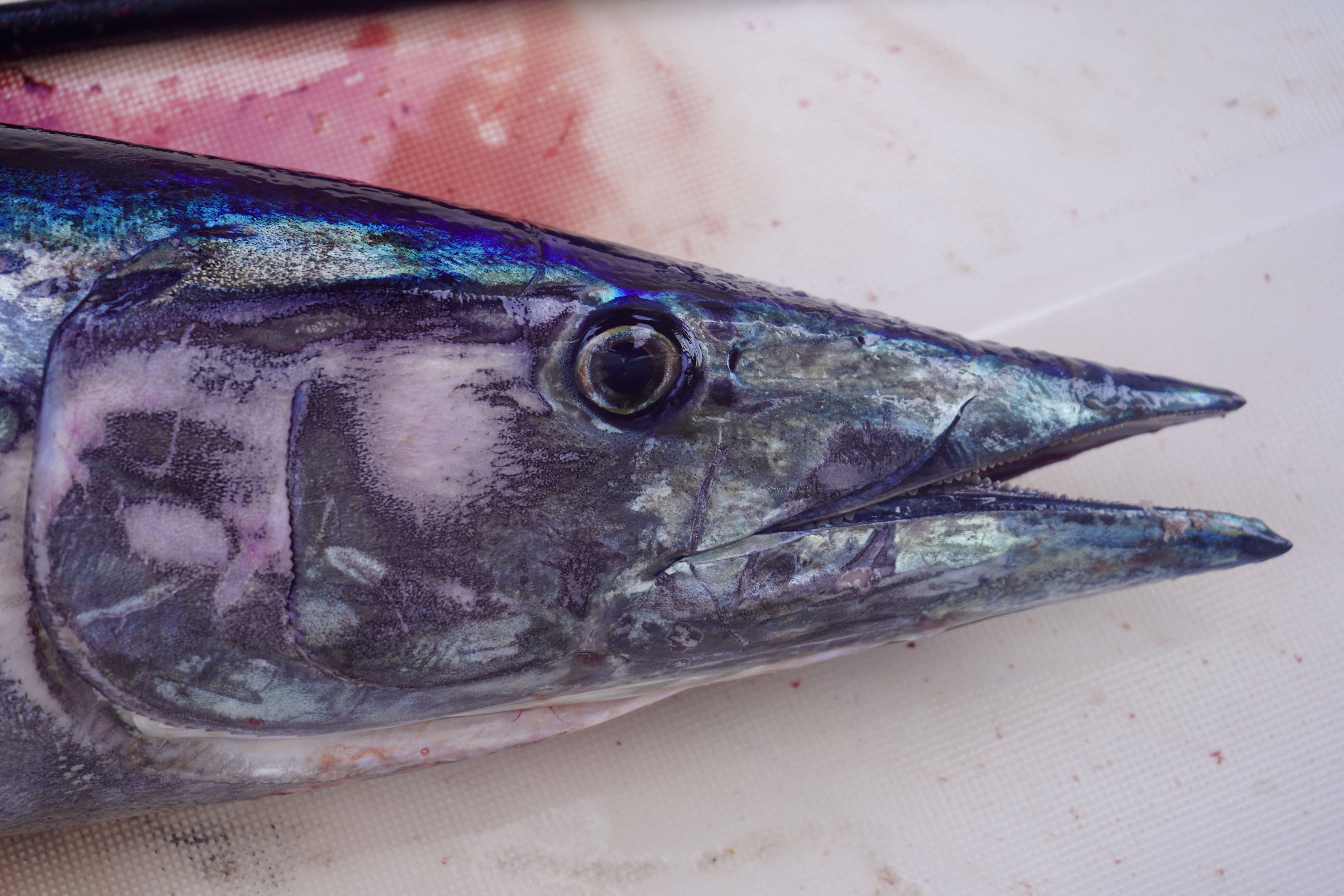
The marine life became more and more prevalent the closer we got to the Galapagos. First was the fish. On the third day we caught the largest fish of our entire adventure so far, a magnificent 1.51m long wahoo. I actually saw the moment the fish took the lure. I happened to be looking behind the boat when the water erupted like a small depth charge had exploded. One second later our trusty 35 year old reel clamped to the back of the boat started screaming. After a decent fight that seemed to involve the whole crew to some extent Tom managed to get the gaff into the fish on the second attempt and we manhandled it over the back of the boat and into the cockpit. We caught this beauty on the simple cedar plug Waterhorse had given us a few days before.
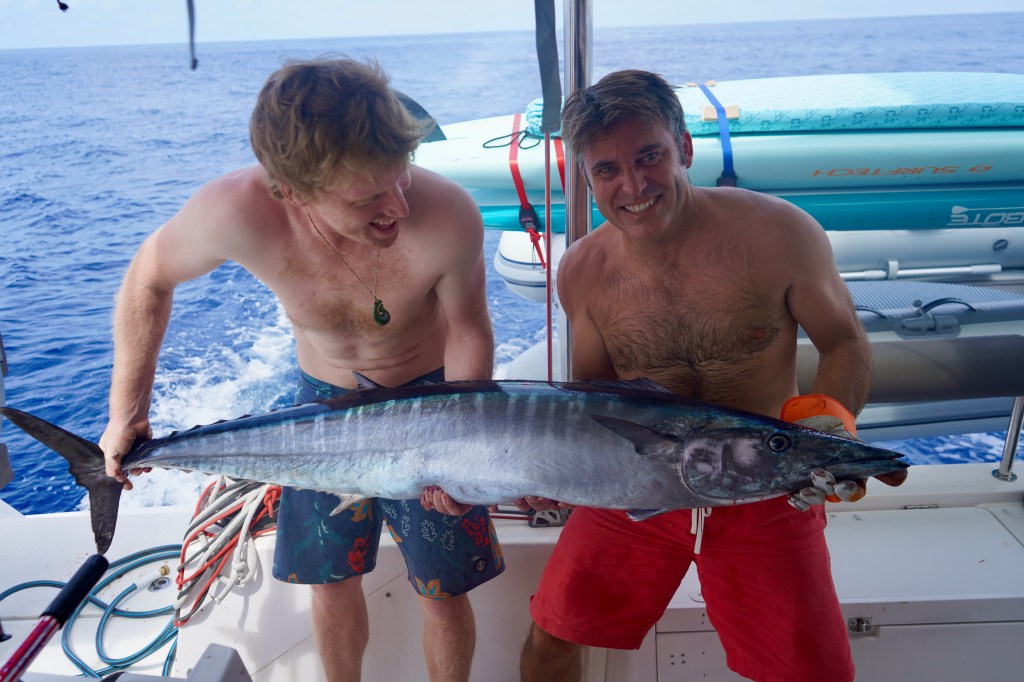
There followed two intense hours of work for the 4 adults as the fish was filleted, skinned and broken down into various cuts to eat in the next two days (one meal each of sushi, ceviche and BBQ steaks) or vacuum packed for the freezer. In total we extracted 8 big meals for 6 people out of this one fish and as I write this almost three weeks later we are still enjoying it!
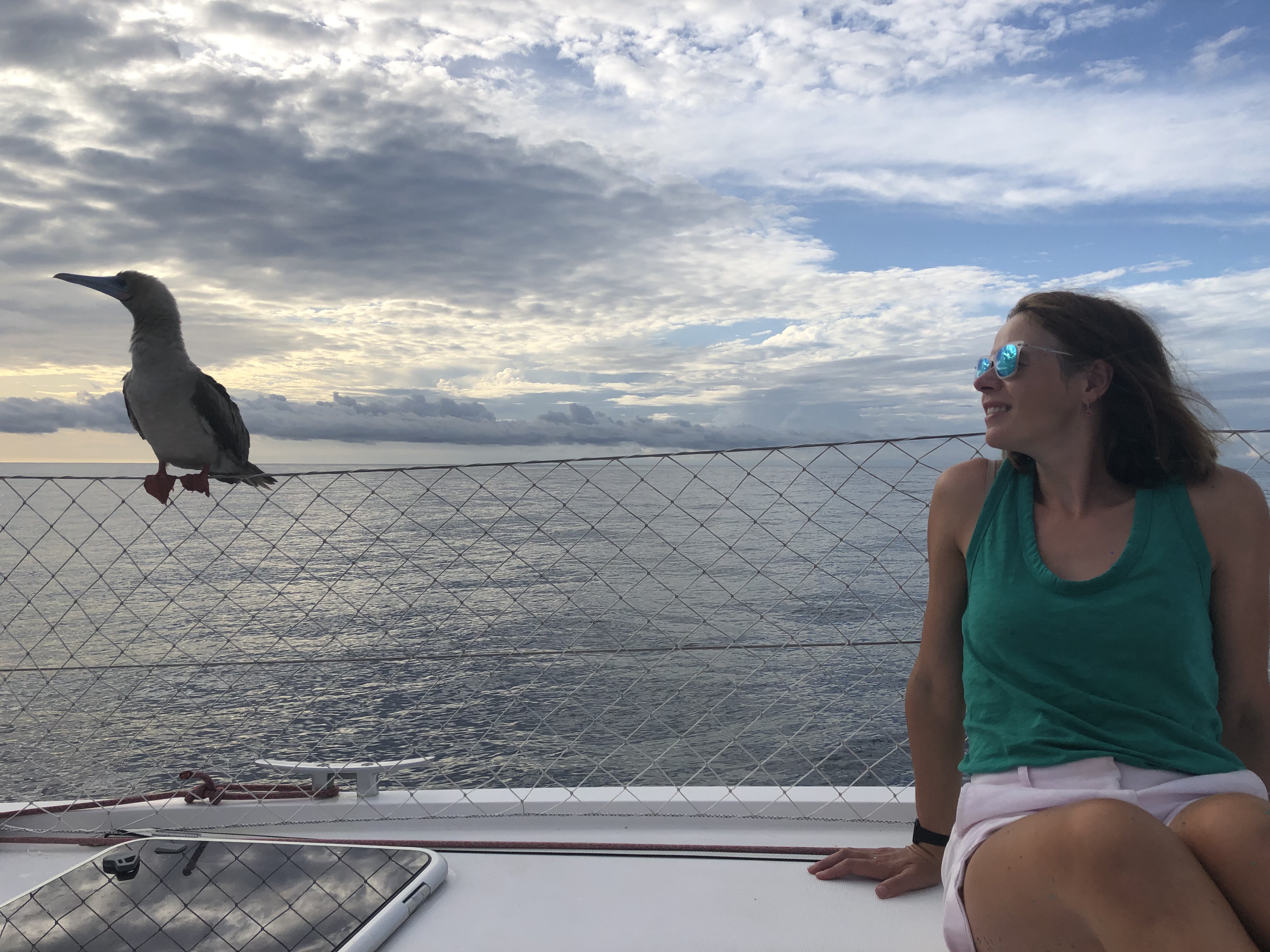
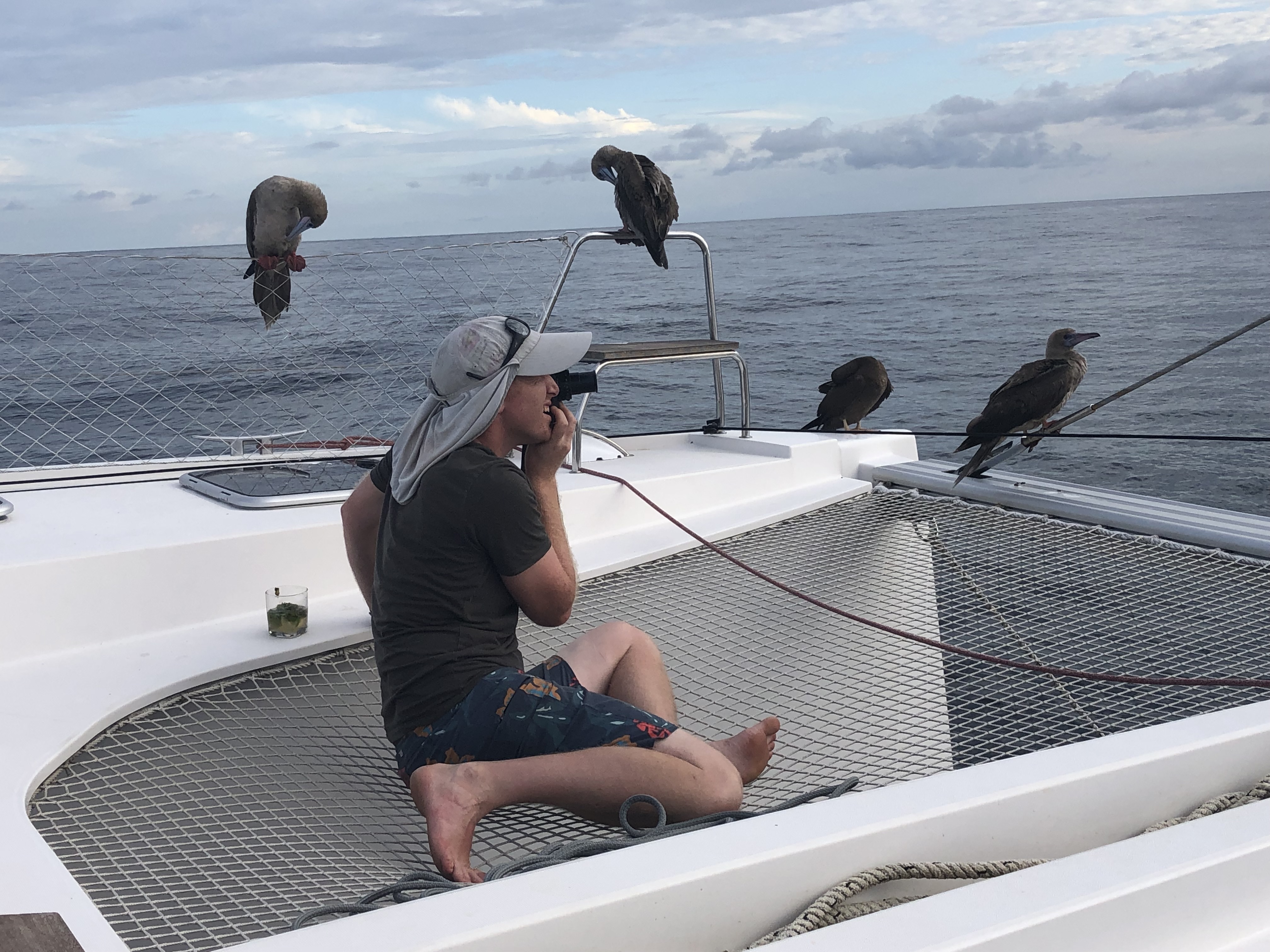
The flat water gave us the opportunity to spot other marine life. Dolphins would visit from time to time and we spotted a couple of massive turtles we thought might have been leatherbacks lolling on the surface. At one stage we watched as enormous rays (we think they were manta rays with their distinctive “horns”) leaped out of the water to a height three times their length and crashed back down again one by one. We later learned from a naturalist in the Galapagos that the mantas do this to shake free parasites that try to cling on to their gills. The best of all was the bird life which increased in variety and quantity each day. For the penultimate day we had a Boobie land on the boat and start preening itself. This was followed a few hours later by another, then another and so on until at one point we had 18 of these big birds perched at various points along the bow. I was torn between enjoying their beauty and amusing character and wondering how I was going to get the bird poo off the deck. At least we had material for hours of terrible jokes (“Tom, stop taking close up photos of those Boobies!”, that sort of thing). Most of the birds left at nightfall but a few remained all through the night providing some company to those on watch.

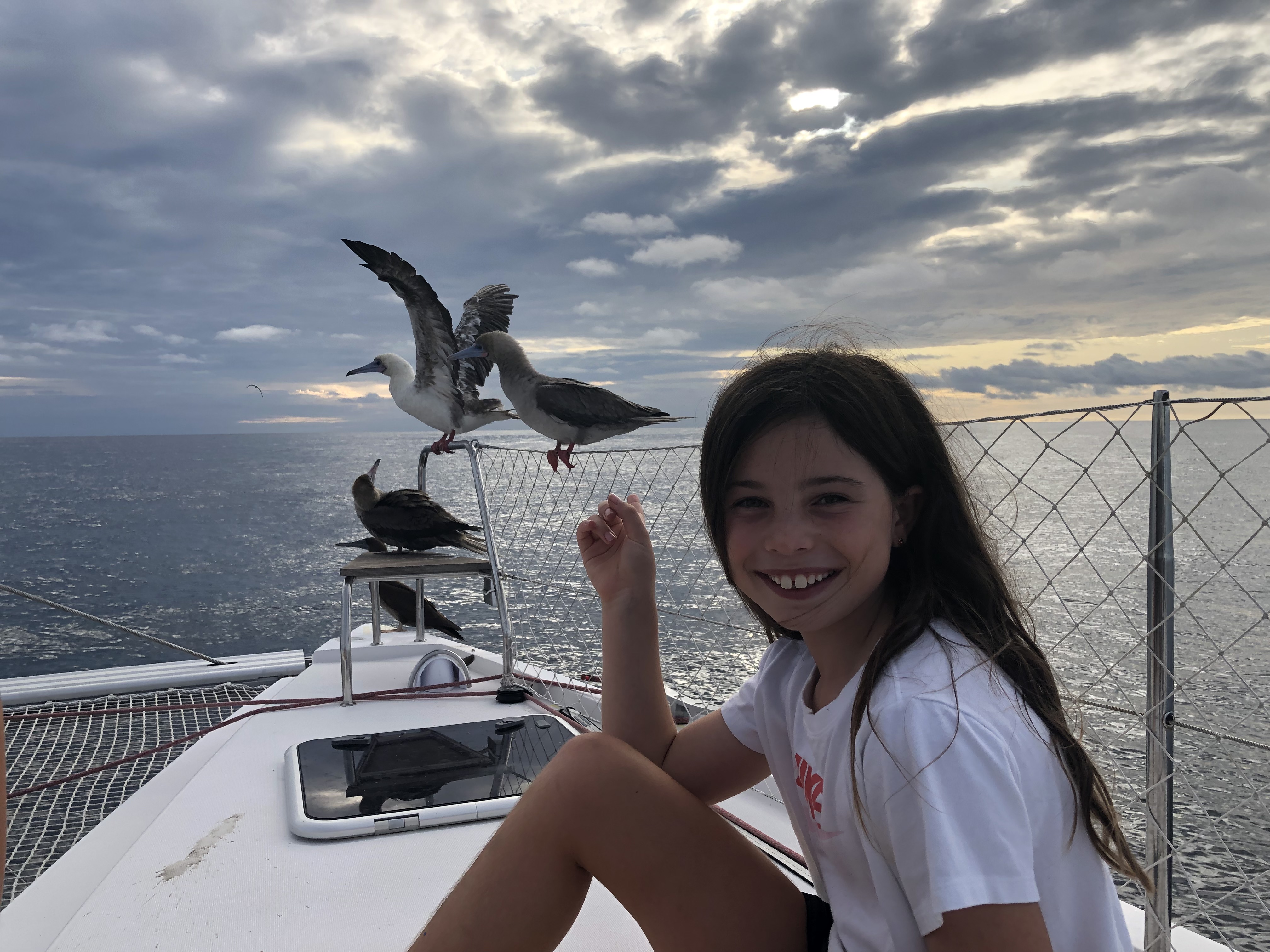

<insert booby joke here>
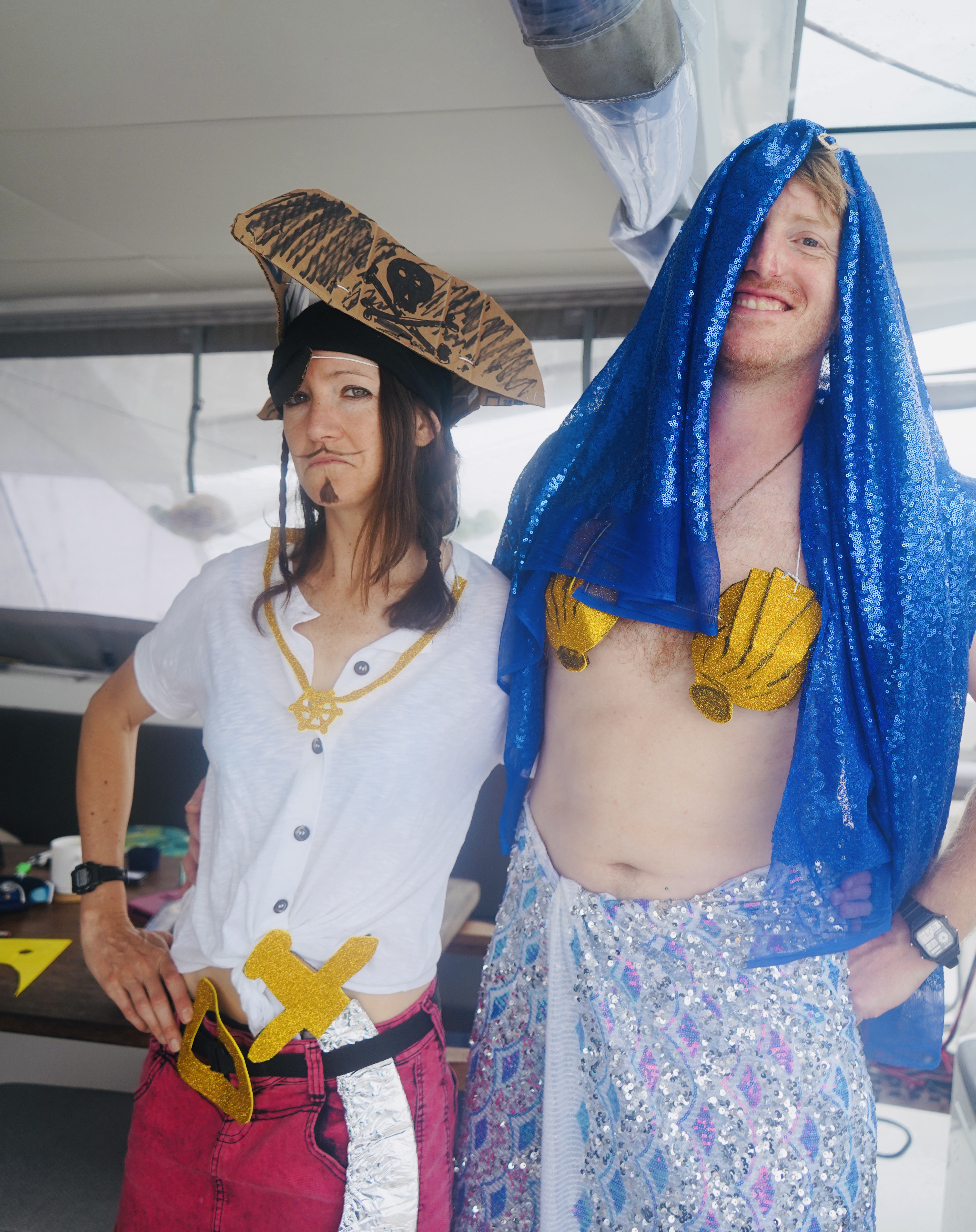
On the last day we reached one of the biggest milestones of our entire year, the crossing of the equator! This moment has been celebrated by sailors for hundreds of years and generally involves an initiation ceremony for those that have never sailed across the equator before (polywogs) led by those that have (shellbacks). As we were all polywogs, I took on the role of master of ceremonies for the occasion. In Panama, Lottie and Ceara had secretly stocked up on costume making “provisions” for just this occasion and for the previous three days we (well mostly Lottie but we all chipped in) had been busy making our costumes. I was King Neptune, Lottie and Ceara were pirates, Tom a demure mermaid complete with shell bra cups, Hugo an octopus with massive cartoon eyes and Jasmine completed the motley crew as a parrot. Each polywog made a sacrifice (booze, a drawing, sweets etc) and had to perform a task set by Neptune. The pirates sang a ditty about the voyage, the kids completed a blind taste test involving vegemite, chocolate and anchovies and Neptune and his mermaid bride was tasked with swimming around the boat in the 3km deep ocean whilst the rest of the crew threw rotten eggs (we found all our eggs to be rotten on the second day) at us. This developed into a full scale rotten egg war and in the end all the crew ended up in the sea (leaving at least one on board at all times of course!). Swimming across the equator in water 3km deep is an experience none of us will ever forget.




There was just enough wind to sail across the equator and it was strangely satisfying to watch the GPS numbers track down to 0-00.000 and the letter change from N to S. We were now not only in the same Ocean as home but also in the same hemisphere as well!

With festivities over we put boat engines on full steam with the aim to get to the anchorage at San Cristobal Island before nightfall. Unfortunately this plan was scuppered by a strong adverse current. With a very still evening and a reasonably well documented and straightforward approach we made the call to attempt a night time landfall and avoid a 6th night at sea. It was surreal drifting into the anchorage in the pitch black moonless night making our way between the dozen or so boats gently bobbing in the swell. At 9:00pm we found what we thought to be a good spot, dropped the anchor, had a celebratory rum, built a wall of fenders on each stern to protect against boarding by sealion (something we had been warned against) and dropped off into our first full night’s sleep for almost a week.
We had sailed almost 850 miles into the Pacific which felt like a decent chunk but with another 7,000 miles to go, was only just over one tenth of the way.
I hope to publish the next instalment describing our Galapagos experience in the next few days so that I am up to speed before we set off for the big one, the 3,000 mile passage to French Polynesia. Our current plan is to set off on 25 March so there’s less than a week to go to get ready!
Panama City to San Cristobal – Passage details
- Distance: 867.0 nautical miles (over land), 818.7 nautical miles (through water)
- Time: 5 days, 12 hours 50 minutes
- Time zones crossed: 1
- Average speed: 6.5 knots
- Max speed: 13.1 knots


Hi guys, thanks for the amazing update and pictures. Those fish look magnificent as does that herculean pile of booze!!!We miss you guys back here. Cheers Andrew and Maddie
LikeLike
I remember seeing a sloth on the ground in Costa Rica in the jungle. It was green from moss and going across the path in front of us and it took us forever to work out what it could be! They look so strange the right way up!
LikeLike