“There are now done a great many things that fifty years ago were unheard of, never dreamed of, never thought possible, as a product of human intelligence and ingenuity in engineering. It has become a byword today that in the hands of a skillful engineer nothing is impossible”
USA Senator Mark Hana, June 1903
This is my favourite quote from the excellent book, “Hell’s Gorge” and is part of an address to the US Senate that helped convince the USA Government to take on the Panama Canal project thus changing world history forever. Engineers are generally a modest, often introverted bunch (how can you tell an extrovert engineer at a party? Its the one looking at someone else’s shoes), so its great to hear credit given at such an important forum. It should happen more often I say.
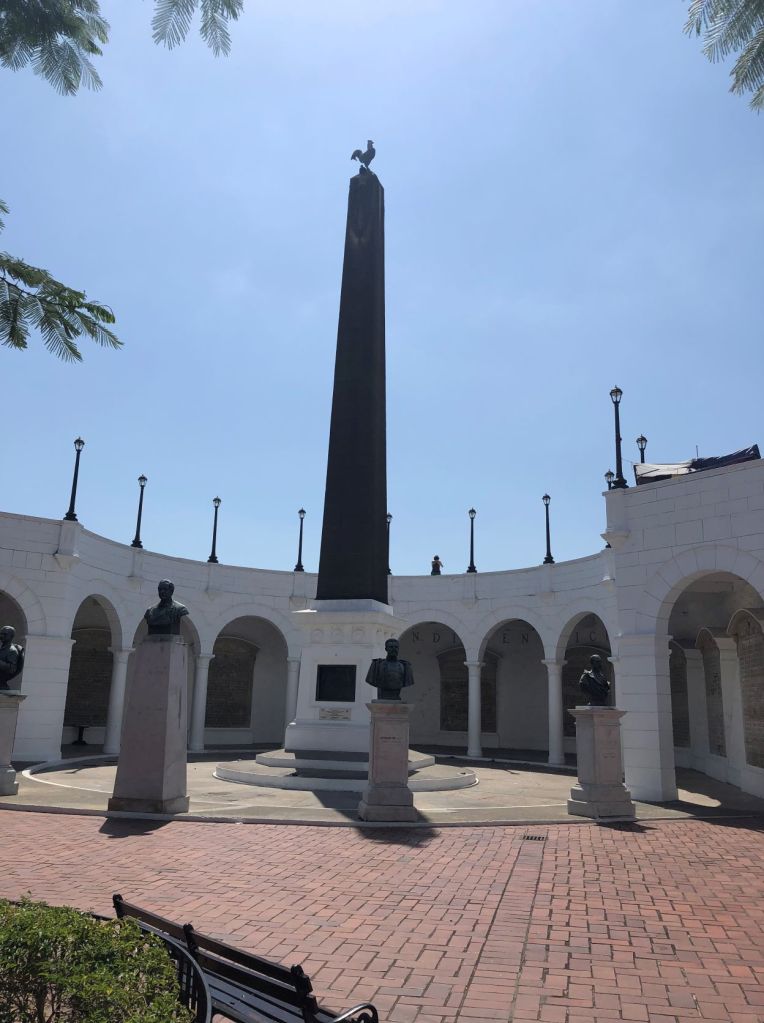
The canal’s construction is a story of human suffering and sacrifice, world politics, financial structures, super powers, capitalism, imperialism, advances in our understanding of tropical diseases and many other things but what fascinates me most is the “human intelligence and ingenuity in engineering” and the characters that conceived the concept and had the audacity to attempt to carry it out and, incredibly, succeed in this objective against all odds. The story of its design and construction spans decades but essentially it comes down to a French led effort that commenced the project in 1881 and, when this eventually failed in 1889, an American led team that took up the baton finishing it off in 1914.

As an engineer who has spent much of his career involved in major infrastructure projects I couldn’t help but draw parallels with my experience and this not only brought home to me the superlative nature of what was achieved but also made me realise that many of the challenges the canal’s project developers, designers and constructors lived through are still experienced today in a similar way.
But first let’s dwell on the audacity of the people who conceived this plan. When the French started work, the only project even remotely close to this one was the Suez Canal but this was a fraction of the size of construction in easily excavatable sand with very little topography and low rainfall and associated disease. In fact the man that led the French Panama effort was the celebrated infrastructure visionary Ferdenand de Lesseps who was credited with pulling off what many thought impossible, linking the Mediterranean and Red Seas. Like many successful people today, his strength was also one of his key weaknesses, one which would eventually bring down the whole French effort. Against the advice of countless engineers and constructors he stuck doggedly to his vision of a sea level canal rather than the current solution that includes three locks in each direction to raise shipping to a higher level and thus massively reduce the amount of excavation required. It is widely recognised in hindsight that such was the size of the undertaking, there was not enough money in the world at the time to achieve Ferdenand’s vision. The strength of his character that was used so successfully to raise capital for the project in France ultimately led to his authority not being able to be challenged which in turn doomed the French effort.
Engineers may be mighty but if they have one weakness, its their ability to accurately estimate the cost and duration of the construction of their projects. This failing even has an offical name, “optimism bias”. The French effort took this concept to a whole new level. The original estimate for a sea level canal was for 120 million cubic metres of excavation costing $120M and taking 6 years. To put this into context, a major 25km long freeway I worked on in Melbourne that took 3 years to construct excavated 2.5 million cubic metres (one fiftieth!) and cost just less than $1B. When the canal was finally completed as a locked canal (requiring much less excavation than the sea level design the estimate was based on) over three decades after it started, 185 million cubic metres was excavated and the price came in at $639M. An example of the audacity, perhaps even arrogance of those involved in the planning was that the excavation rates were based on the assumption that machines would be invented that didn’t then exist! This sounds fanciful but in fact was to some extent achieved with the creation of some massive steam powered machines and is a testament to what engineers can achieve given a challenge.
My favourite engineering story was how the biggest technical challenge, the Chagres River which crossed the route of the canal and was subject to massive flows in the rainy season, was tamed and used to solve another great challenge, how to keep the locks supplied with water all year round. The solution was the damning of the river capturing one of the world’s highest rainfalls in an enormous inland lake across which ships would sail and which would be used to feed the thirsty locks and balance the widely variable inflows. What better way to illustrate how, as civil engineers, our job is to harness the forces of nature rather than to fight against them.
OK, enough canal history and engineering philosophy! Our canal experience started with potential disaster followed by a dash of comedy and then my very own Panama fever experience.
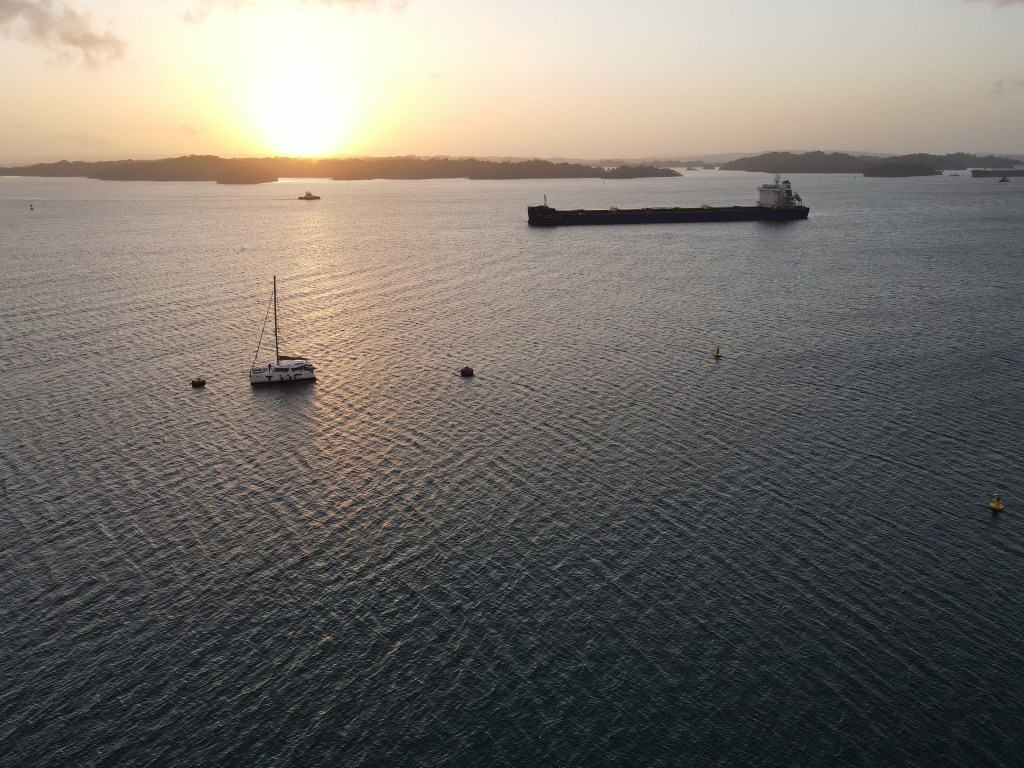
It was a simple day sail from Linton Bay (where we had the boat hauled out of the water) to Shelter Bay, a marina inside the harbour that forms the entrance to the Caribbean side of the canal. On the way we sailed over or very close to Sir Francis Drake’s final resting place having been buried at sea after becoming ill in Portobello. One by one, anchored ships started popping up over the horizon and we started to weave between them marveling at their size and number. At one point I had 98 ships recorded on my AIS machine! The flow of ships into and out of the canal and the management of the many pilots that take over each ship to drive them through was managed by Cristobal Signal Station, which for us was a very patient sounding woman who calmly answered the myriad of questions from captains from all around the world demanding to know when the pilot would board and when they would start their transit. We were required to seek permission from her to enter the harbour a well which she duly gave. The harbour has two very long breakwaters several kilometres long with a narrow entrance protecting the harbour which we had to cross on our way in. We were so focused on this entrance through which ships were steaming in a steady procession that we (OK I’ll admit it, I) didn’t realise there was another break in the wall halfway along leading to the port of Colon.

“Er, Al, you’ve seen that one haven’t you?”. I tore my eyes from a big tanker that we were following and looked to my left where Charlotte was pointing straight at the bow of a very large ship clearly heading straight at us through this sneaky little secondary channel. I put the engines in neutral, turned the boat 90 degrees and we bobbed around while the ship steamed past a hundred metres away as if we had planned that all along. Another brown undies moment to add to the others!
Whether you are one of the largest ships in the world, or a humble yacht like us, you need to be officially measured before you pass through the canal. Initially this involves filling out lots of paperwork and answering questions like “what is your cargo?” (er vegemite?) but it also involves being actually measured. In todays modern world I expected this to be done with drones or lasers or something but I was to be disappointed. A very portly man with a very official uniform completely at odds with his jovial demeanour arrived carrying an ancient cloth tape measure. He explained that he had to measure from the stern of the boat to the steering wheel then from there to the bow and then finally the bowsprit itself. Our official length would be these three measurements ADDED TOGETHER. An amazing feat of maths and geometry. He asked me to grab one end of the tape and he grabbed the other not minding whether the tape was going round and over objects along the way. When we got to the bowsprit I saw he was getting quite anxious and he started sweating even more than usual until I offered to shimmy along the bowsprit to hold the tape for him while he did the inboard side. He looked very relieved. The whole process seemed very inaccurate and when I asked him what he did with the numbers he said, “oh, its just for payment, if you are under 65 feet its one price. It was physically impossible to get a 65 foot boat into our part of the marina, what a waste of time! The measurer had a big list to tick off which included confirmation that we had 6 strong cleats. This important check consisted of him half-heartedly trying to pull a cleat off the deck with his bare hands and not being able to do so, he seemed happy and added another tick.

Next came the canal transit briefing. We would need a captain (that’s me!), a Transit Advisor (we had one booked), 4 line handlers (Lottie, Tom and Ceara and we chose to hire a fourth) and 4 very long mooring lines and 6 very large fenders (already hired). For the six locks, we could choose between any number of four options, all of which involved us being in the lock with a large ship. I can’t remember the forth only that it was not recommended as it could cause “damage and injury” (why on earth would they include this as an option?) but the other three were:
- By yourself
- Strapped to one or two other yachts
- Strapped to a tug boat
We opted for 1 or 2. Next came the most important part and the section that took the longest which was the expectations of the Transit Advisor which mostly centred around food and drink. We were to provide dinner on the first day and breakfast on the second day plus mineral water (cap sealed) which must be kept cool for him.- For the dinner it was very important that this was a “big and very nice meal” which included “heavy meat”. We weren’t quite sure what this meant but we were provided with a list of acceptable dishes which included steak and chips (this is will make advisor very happy) and spaghetti Bolognese (with good ground beef and nice herbs). We genuinely thought the guy was having us on but he was very earnest and more serious during this part of the briefing than any other including the part where he laughingly explained how to avoid being crushed by a ship.
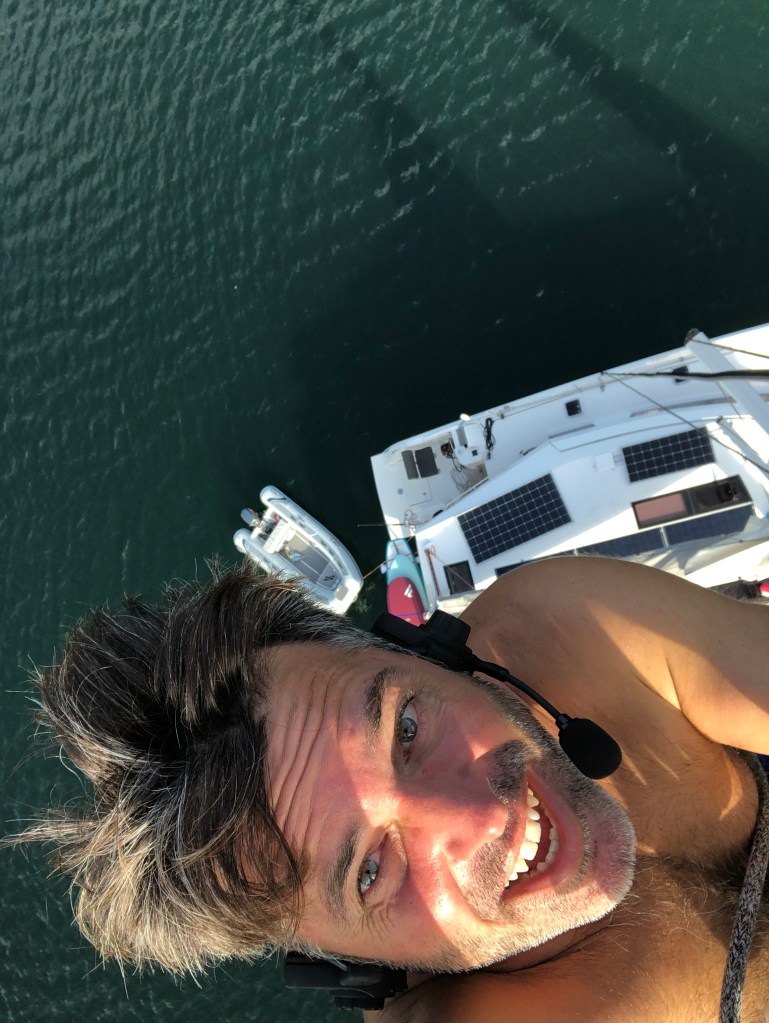
We had to wait almost 2 weeks for our transit due to the 20 odd boats that made up the Oyster Around the World Rally sneaking in before us. This would have been an ideal time to complete all our pre-Pacific jobs but this was severely hampered by the fact I chose this point to contract COVID. My experience of it was just like flu with sweats, headaches and generally feeling lousy. I thought of it as my own mini Yellow Fever which seemed kind of fitting given the history of disease in this area. Charlotte declared the port hull a quarantine zone and I was kept inside this sweat box at all times except when the rest of the crew went ashore at which point I would emerge blinking into the daylight and wander about the decks fretting about all the jobs I needed to do but felt too rubbish to attempt.

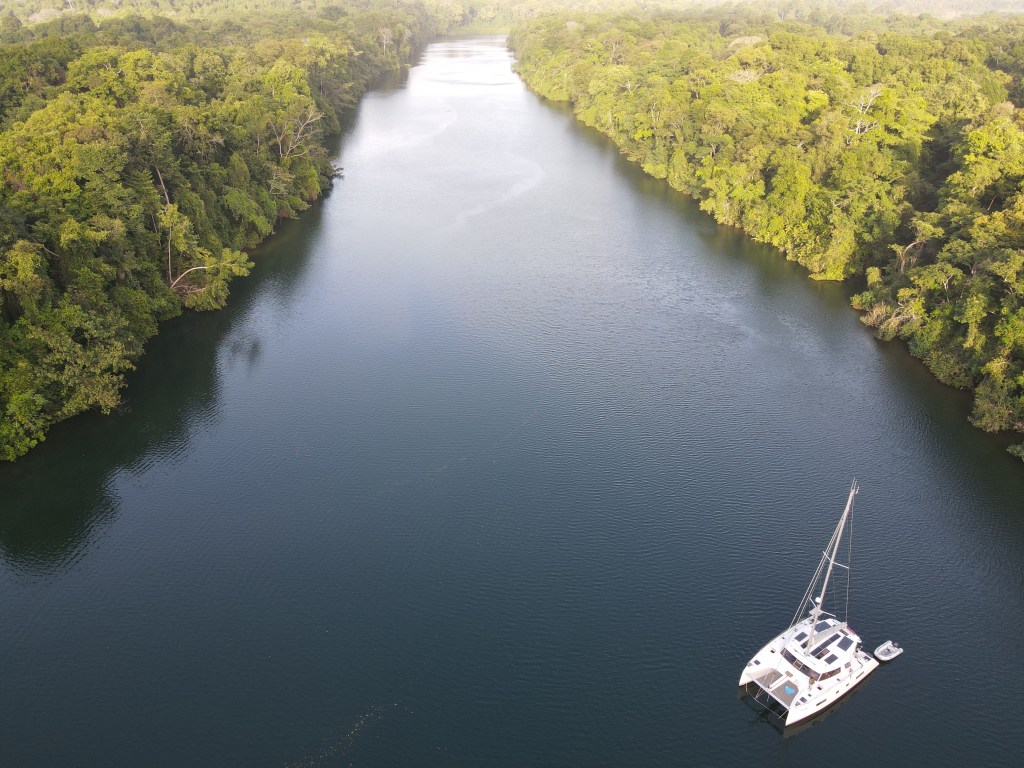
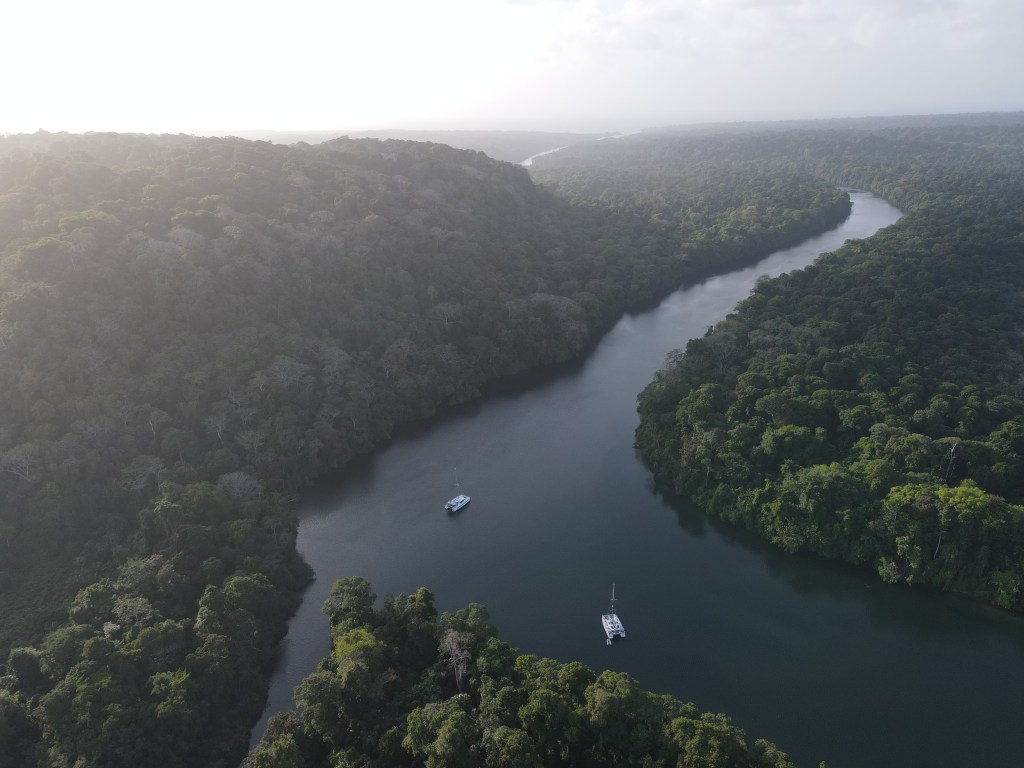
I declared myself fit and COVID free after about 10 days and having heard from other yachties that you could get up the Chagres River we decided to head the few miles down the coast with our new American “kid boat” friends on Aqua Fox to see it for ourselves. If someone would have told me that on this trip we would head 10 miles up a jungle river on our ocean going yacht and anchor in crocodile infested water I would never have believed them but this is exactly what we did. We saw our first croc, about the size of Hugo but twice as hungry, lazily swimming along one of the banks. At night we went on an adventure by dinghy down a side creek with our torches and every time the beam fell onto a croc we would see one or two of their eyes beaming back as devil-like red dots. Very spooky and a perfectly legitimate way to terrify your children. We took the boats right up to the damn, on the other side of which was the mighty Gatun Lake and then anchored further downstream. We also explored the Chagres River fort, a World Heritage Site and scene of numerous battles involving various countries and pirates including Sir Francis Drake and Captain Morgan (of spiced rum fame).
Tom and Ceara, our crew for the canal transit and first two Pacific legs, arrived and the next day in the middle of the afternoon we cast off our lines, waved goodbye to the Atlantic Ocean / Caribbean Sea and took onboard our Transit Advisor Freddie. He was a big jovial man of West Indian descent who introduced himself and then busied himself with the very important job of eating his dinner of fillet steak, chips and salad which he declared was “fantastic”. I could see the relief on Charlotte’s face, the logic being a happy advisor would mean a happy transit. Freddie was so laid back there were times I suspected he was asleep, maybe we had fed him too much?
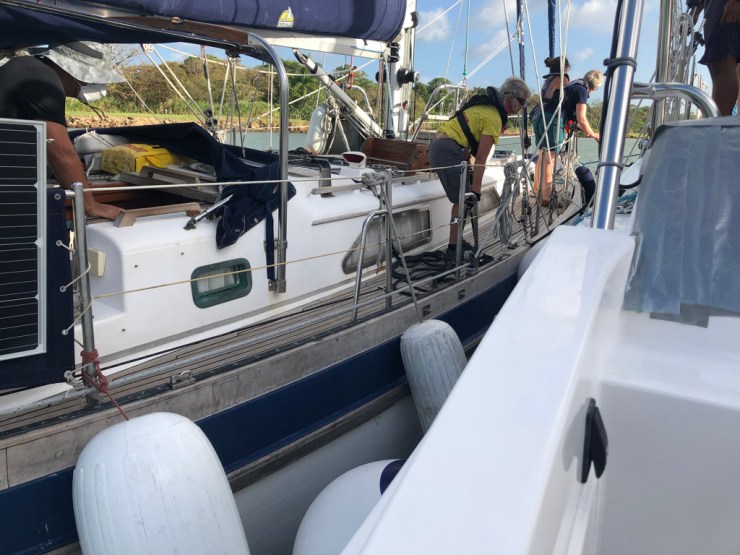
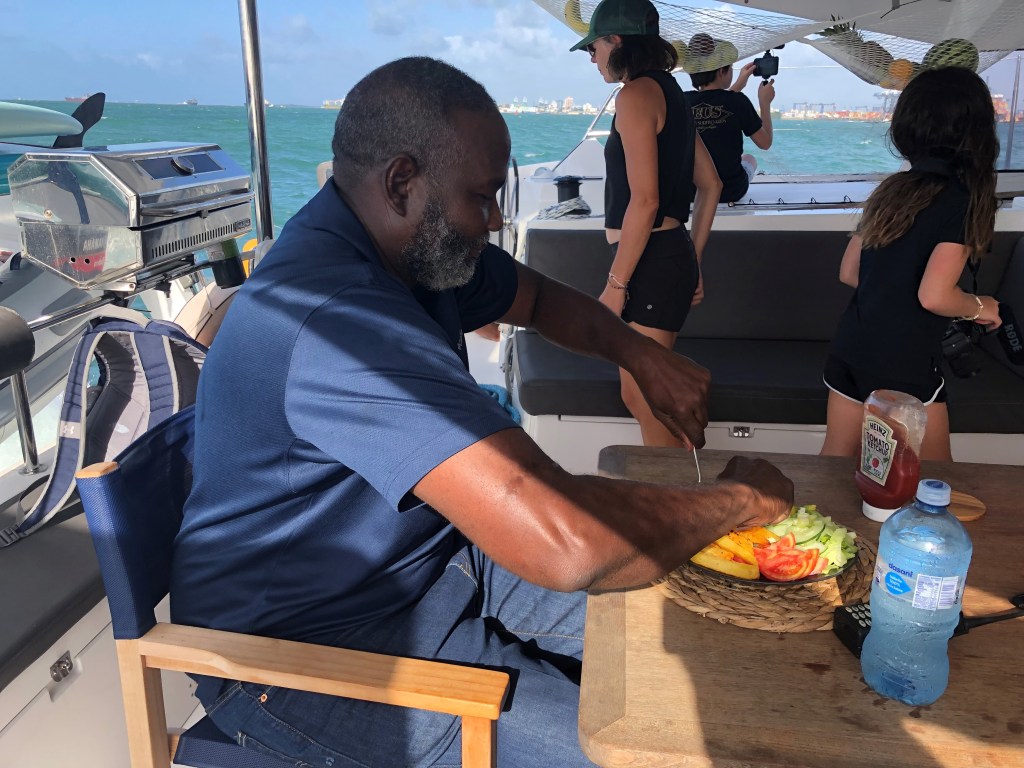
We were to share our canal experience with a 40 foot British monohull who would be strapped alongside us for the locks at which point it was our job to do the motoring and maneuvering for the both of us given our superior engine power. No pressure then Captain! The trickiest moments were trying to stay still while waiting for a lock to open in the crosswind and current with a 15 tonne dead weight strapped to one side and also accelerating from stationary without twisting around alarmingly, not something you want to do in a narrow lock.

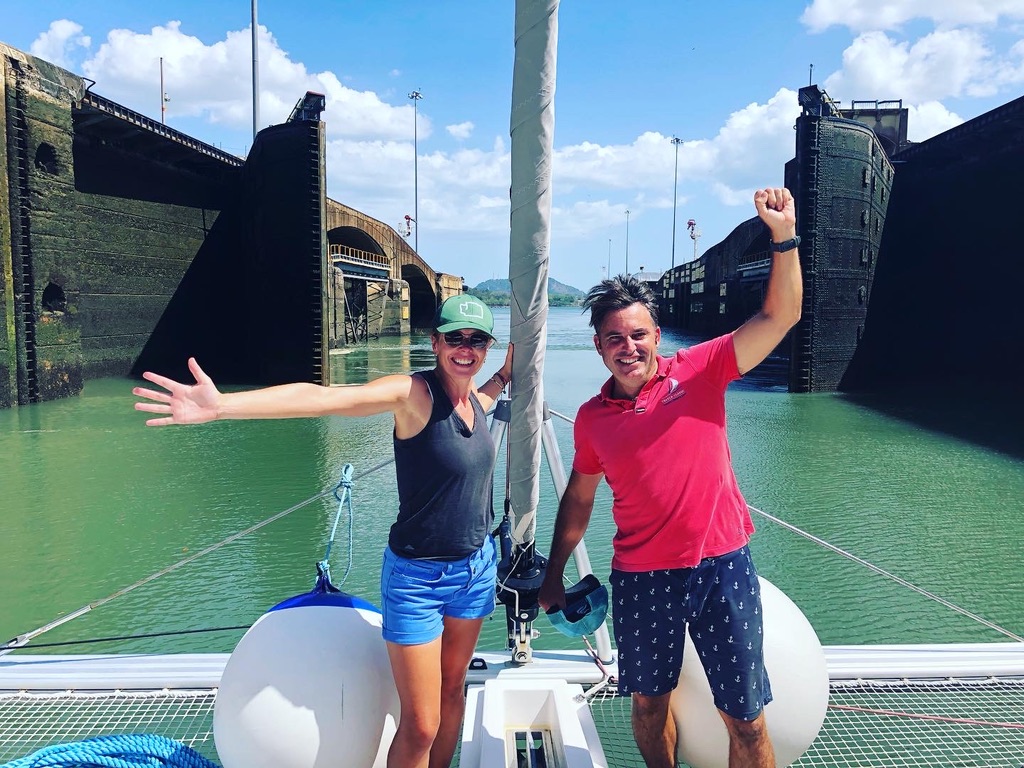
Our first evening was spent in the triple lock that takes ships up to Lake Gatun. We entered the first one as the sun started setting and exited the last one in pitch darkness although you wouldn’t know it while in the locks given the multitude of very bright lights. It was very efficiently done and we were thankful for our professional line handler, Mariano, who gave us the low down on what to expect and kept all the line handlers in check as the boat got lifted up in each lock. For each lock, four men on the canal wall high above us threw a ball (called a monkey’s fist) attached to a light rope down onto the boat and it was the line handlers job to attach our long heavy lines to this light rope for the men ashore to haul in and secure onto enormous looking bollards. Before this, they would walk alongside the boat keeping pace with it as we entered the lock and I found it amusing that if I gunned the engine slightly they would have to trot rather than walk which they weren’t happy with at all. Through all this Freddie smiled and joked and seemed to pay very little attention to what was going on around us other than a few “good job Captain”s to give the impression he was observing what I was doing.

It felt like in no time at all we were motoring out into Lake Gatun, casting off our friends and heading over to one of the official mooring buoys where we were to spend the night gently rocking to the bow waves caused by ships as they relentlessly ploughed their way along the channel across the lake.

Next day was an early start and we met our new Transit Advisor who was the complete opposite of Freddie. Very polite but very serious and in complete control of proceedings across both boats giving clear instructions to me, the line handlers and the canal lock men punctuating these commands with a blow on his official whistle when required. The second day was very different to the first. We spent all morning cruising along the beautiful Lake Gatun and its myriad of islands every now and again watching an enormous ship go by a few dozen metres away.

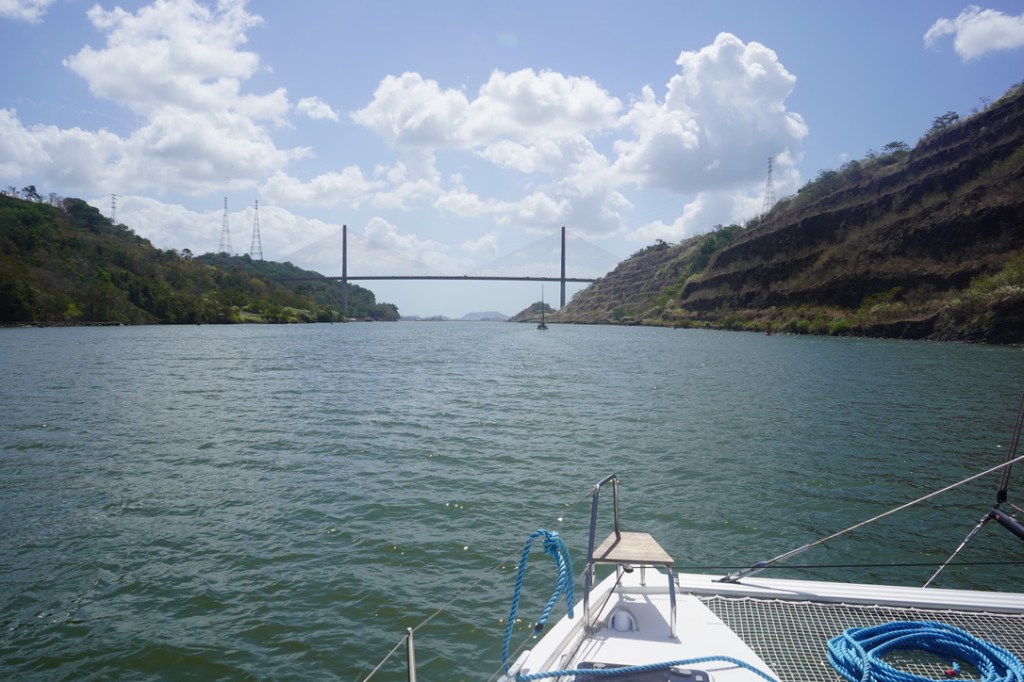
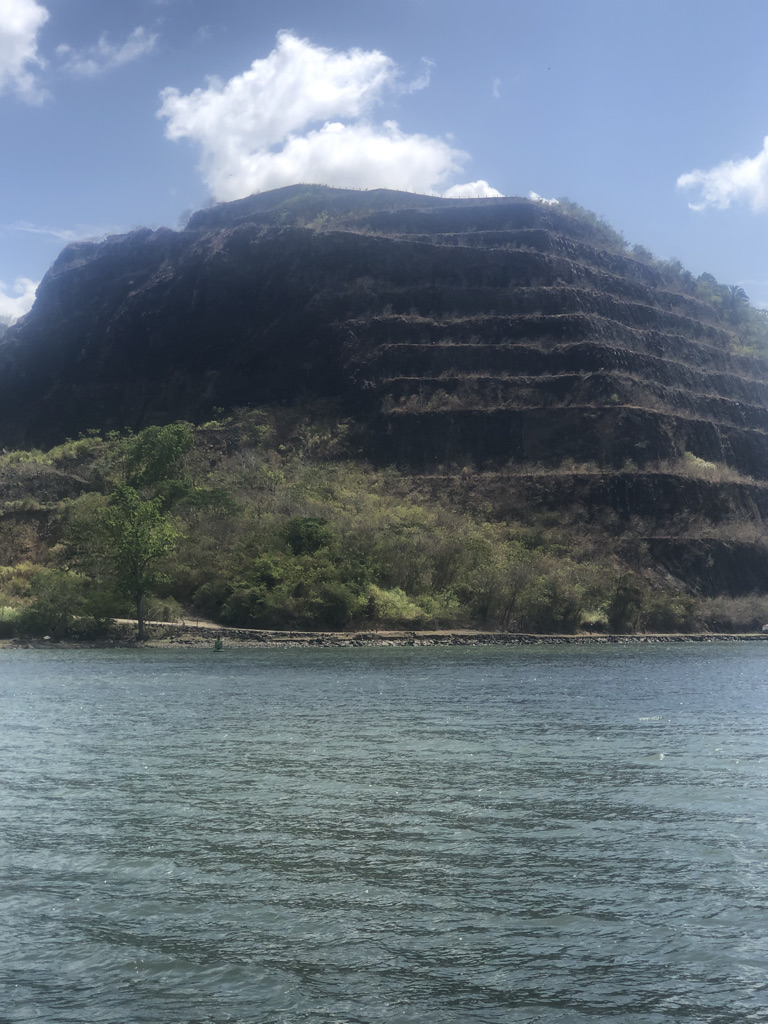
After the lake was the infamous Calebra Cut where so many people lost their lives due to disease or accident, on average one person for every 4m of canal. We went through the three locks (one double and a single) that dropped us down to the Pacific Ocean level at around lunch time and this time we were to enter first with the ship behind us. Seeing this huge vessel inch its way into the lock until its bow appeared to overhang our little boat was pretty intimidating. I couldn’t help wonder what would happen if its lines broke imagining it surging forward and crushing our little boat like it was made of matchsticks.

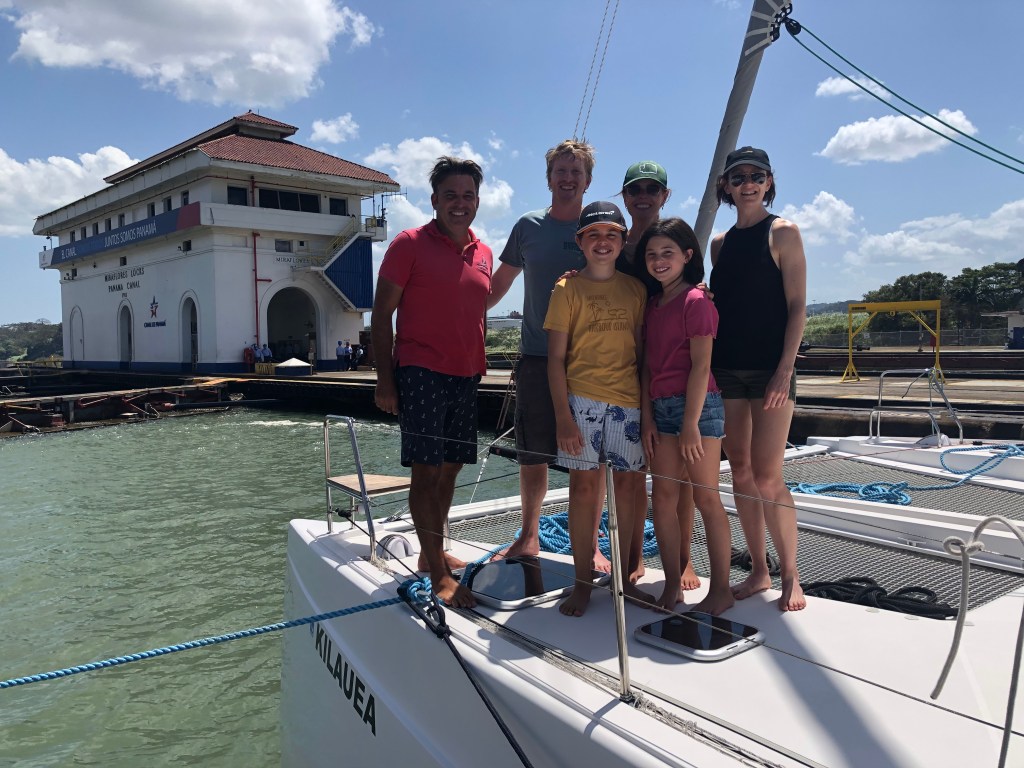
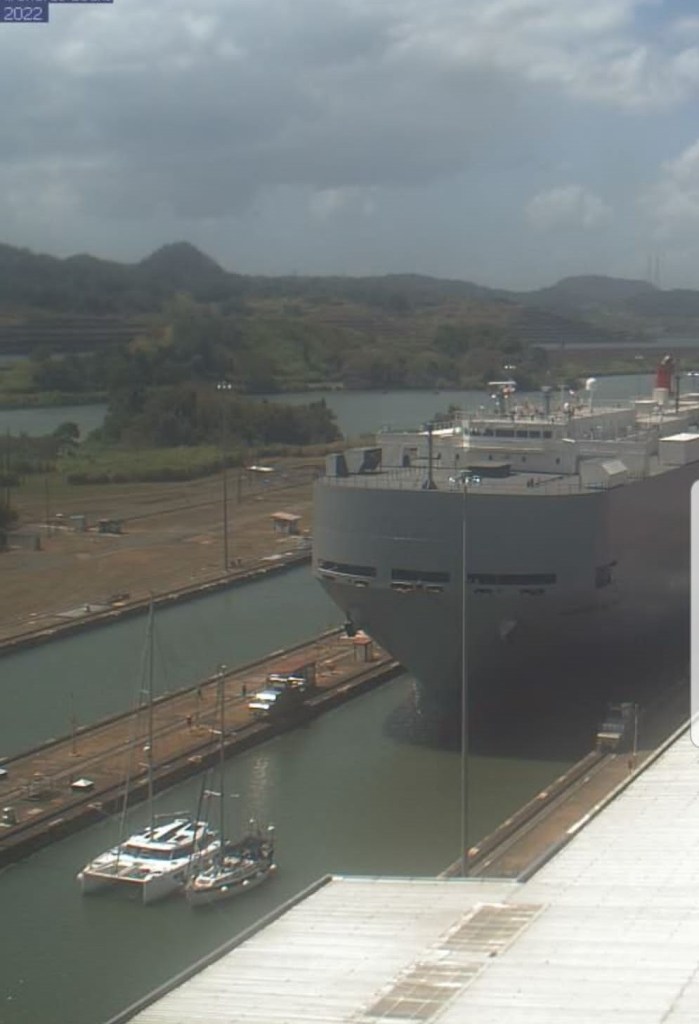
And then the moment came when the last lock gate opened and Kilauea tasted the saltwater of the Pacific Ocean for the first time in its life. As we sailed under the bridge of the Americas I couldn’t help thinking that the next bridge we would sail under, if all went to plan, would be the Sydney Harbour Bridge at the other side of this ocean.
In the next instalment we finish preparing for the Pacific, have a very close encounter with a sloth and head offshore again for our first Pacific passage, the 900 mile journey to the incredible Galapagos Islands crossing the equator for the first time along the way.
 Sailing Kilauea
This was the blog I’ve been hanging out for! What an amazing experience and some awesome photos. Enjoy the Galapagos!
LikeLike
1914 if I remember was the canal. 108 years ago. Howdy. Hope its all going great. Love the info
Regards Rob Date Phone-0409520158
LikeLike
So exciting!!!!!! You did it!!!
LikeLike
Amazing. Can’t believe you got Covid Alex.. how? We’re all in awe of you all and everything you’ve done so far. Absolutely incredible. You also write beautifully! Ps a croc the size of Hugo? Arrgghhh. Can’t wait for the next installment xx
LikeLike
Ahoy and, wow, what a story!!! I just recently watched a video from WindHippie Sailing with Skipper Holly Martin taking her taking her Grinde 27, ‘Gecko,’ through the Panama Canal. I also just read Tania Aebi’s account of her crossing with her Contessa 26, ‘Varuna,’ in her book, ‘Maiden Voyage!’ It was so cool to hear about your experience in parallel to these other two experiences with which I’m acquainted! Sounds like it was daunting, yet exciting experience all at the same time! Looking forward to your journey onto the Galapagos — I’ve been trying to convince my husband to take a trip there — it sounds incredible! Tania Aebi also stopped there with her ‘Varuna,’ as their first port of call in the Pacific after crossing the canal, during her circumnavigation back in the late 80’s — she was only 18 yrs old at the time! Fair winds!
LikeLike
What an incredible experience going through the Canal, thanks for sharing. Safe travels across the Pacific. As for the boy band shot up the mast – memories of Duran Duran lead singer Simon Le Bon doing the same shot years ago, Alex Le Gilbert ??
LikeLike
I’m so sorry to hear you had Covid Alex and trust everyone else remained fit and healthy. The Chagres River trip with crocs sounds terrific; unfortunately we didn’t have an opportunity to do that.
What a great account of your passage through the Panama Canal which I knew would be an amazing adventure that you’d all love, especially with your engineering background. We also saw a sloth when we climbed the hill. They’re such amusing looking creatures with doleful looking eyes and they look as if they’re smiling at you.
I hope you’re going to stop at the Las Perlas islands not far from Panama on your way to the Galapagos as they’re really beautiful.
Have a fantastic sail and I know you’ll absolutely love all the snorkeling with seals, turtles, sharks, a myriad of fish, etc., possibly dolphins (we swam with them at Kicker Rock, which you’ll sail past on your way into San Cristobal), as well as the giant tortoises, blue footed boobies, frigate birds, multitude of iguanas and much more. I know it will all be a major highlight for all of you. Enjoy, have lots of fun and amazing experiences. Much love xx
LikeLike
EPIC! Love the engineering behind it all, incredible to compare today’s safety requirements to those of the past. Imagine if we averaged 1 death per 4m of the West Gate Tunnel Project Alex.. scary thought.
Again thanks for the share, some pretty amazing photos in there too!
LikeLike
Finally catching up on your news and I’m back up to date! Hope the Covid experience wasn’t too bad Alex, and that the rest of you continue to avoid it!!! Looking forward to hearing all about the Galapagos, lots of love The Georgious xxx
LikeLike
Hi Alex and family,
Great read as always and loved the history. Brought back memories from Bilfinger Berger days (owned Baulderstone Hornibrook at the time) who were one of the main contractors on Centennial Bridge crossing Culebra Cut. Some of my mates worked on that bridge including mr Pittaway himself.
Awesome photos and loved seeing the scale of your boat next to the ships you shared the lock with. Amazing experience. Looking forward to reading the next one.
Cheers,
Akos
LikeLike